Summary information and primary citation
- PDB-id
-
5vvr;
DSSR-derived features in text and
JSON formats
- Class
- transcription-RNA-DNA
- Method
- cryo-EM (5.8 Å)
- Summary
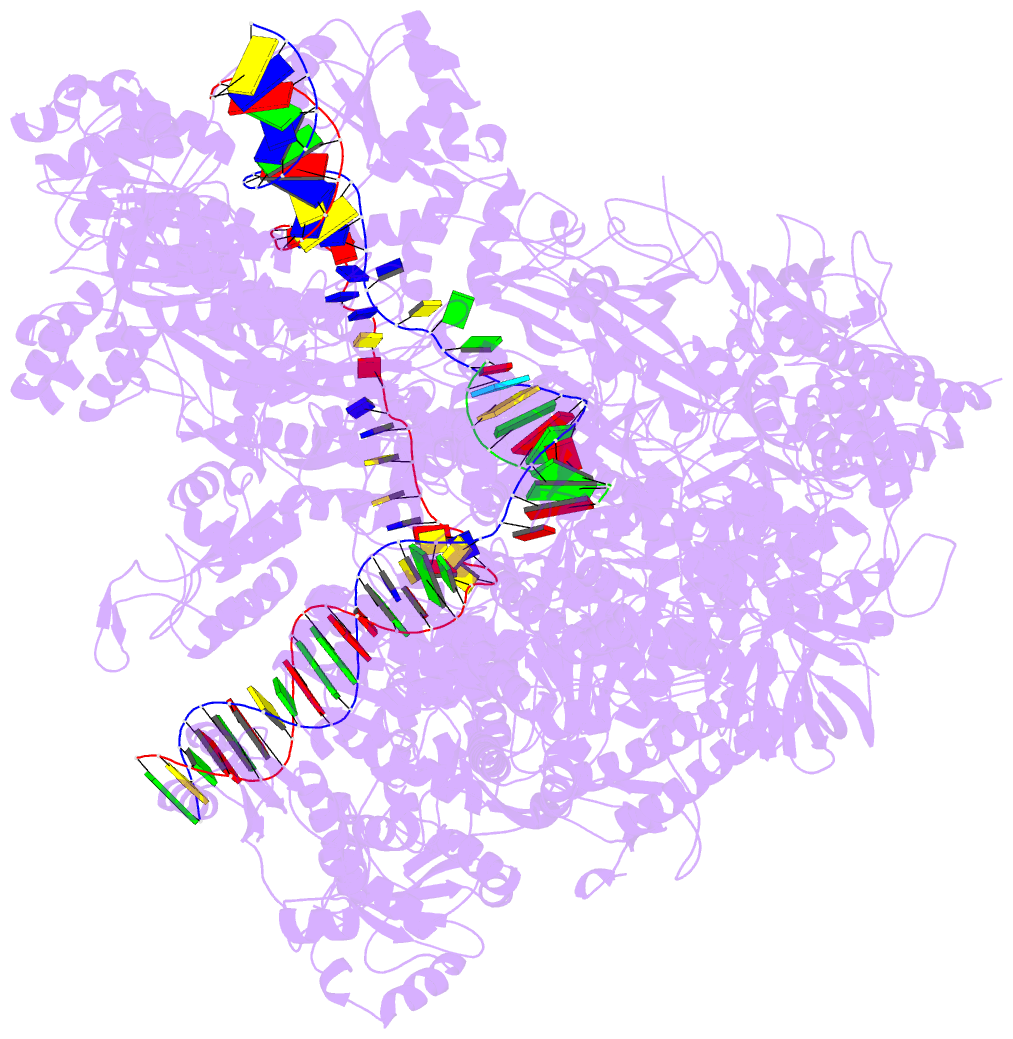
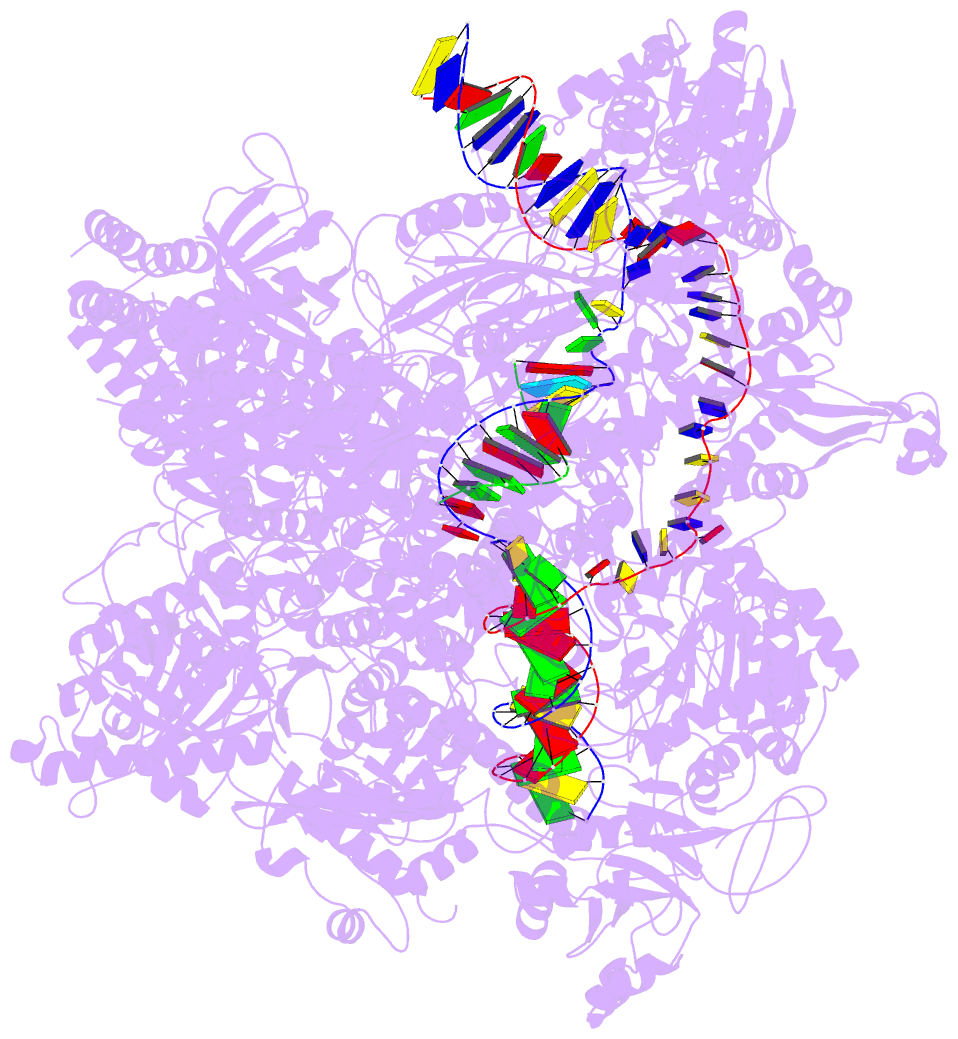
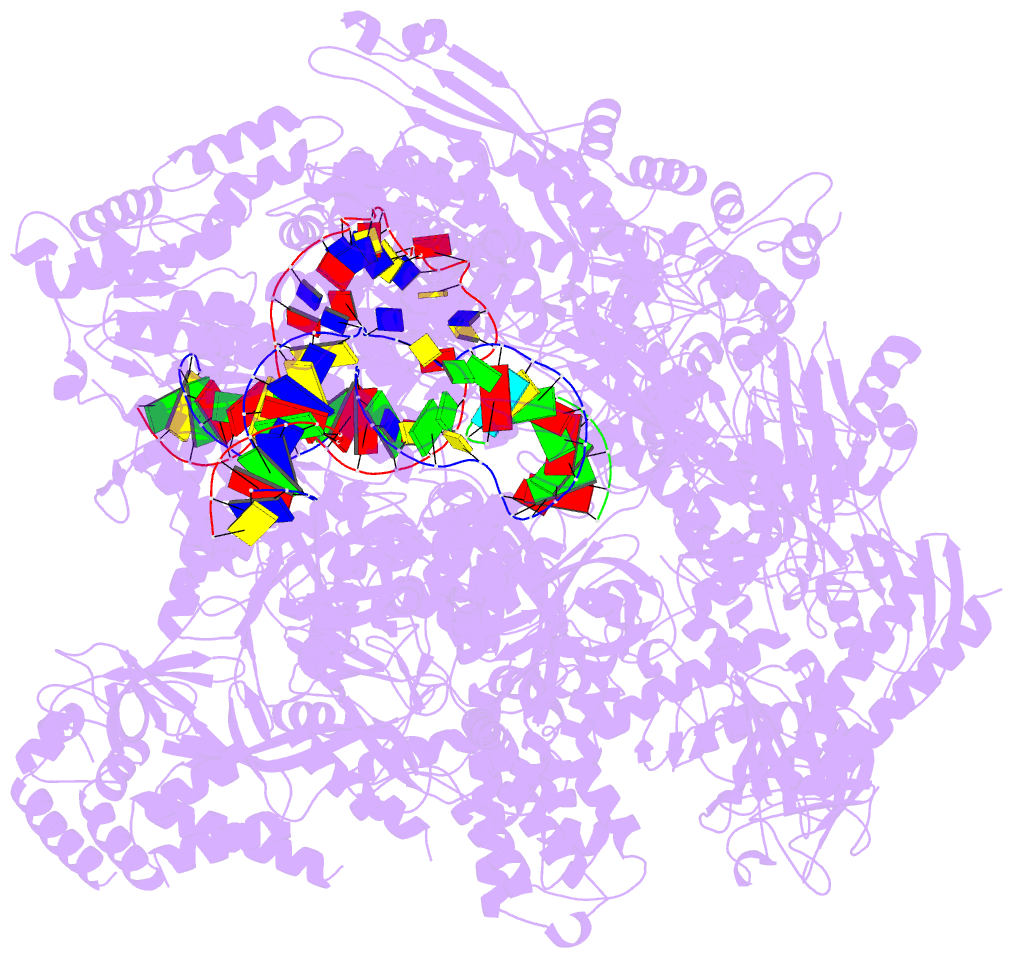
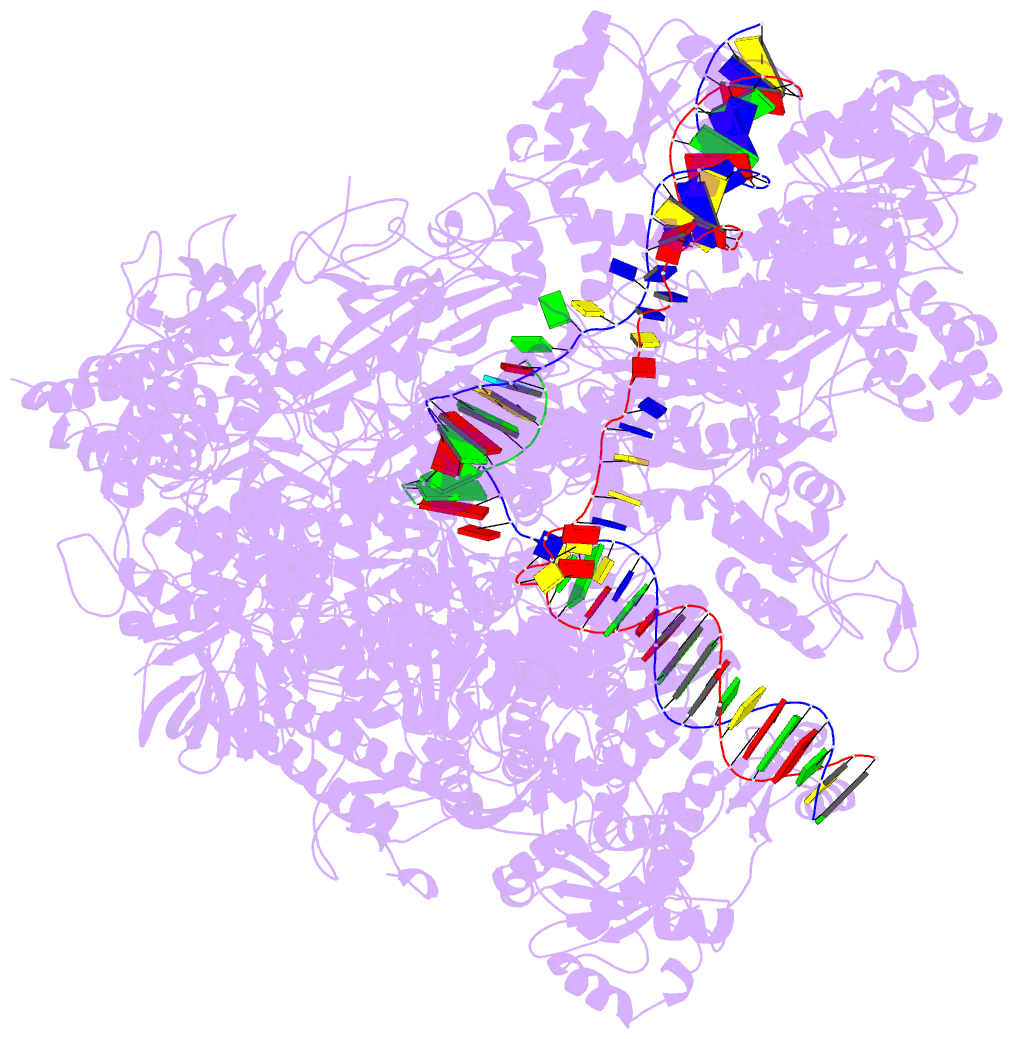
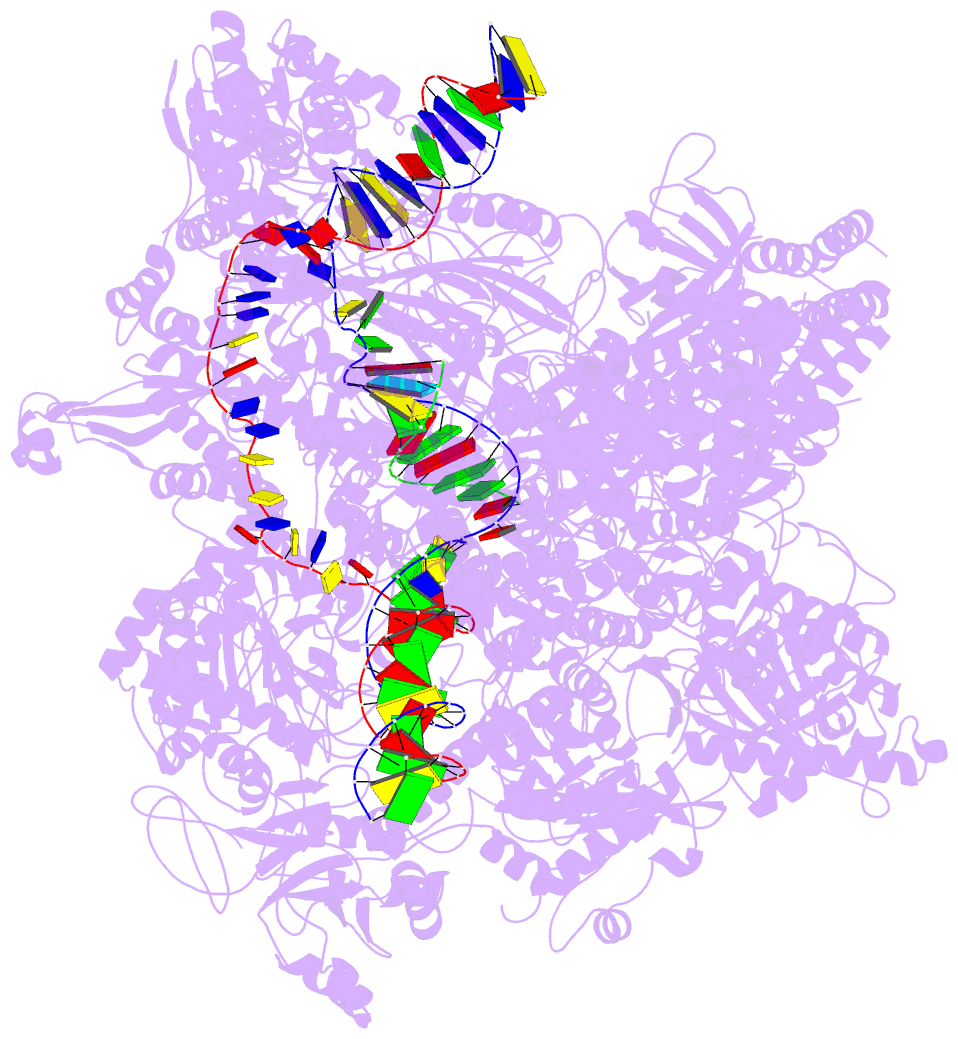
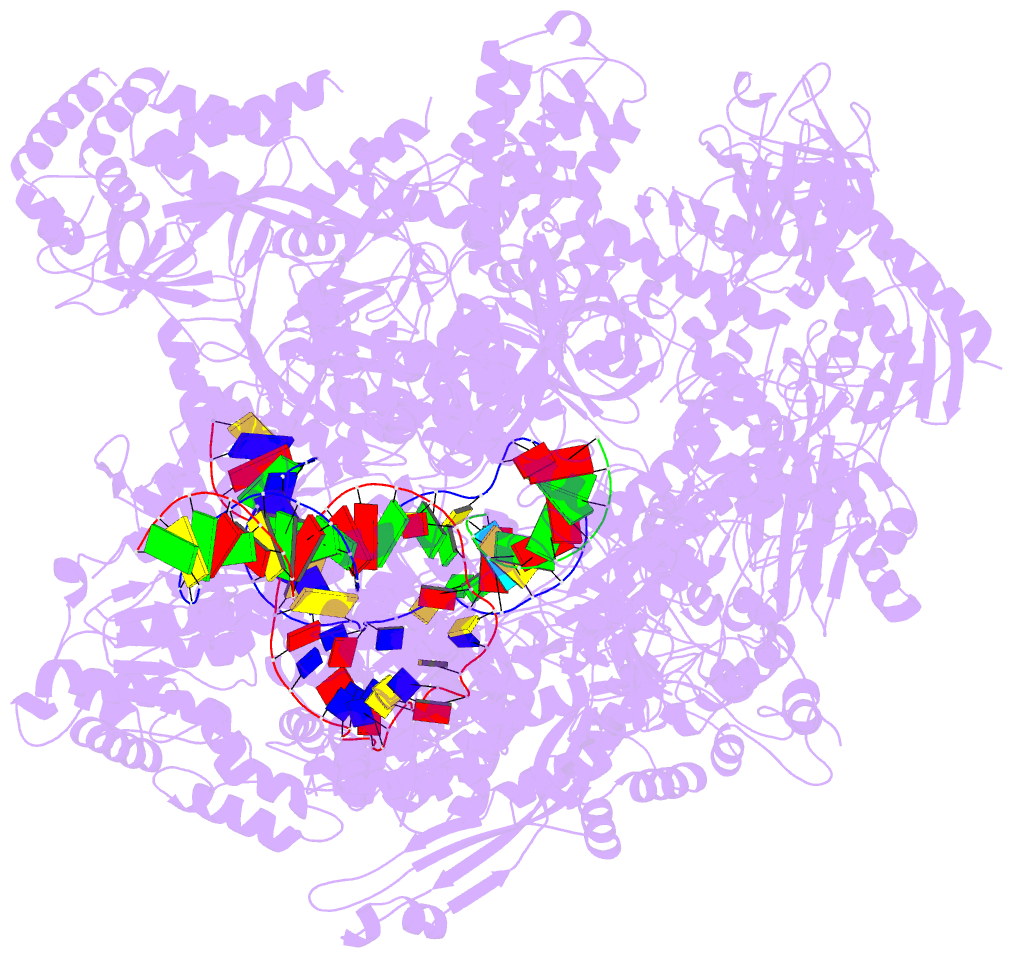
- Ternary complex of RNA pol ii, transcription scaffold
and rad26
- Reference
-
Xu J, Lahiri I, Wang W, Wier A, Cianfrocco MA, Chong J,
Hare AA, Dervan PB, DiMaio F, Leschziner AE, Wang D
(2017): "Structural
basis for the initiation of eukaryotic
transcription-coupled DNA repair." Nature,
551, 653-657. doi: 10.1038/nature24658.
- Abstract
- Eukaryotic transcription-coupled repair (TCR) is an
important and well-conserved sub-pathway of nucleotide
excision repair that preferentially removes DNA lesions
from the template strand that block translocation of RNA
polymerase II (Pol II). Cockayne syndrome group B (CSB,
also known as ERCC6) protein in humans (or its yeast
orthologues, Rad26 in Saccharomyces cerevisiae and Rhp26 in
Schizosaccharomyces pombe) is among the first proteins to
be recruited to the lesion-arrested Pol II during the
initiation of eukaryotic TCR. Mutations in CSB are
associated with the autosomal-recessive neurological
disorder Cockayne syndrome, which is characterized by
progeriod features, growth failure and photosensitivity.
The molecular mechanism of eukaryotic TCR initiation
remains unclear, with several long-standing unanswered
questions. How cells distinguish DNA lesion-arrested Pol II
from other forms of arrested Pol II, the role of CSB in TCR
initiation, and how CSB interacts with the arrested Pol II
complex are all unknown. The lack of structures of CSB or
the Pol II-CSB complex has hindered our ability to address
these questions. Here we report the structure of the S.
cerevisiae Pol II-Rad26 complex solved by cryo-electron
microscopy. The structure reveals that Rad26 binds to the
DNA upstream of Pol II, where it markedly alters its path.
Our structural and functional data suggest that the
conserved Swi2/Snf2-family core ATPase domain promotes the
forward movement of Pol II, and elucidate key roles for
Rad26 in both TCR and transcription elongation.