Summary information and primary citation
- PDB-id
-
5uuh;
DSSR-derived features in text and
JSON formats
- Class
- hydrolase-DNA-antibiotic
- Method
- X-ray (1.569 Å)
- Summary
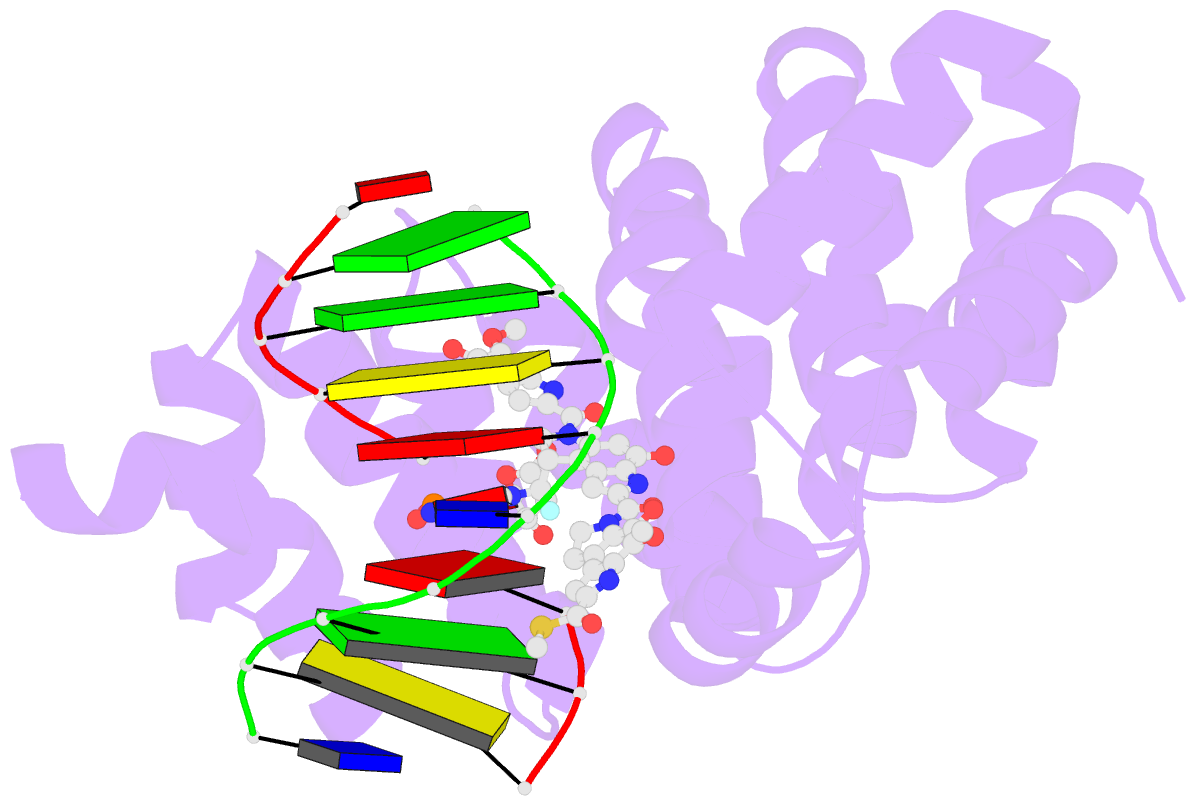
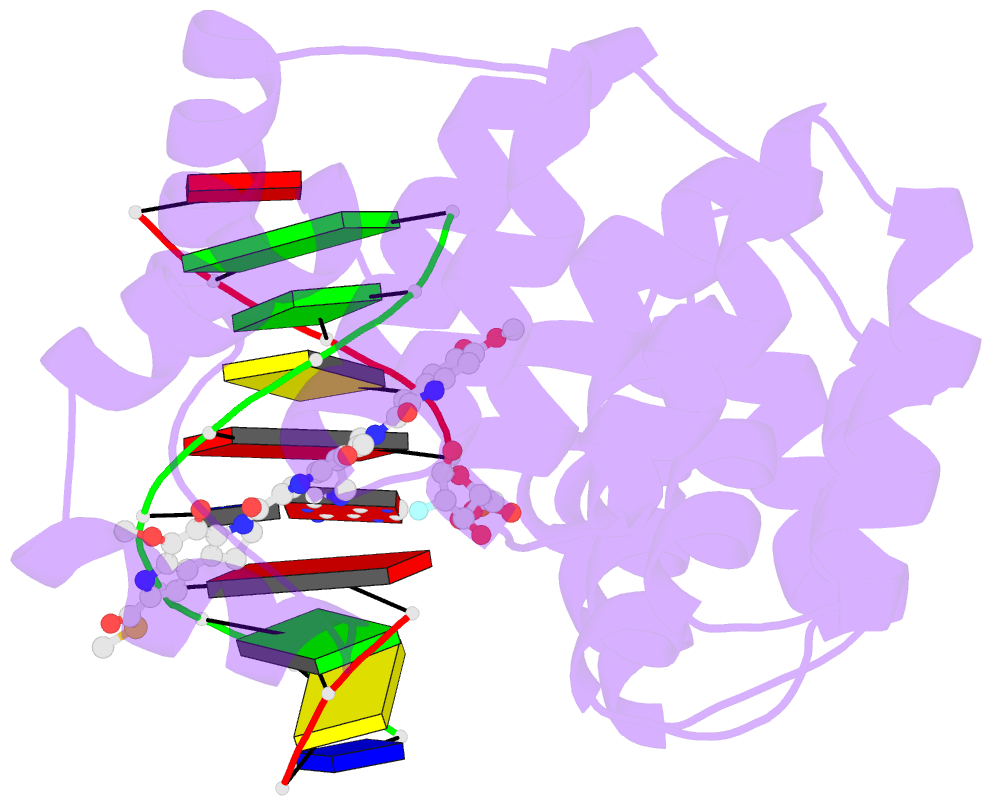
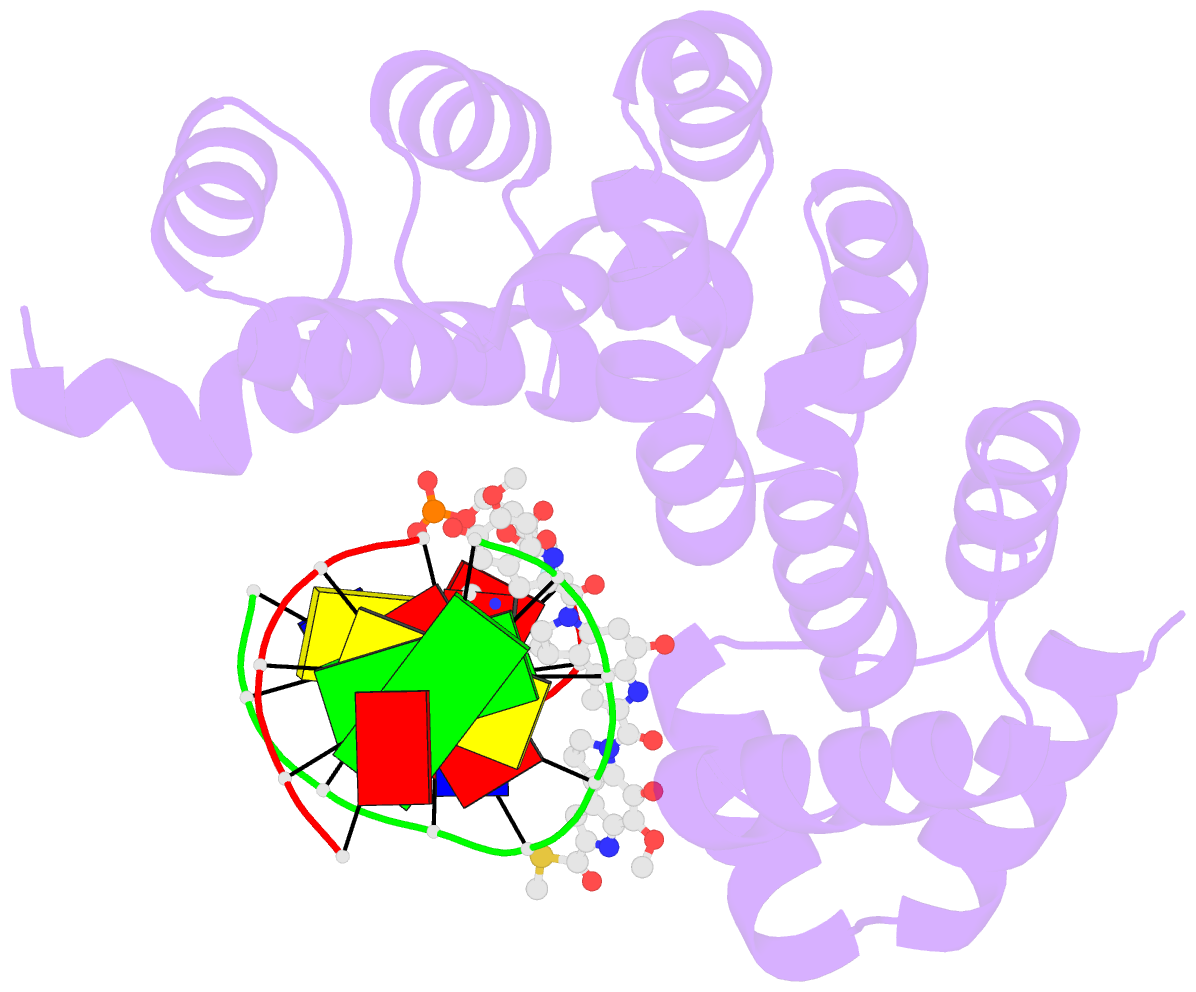
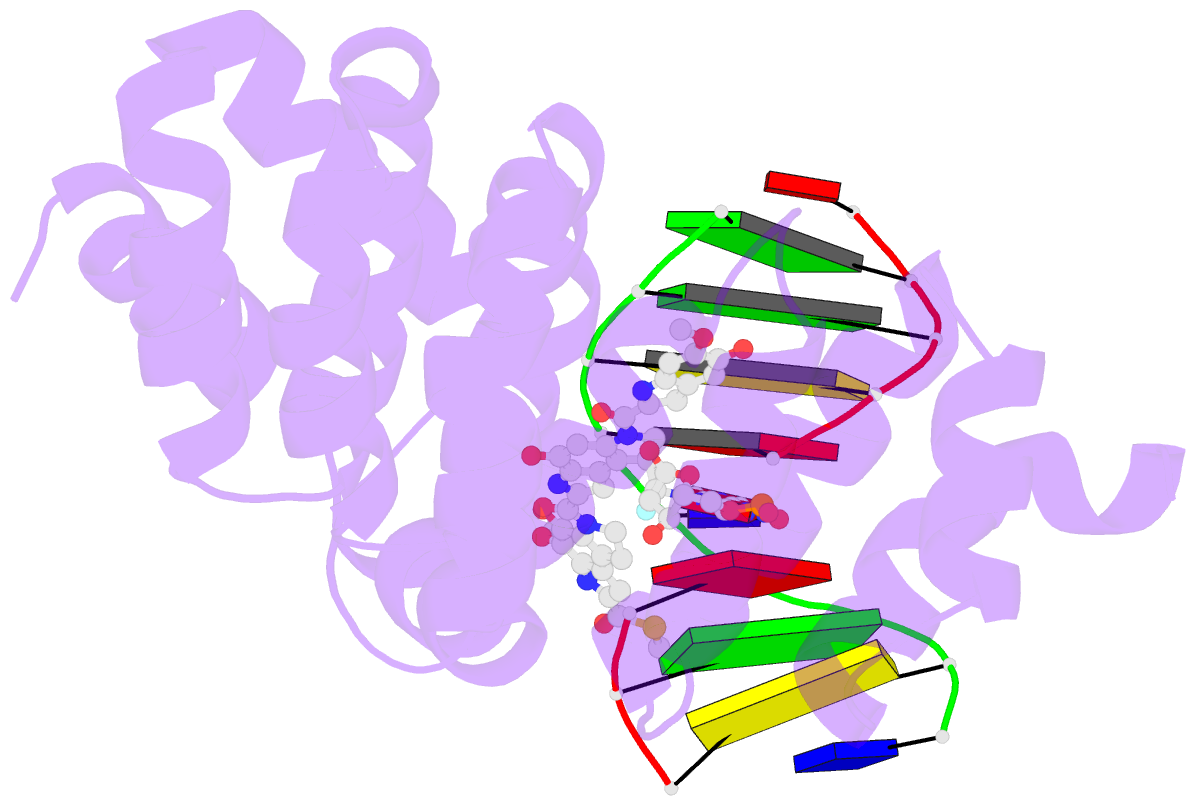
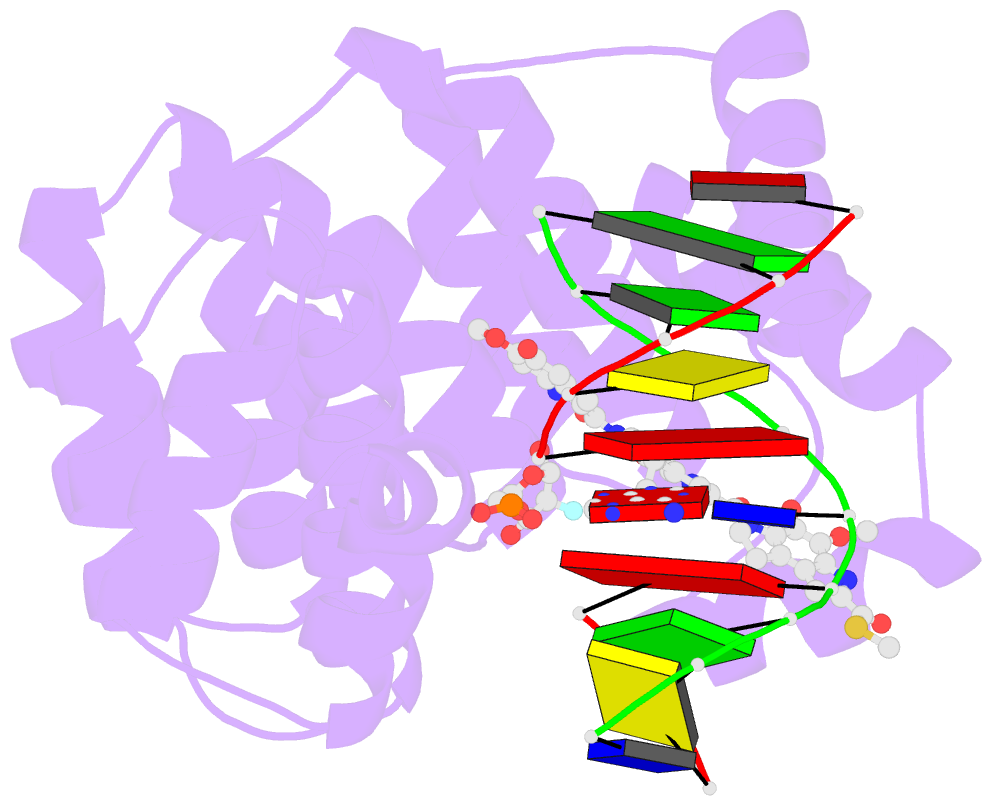
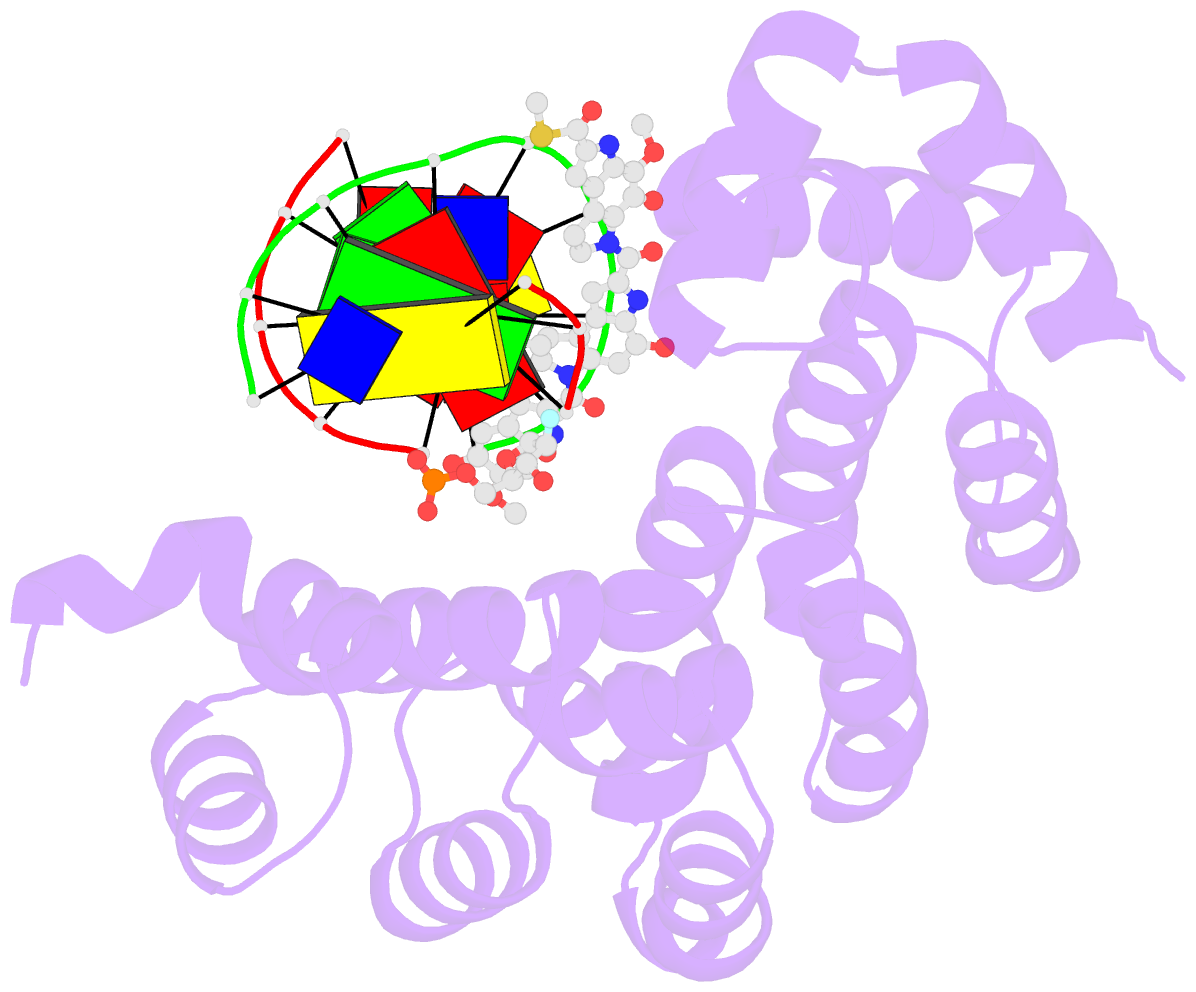
- Bacillus cereus DNA glycosylase alkd bound to a
yatakemycin-adenine nucleobase adduct and DNA containing a
fluorinated abasic site (9-mer product complex)
- Reference
-
Mullins EA, Shi R, Eichman BF (2017): "Toxicity
and repair of DNA adducts produced by the natural product
yatakemycin." Nat. Chem. Biol.,
13, 1002-1008. doi: 10.1038/nchembio.2439.
- Abstract
- Yatakemycin (YTM) is an extraordinarily toxic DNA
alkylating agent with potent antimicrobial and antitumor
properties and is the most recent addition to the CC-1065
and duocarmycin family of natural products. Though bulky
DNA lesions the size of those produced by YTM are normally
removed from the genome by the nucleotide-excision repair
(NER) pathway, YTM adducts are also a substrate for the
bacterial DNA glycosylases AlkD and YtkR2, unexpectedly
implicating base-excision repair (BER) in their
elimination. The reason for the extreme toxicity of these
lesions and the molecular basis for the way they are
eliminated by BER have been unclear. Here, we describe the
structural and biochemical properties of YTM adducts that
are responsible for their toxicity, and define the
mechanism by which they are excised by AlkD. These findings
delineate an alternative strategy for repair of bulky DNA
damage and establish the cellular utility of this pathway
relative to that of NER.