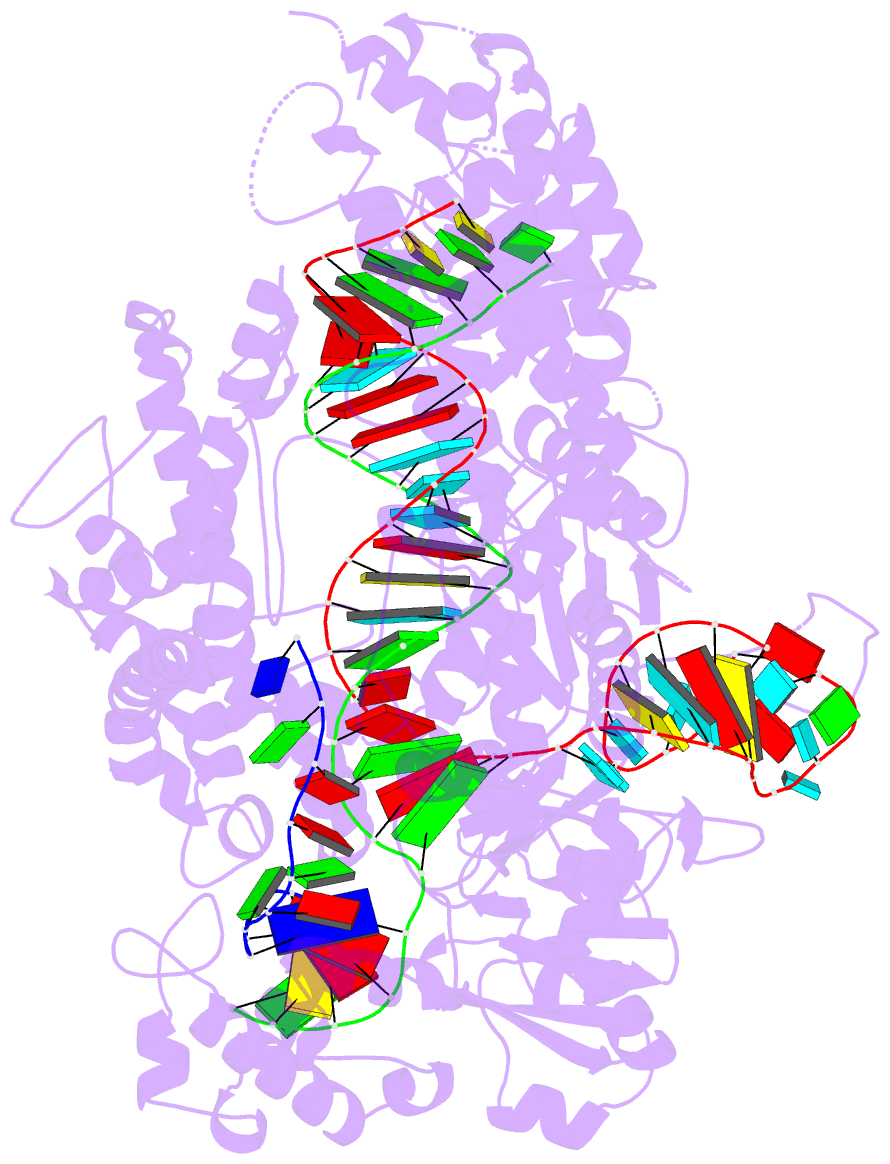
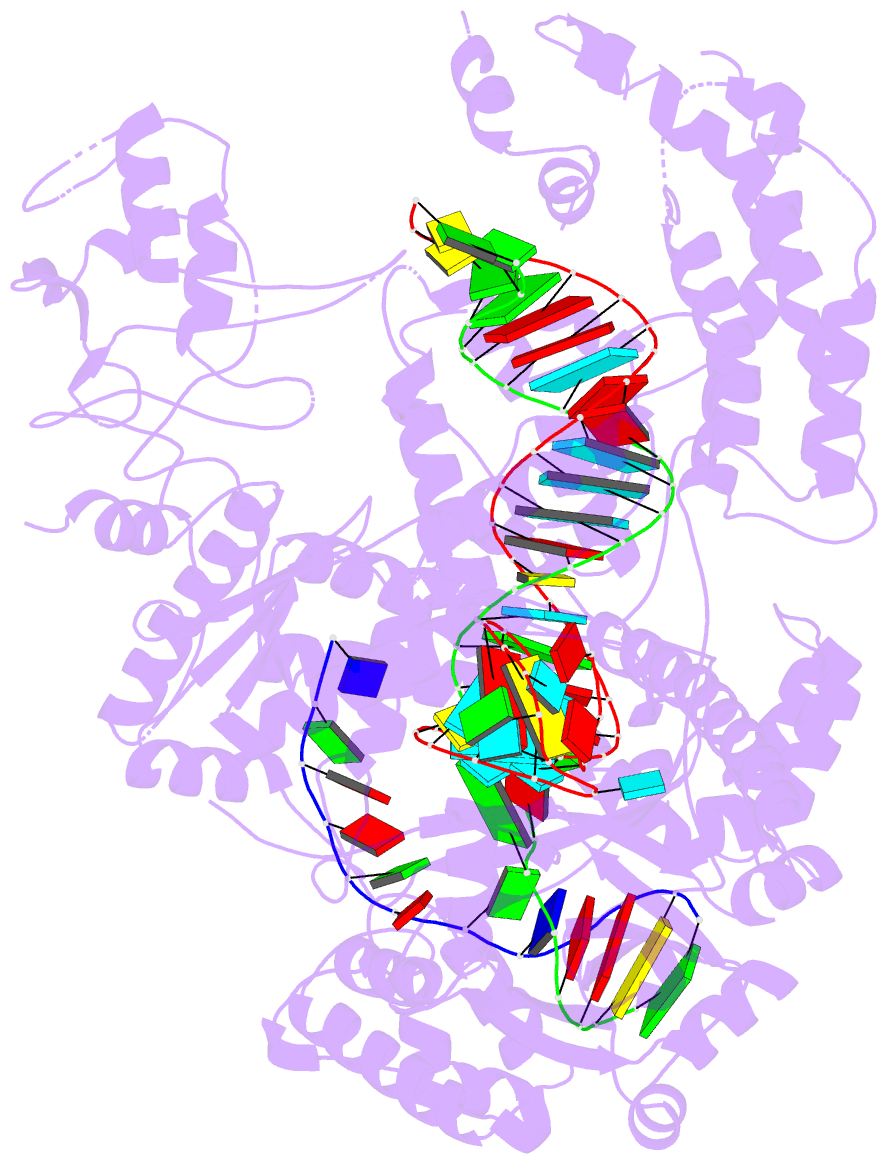
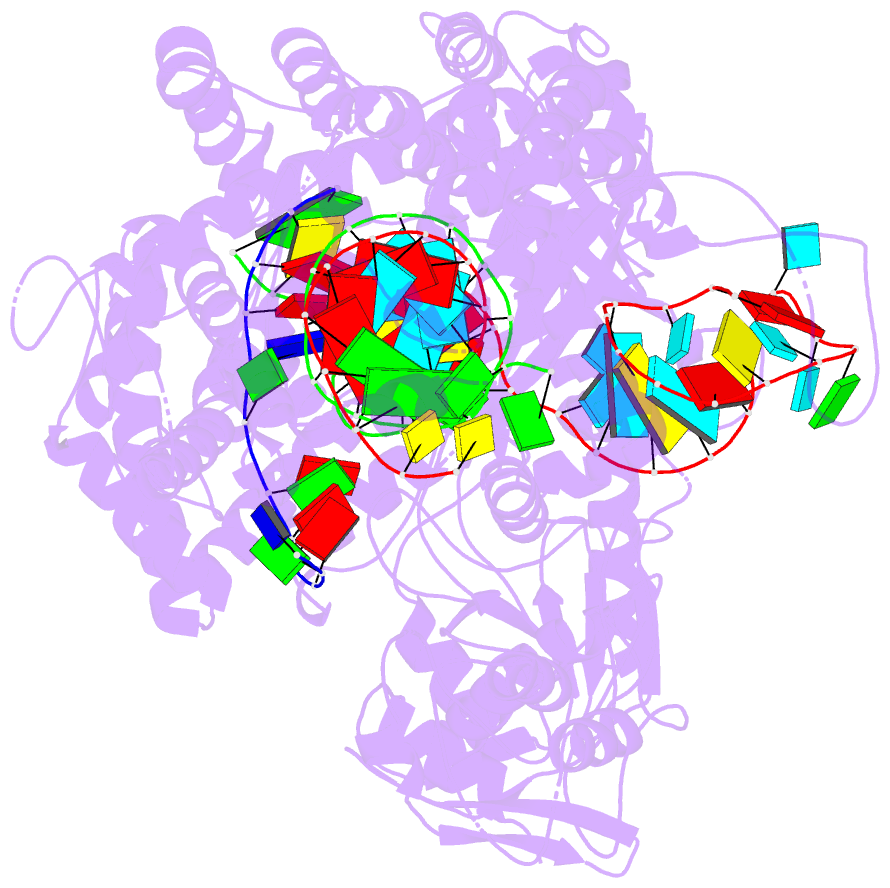
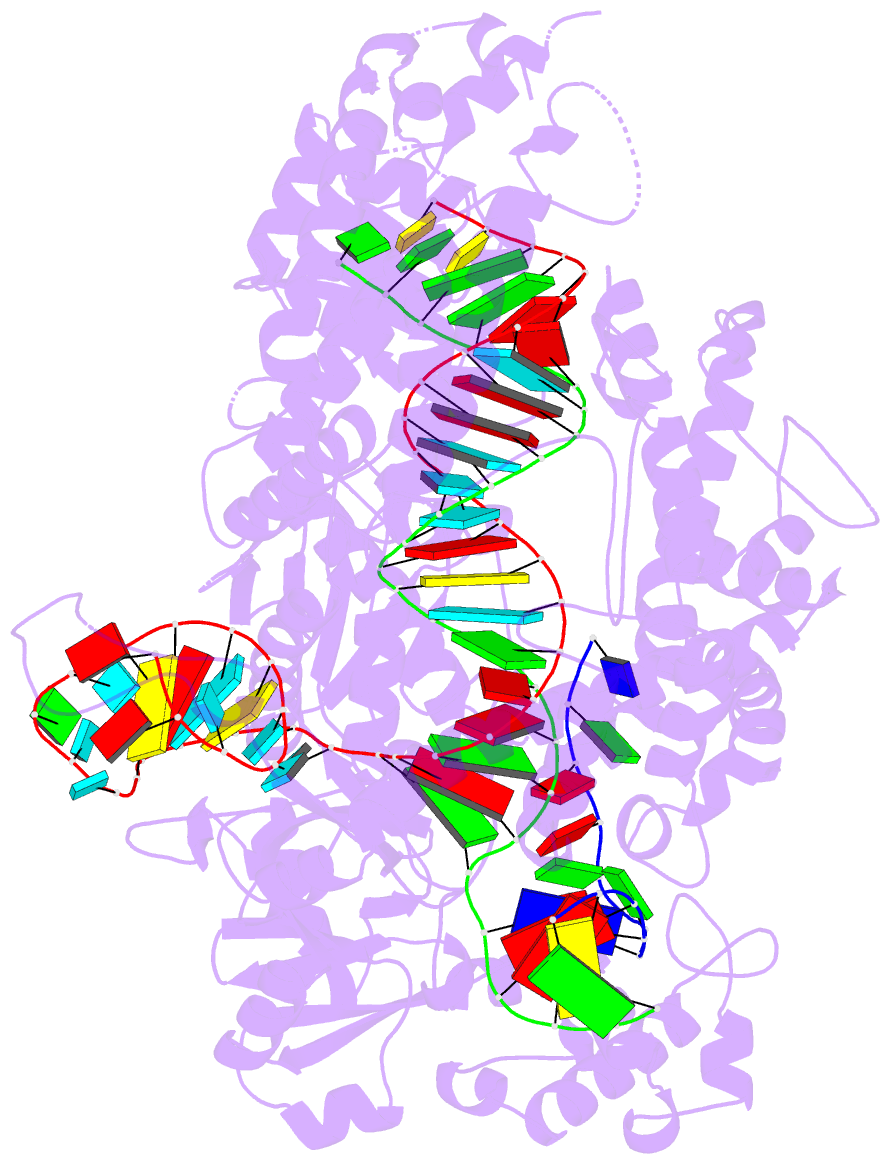
Summary information and primary citation
- PDB-id
-
5mga;
DSSR-derived features in text and
JSON formats
- Class
- hydrolase
- Method
- X-ray (3.0 Å)
- Summary
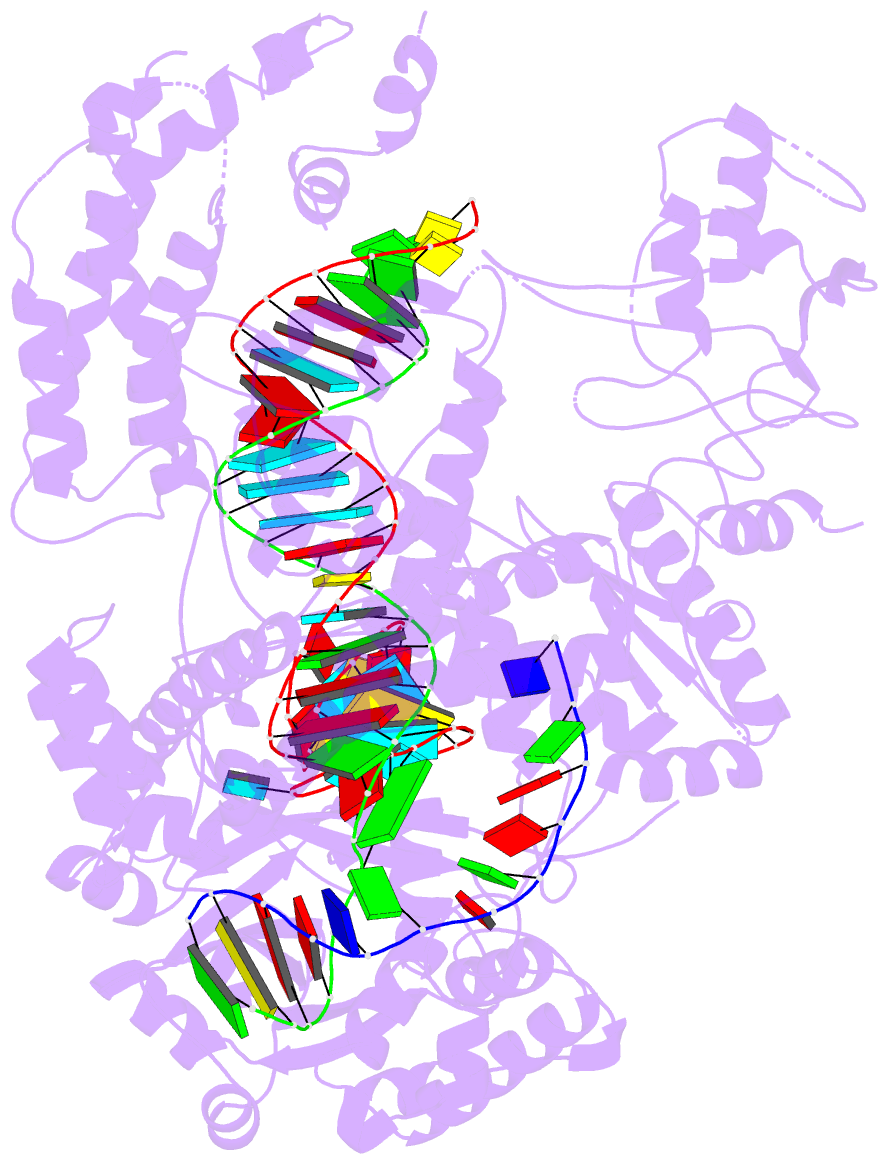
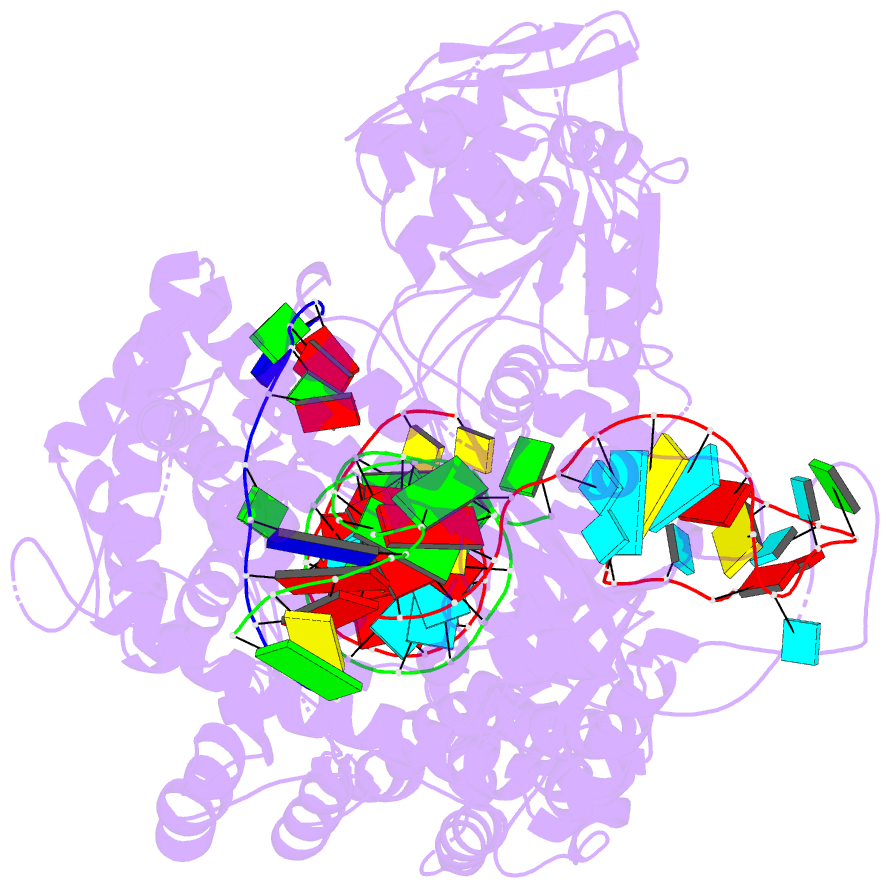
- Structure of the cpf1 endonuclease r-loop complex after
DNA cleavage
- Reference
-
Stella S, Alcon P, Montoya G (2017): "Structure
of the Cpf1 endonuclease R-loop complex after target DNA
cleavage." Nature, 546,
559-563. doi: 10.1038/nature22398.
- Abstract
- Cpf1 is an RNA-guided endonuclease that is emerging as
a powerful genome-editing tool. Here we provide insight
into its DNA-targeting mechanism by determining the
structure of Francisella novicida Cpf1 with the
triple-stranded R-loop generated after DNA cleavage. The
structure reveals the machinery involved in DNA unwinding
to form a CRISPR RNA (crRNA)-DNA hybrid and a displaced DNA
strand. The protospacer adjacent motif (PAM) is recognized
by the PAM-interacting domain. The loop-lysine helix-loop
motif in this domain contains three conserved lysine
residues that are inserted in a dentate manner into the
double-stranded DNA. Unzipping of the double-stranded DNA
occurs in a cleft arranged by acidic and hydrophobic
residues facilitating the crRNA-DNA hybrid formation. The
PAM single-stranded DNA is funnelled towards the nuclease
site through a mixed hydrophobic and basic cavity. In this
catalytic conformation, the PAM-interacting domain and the
helix-loop-helix motif in the REC1 domain adopt a 'rail'
shape and 'flap-on' conformations, respectively,
channelling the PAM strand into the cavity. A steric
barrier between the RuvC-II and REC1 domains forms the
'septum', separating the displaced PAM strand and the
crRNA-DNA hybrid, avoiding DNA re-annealing. Mutations in
key residues reveal a mechanism linking the PAM and DNA
nuclease sites. Analysis of the Cpf1 structures proposes a
singular working model of RNA-guided DNA cleavage,
suggesting new avenues for redesign of Cpf1.