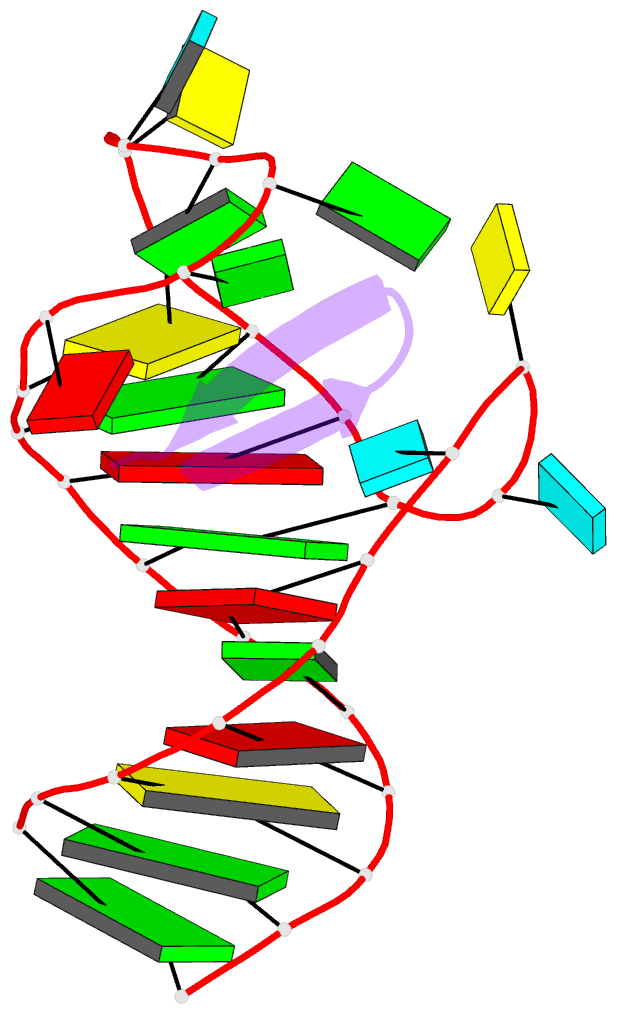
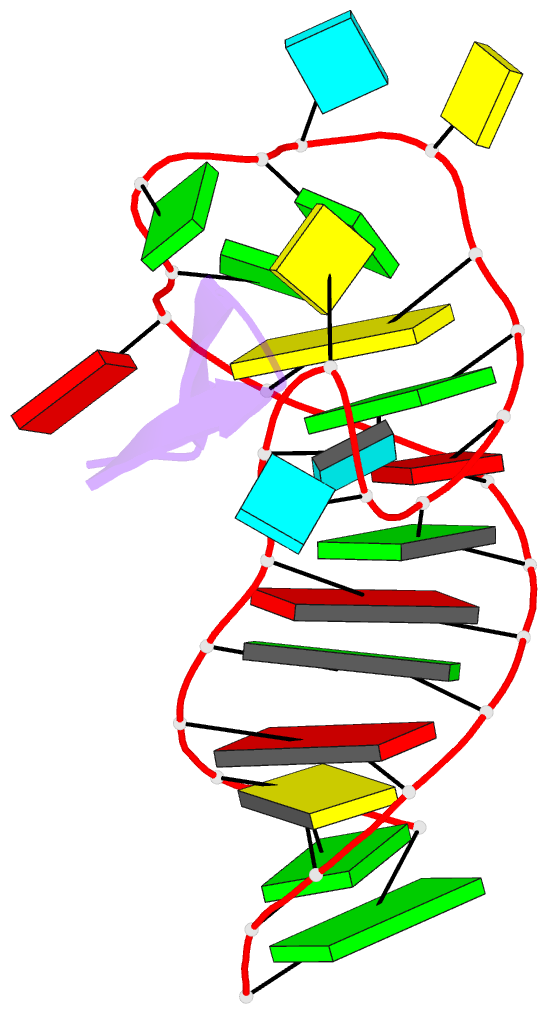
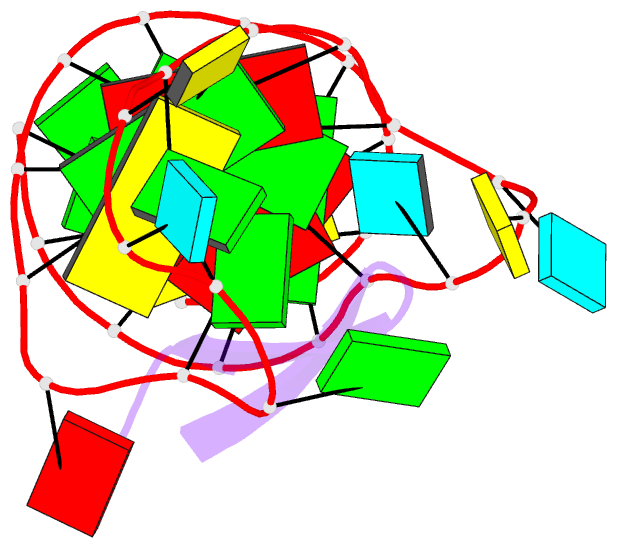
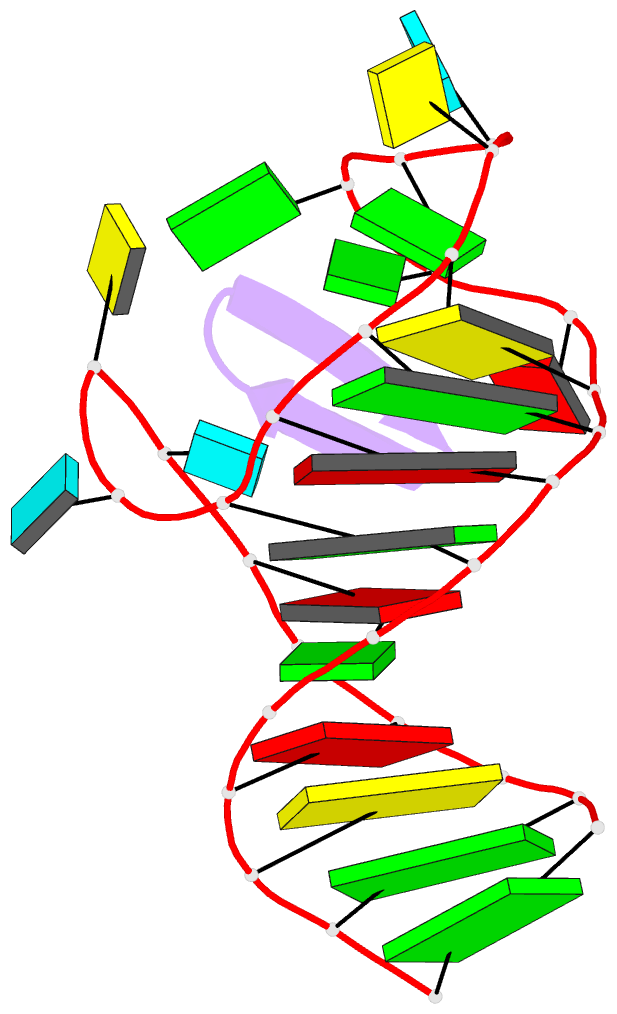
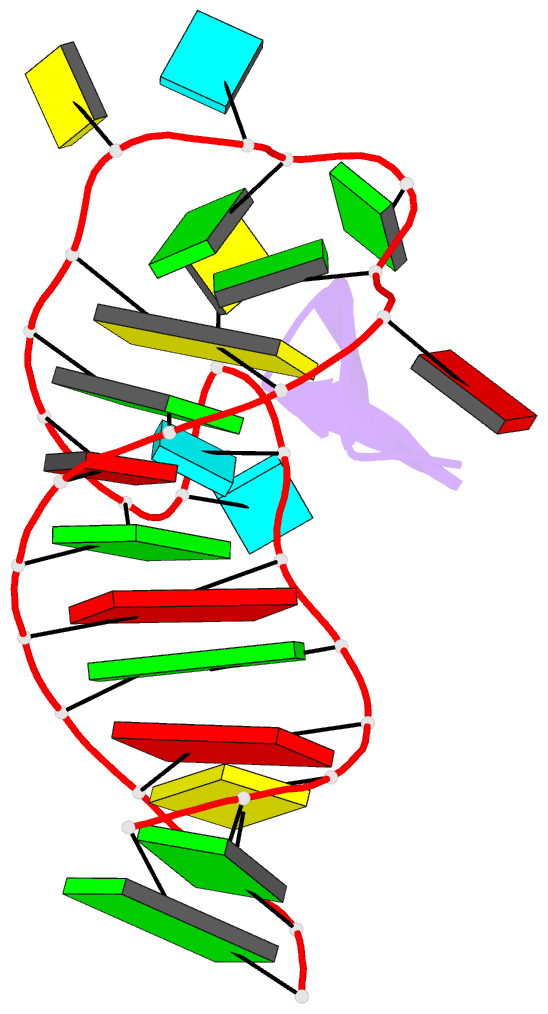
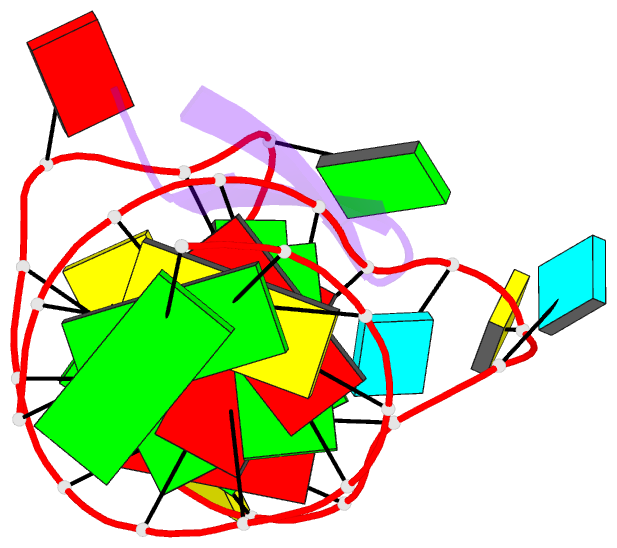
Summary information and primary citation
- PDB-id
-
5j0m;
DSSR-derived features in text and
JSON formats
- Class
- viral protein
- Method
- NMR
- Summary
- Ground state sampled during rdc restrained
replica-averaged metadynamics (ram) simulations of the
hiv-1 tar complexed with cyclic peptide mimetic of tat
- Reference
-
Borkar AN, Bardaro MF, Camilloni C, Aprile FA, Varani G,
Vendruscolo M (2016): "Structure
of a low-population binding intermediate in protein-RNA
recognition." Proc.Natl.Acad.Sci.USA,
113, 7171-7176. doi: 10.1073/pnas.1521349113.
- Abstract
- The interaction of the HIV-1 protein transactivator of
transcription (Tat) and its cognate transactivation
response element (TAR) RNA transactivates viral
transcription and represents a paradigm for the widespread
occurrence of conformational rearrangements in protein-RNA
recognition. Although the structures of free and bound
forms of TAR are well characterized, the conformations of
the intermediates in the binding process are still unknown.
By determining the free energy landscape of the complex
using NMR residual dipolar couplings in replica-averaged
metadynamics simulations, we observe two low-population
intermediates. We then rationally design two mutants, one
in the protein and another in the RNA, that weaken specific
nonnative interactions that stabilize one of the
intermediates. By using surface plasmon resonance, we show
that these mutations lower the release rate of Tat, as
predicted. These results identify the structure of an
intermediate for RNA-protein binding and illustrate a
general strategy to achieve this goal with high
resolution.