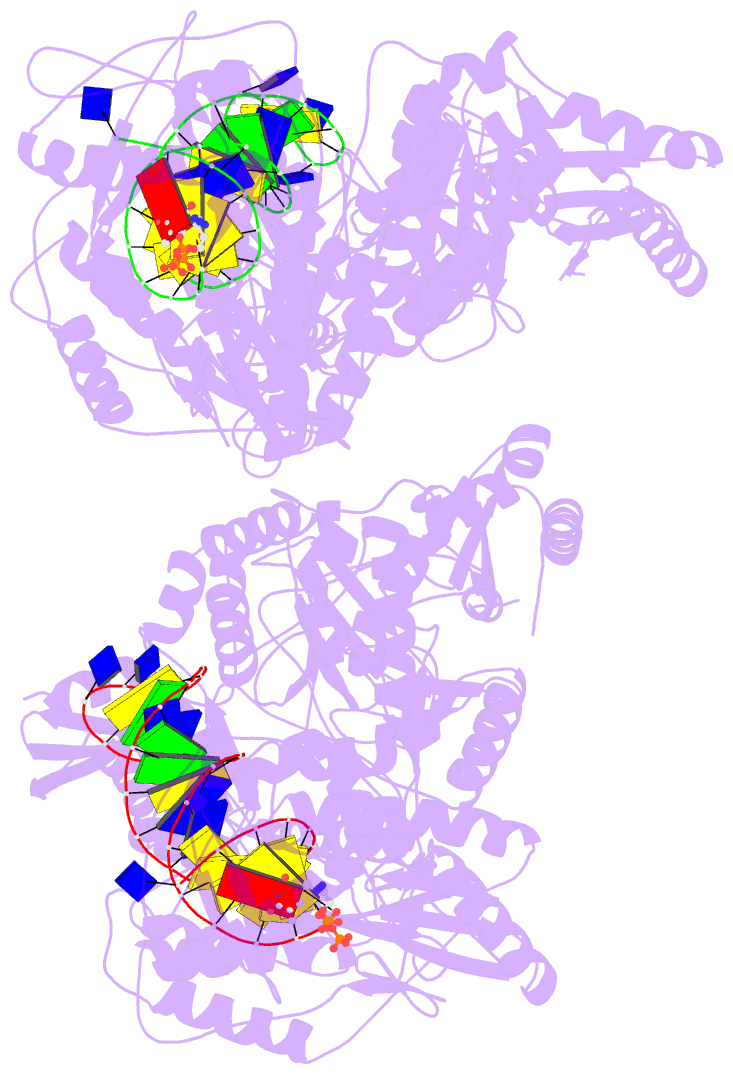
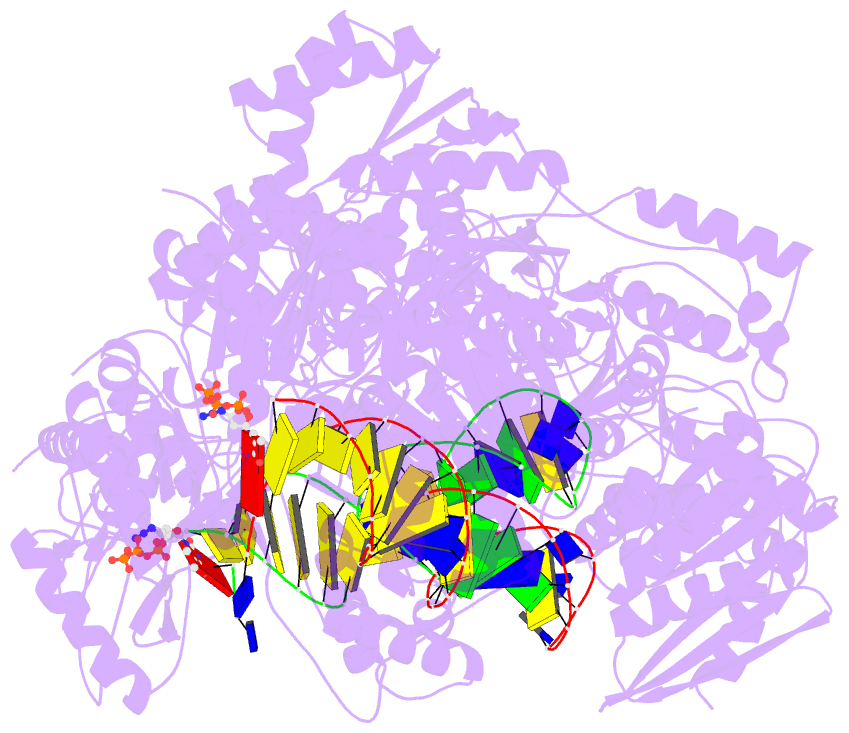
Summary information and primary citation
- PDB-id
-
5i42;
DSSR-derived features in text and
JSON formats
- Class
- transferase-DNA
- Method
- X-ray (3.3 Å)
- Summary
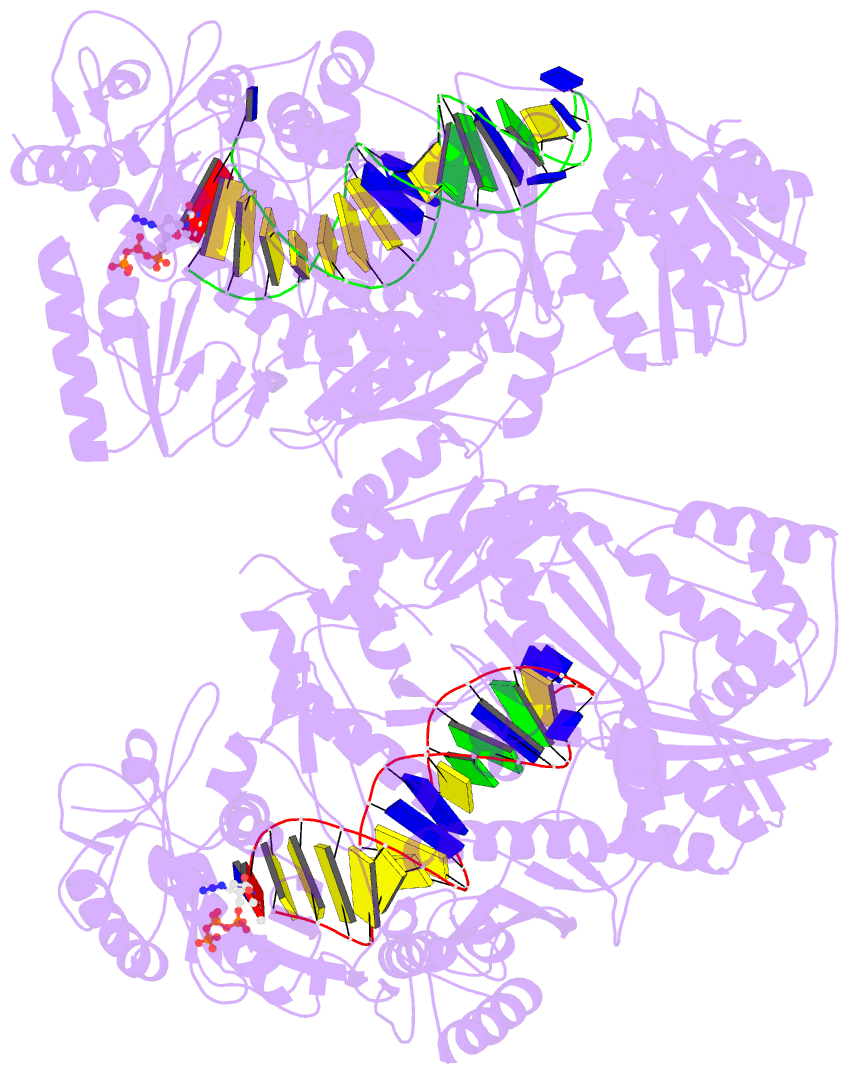
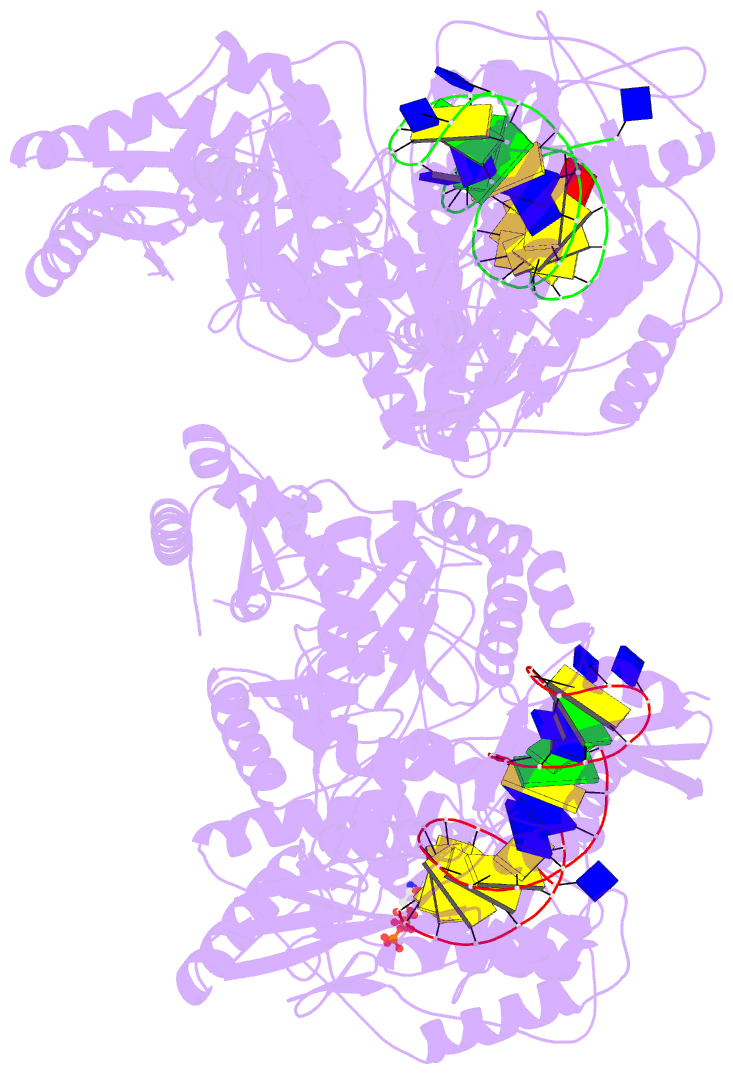
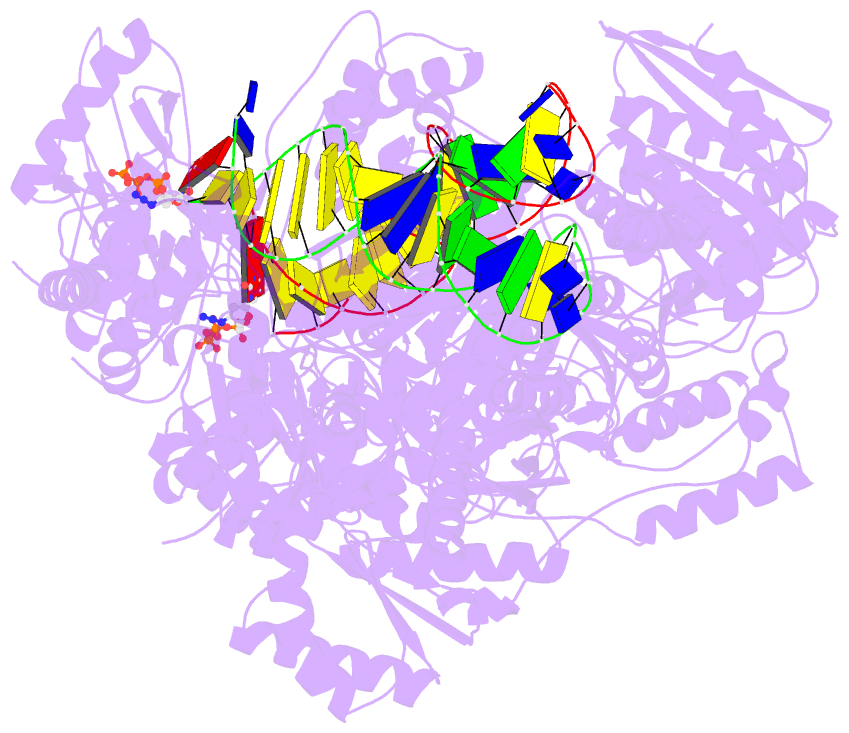
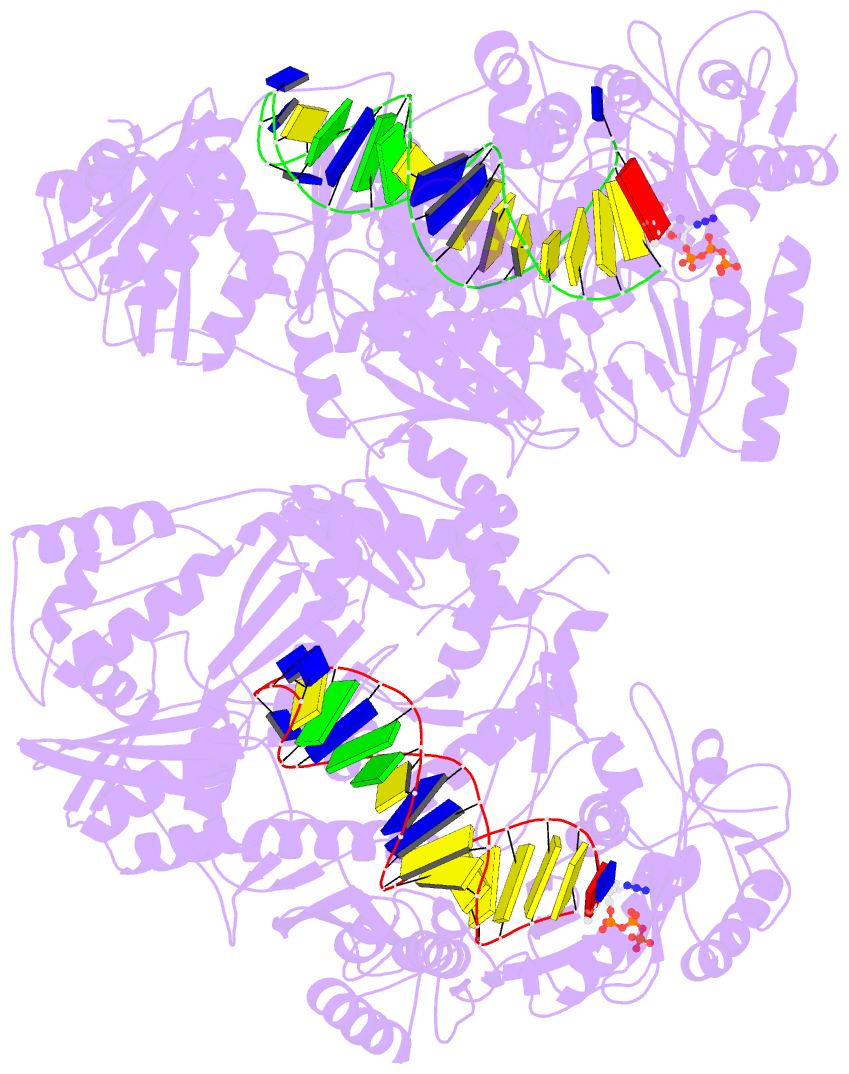
- Structure of hiv-1 reverse transcriptase in complex
with a DNA aptamer, azttp, and ca(2+) ion
- Reference
-
Das K, Balzarini J, Miller MT, Maguire AR, DeStefano JJ,
Arnold E (2016): "Conformational
States of HIV-1 Reverse Transcriptase for Nucleotide
Incorporation vs Pyrophosphorolysis-Binding of
Foscarnet." Acs Chem.Biol.,
11, 2158-2164. doi: 10.1021/acschembio.6b00187.
- Abstract
- HIV-1 reverse transcriptase (RT) catalytically
incorporates individual nucleotides into a viral DNA strand
complementing an RNA or DNA template strand; the polymerase
active site of RT adopts multiple conformational and
structural states while performing this task. The states
associated are dNTP binding at the N site, catalytic
incorporation of a nucleotide, release of a pyrophosphate,
and translocation of the primer 3'-end to the P site.
Structural characterization of each of these states may
help in understanding the molecular mechanisms of drug
activity and resistance and in developing new RT
inhibitors. Using a 38-mer DNA template-primer aptamer as
the substrate mimic, we crystallized an RT/dsDNA complex
that is catalytically active, yet translocation-incompetent
in crystals. The ability of RT to perform dNTP binding and
incorporation in crystals permitted obtaining a series of
structures: (I) RT/DNA (P-site), (II) RT/DNA/AZTTP ternary,
(III) RT/AZT-terminated DNA (N-site), and (IV)
RT/AZT-terminated DNA (N-site)/foscarnet complexes. The
stable N-site complex permitted the binding of foscarnet as
a pyrophosphate mimic. The Mg(2+) ions dissociated after
catalytic addition of AZTMP in the pretranslocated
structure III, whereas ions A and B had re-entered the
active site to bind foscarnet in structure IV. The binding
of foscarnet involves chelation with the Mg(2+) (B) ion and
interactions with K65 and R72. The analysis of interactions
of foscarnet and the recently discovered
nucleotide-competing RT inhibitor (NcRTI) α-T-CNP in two
different conformational states of the enzyme provides
insights for developing new classes of polymerase active
site RT inhibitors.