Summary information and primary citation
- PDB-id
-
5fhl;
DSSR-derived features in text and
JSON formats
- Class
- DNA
- Method
- X-ray (1.791 Å)
- Summary
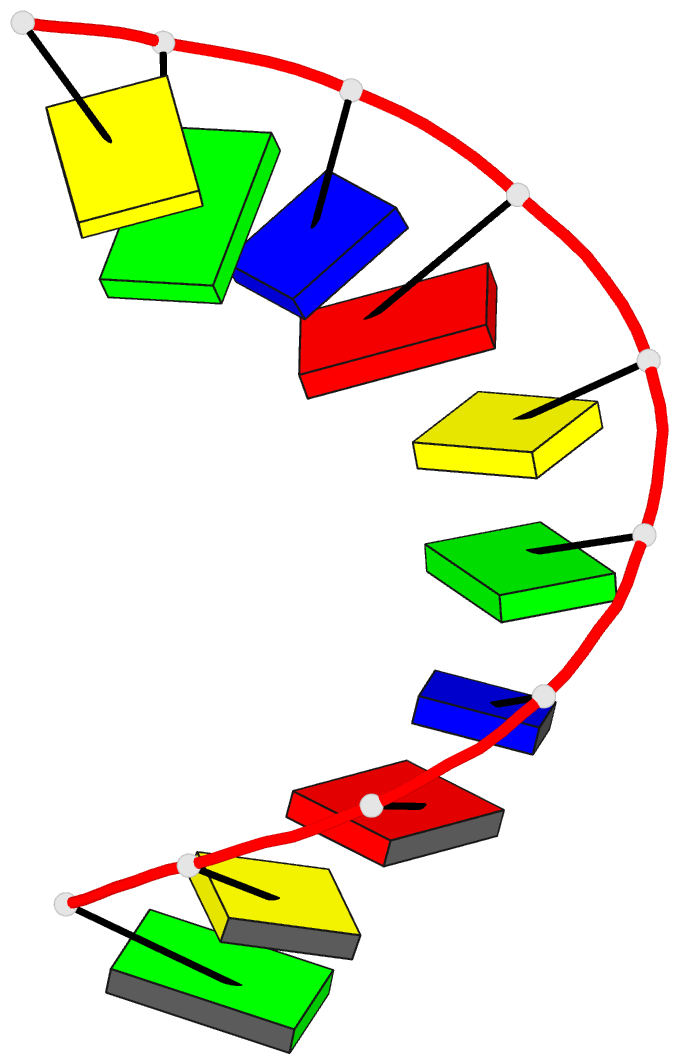
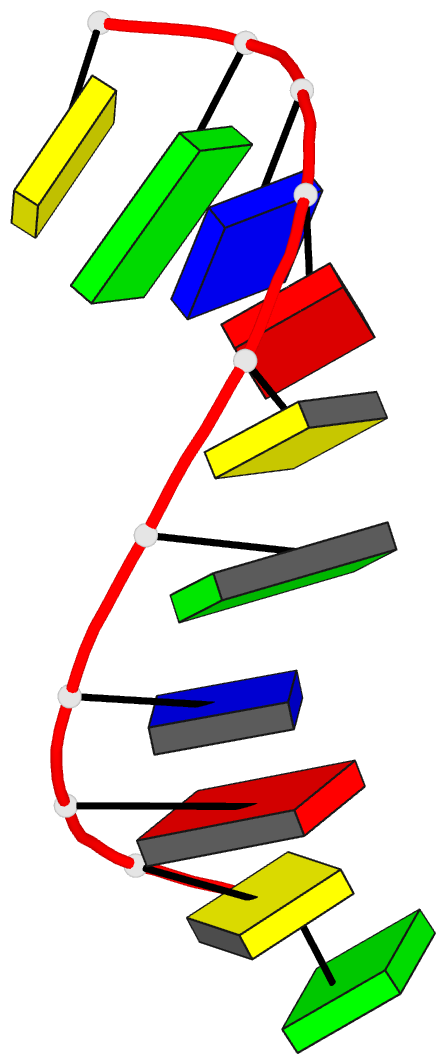
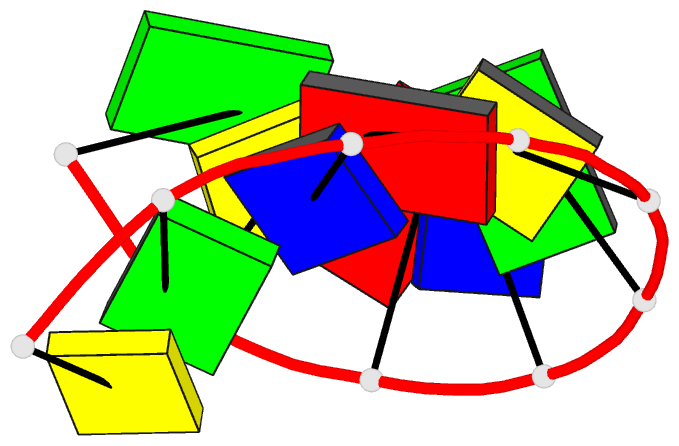
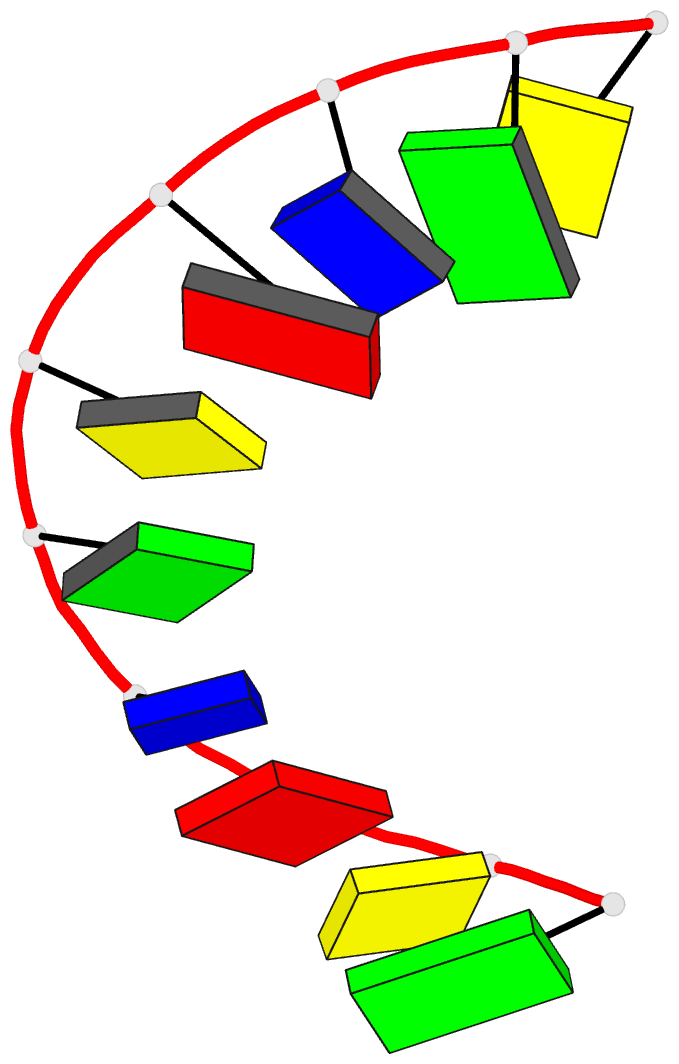
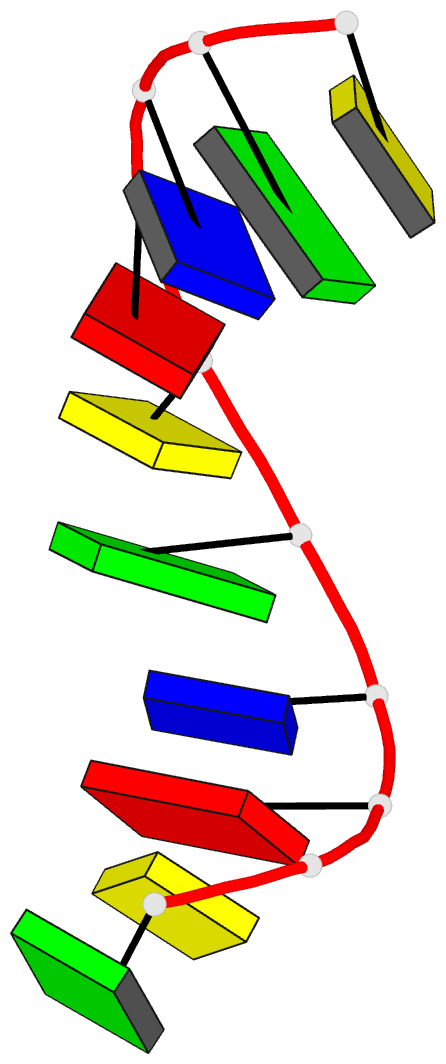
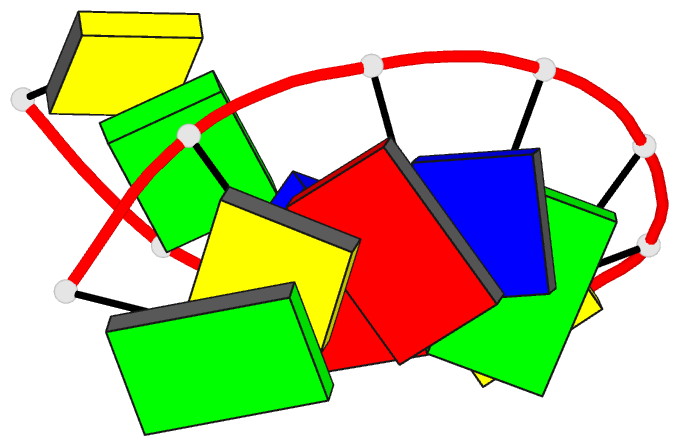
- Extensive amphimorphism in DNA: three stable
conformations for the decadeoxynucleotide
d(gcatgcatgc)
- Reference
-
Thirugnanasambandam A, Karthik S, Artheswari G, Gautham N
(2016): "DNA
polymorphism in crystals: three stable conformations for
the decadeoxynucleotide d(GCATGCATGC)." Acta
Crystallogr D Struct Biol, 72,
780-788. doi: 10.1107/S2059798316006306.
- Abstract
- High-resolution structures of DNA fragments determined
using X-ray crystallography or NMR have provided
descriptions of a veritable alphabet of conformations. They
have also shown that DNA is a flexible molecule, with some
sequences capable of adopting two different structures.
Here, the first example is presented of a DNA fragment that
can assume three different and distinct conformations in
crystals. The decanucleotide d(GCATGCATGC) was previously
reported to assume a single-stranded double-fold structure.
In one of the two crystal structures described here the
decamer assumes both the double-fold conformation and,
simultaneously, the more conventional B-type double-helical
structure. In the other crystal the sequence assumes the
A-type double-helical conformation. These results, taken
together with CD spectra, which were recorded as the
decamer was titrated against four metal ions and spermine,
indicate that the molecule may exist as a mixed population
of structures in solution. Small differences in the
environmental conditions, such as the concentration of
metal ion, may decide which of these crystallizes out. The
results also support the idea that it may be possible for
DNA to change its structure to suit the binding
requirements of proteins or drugs.