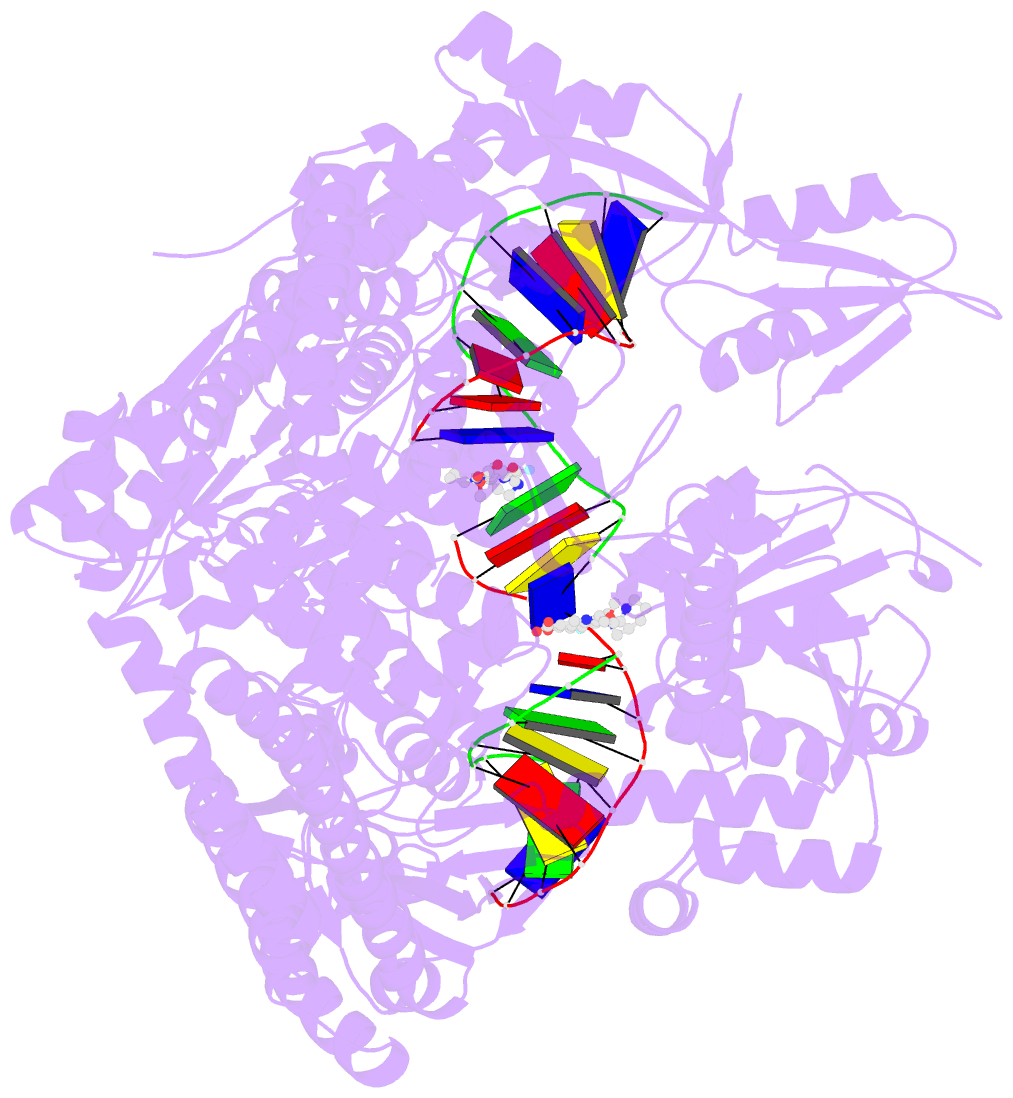
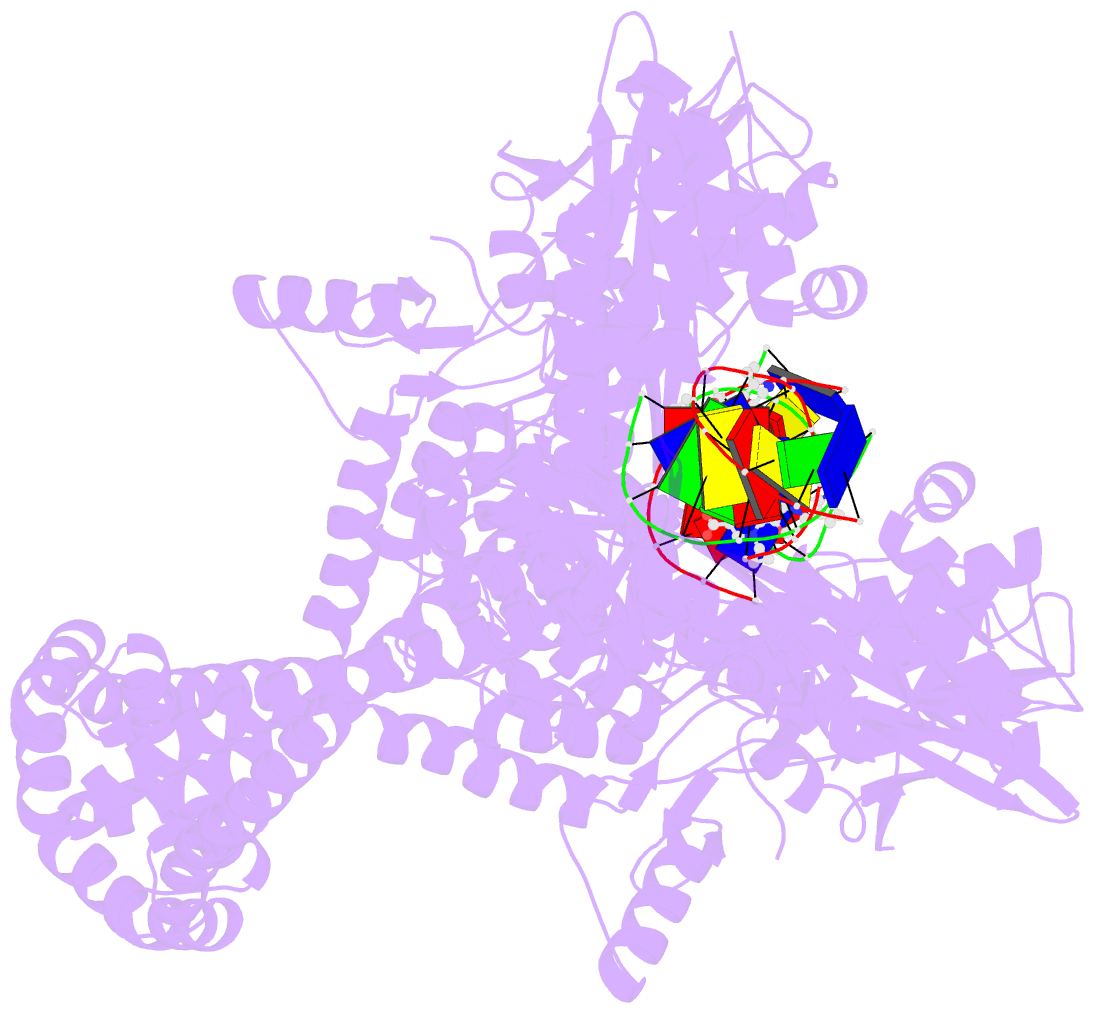
Summary information and primary citation
- PDB-id
-
5bta;
DSSR-derived features in text and
JSON formats
- Class
- isomerase-DNA
- Method
- X-ray (2.55 Å)
- Summary
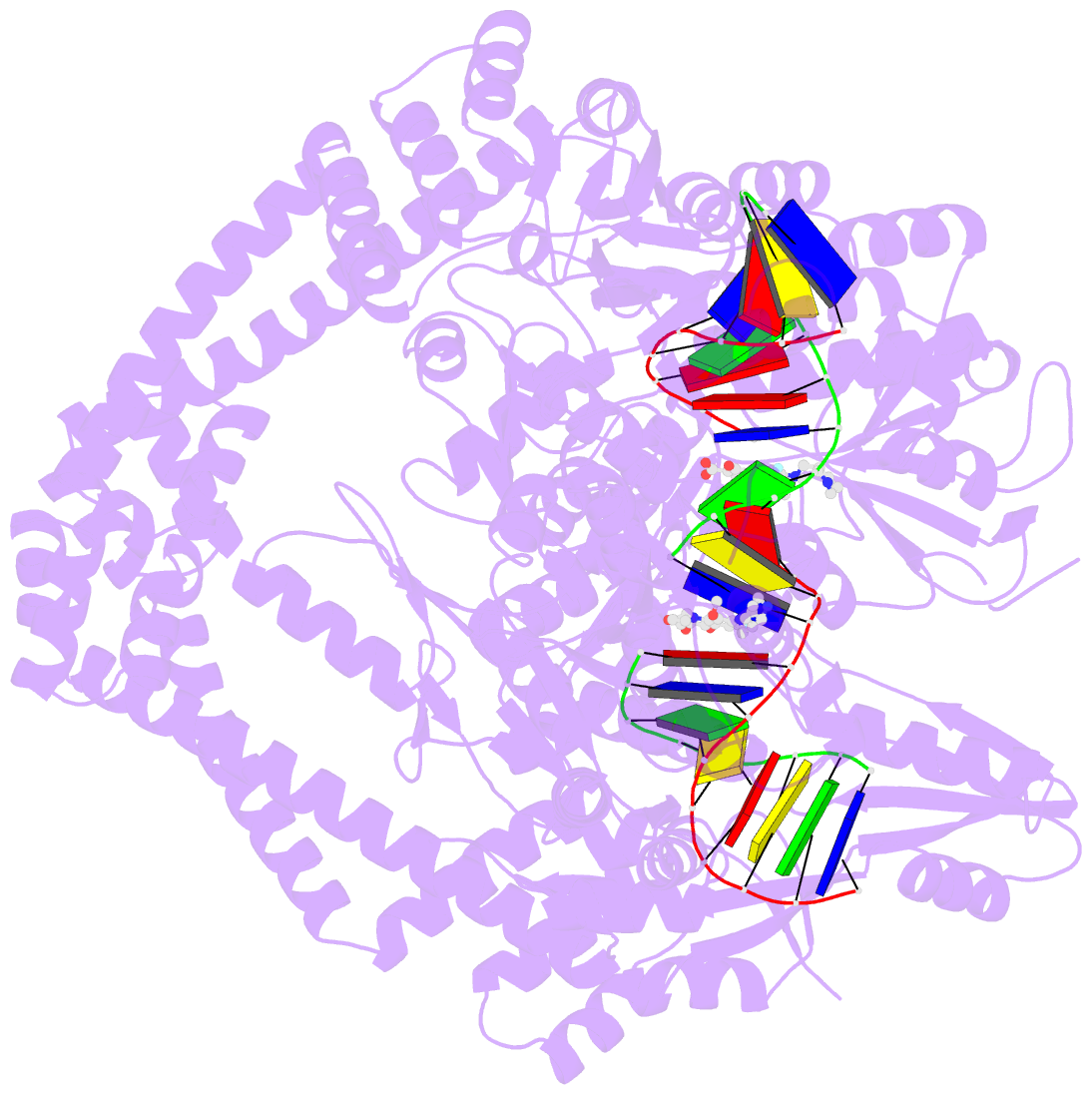
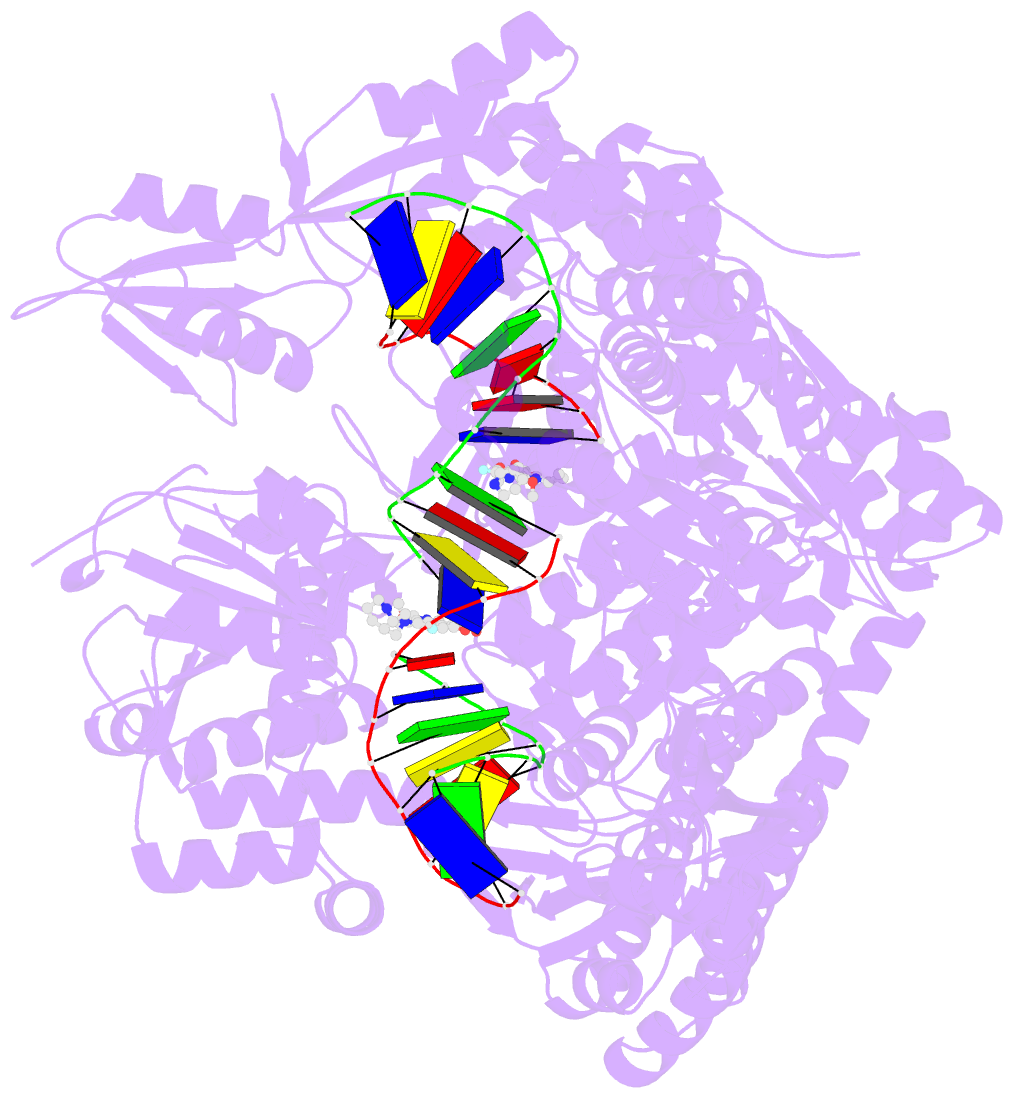
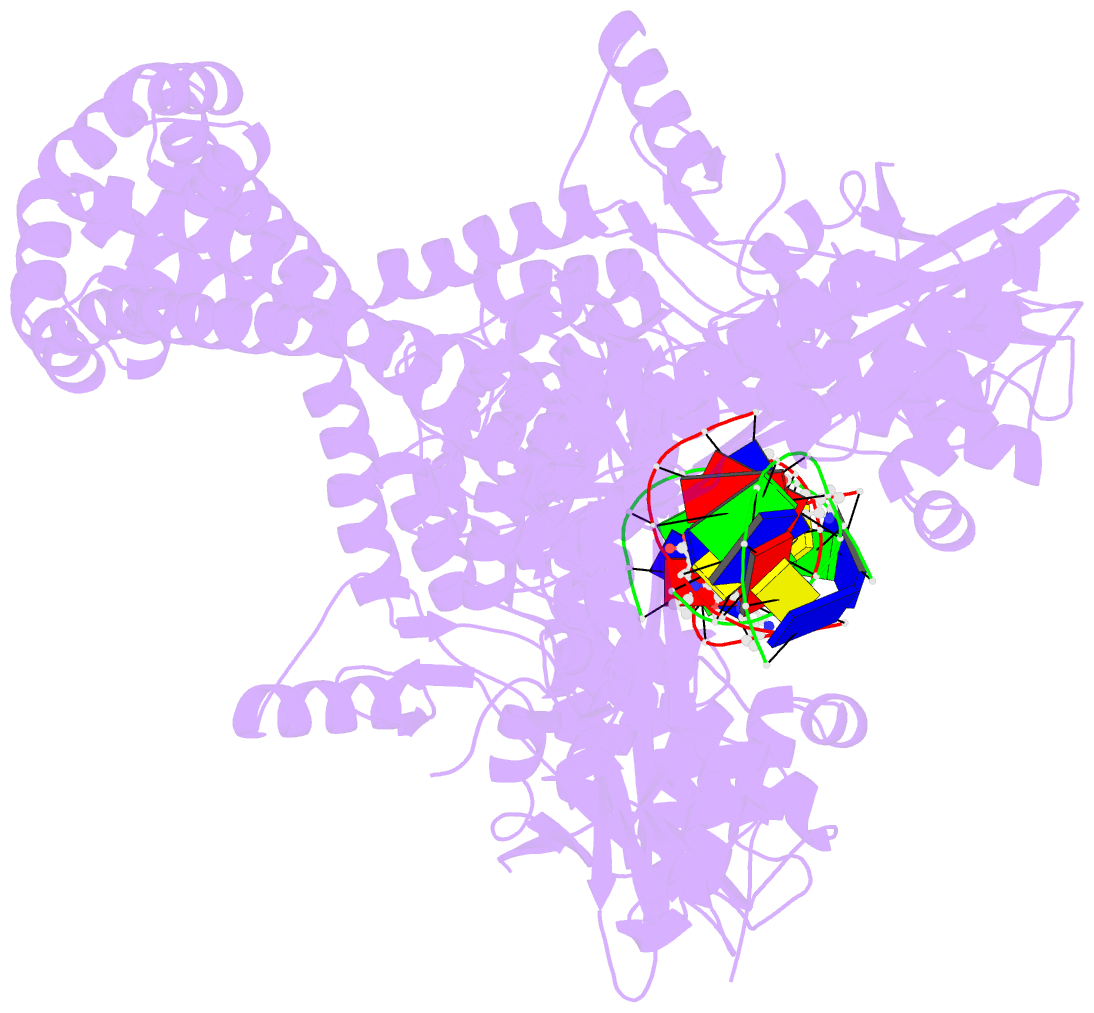
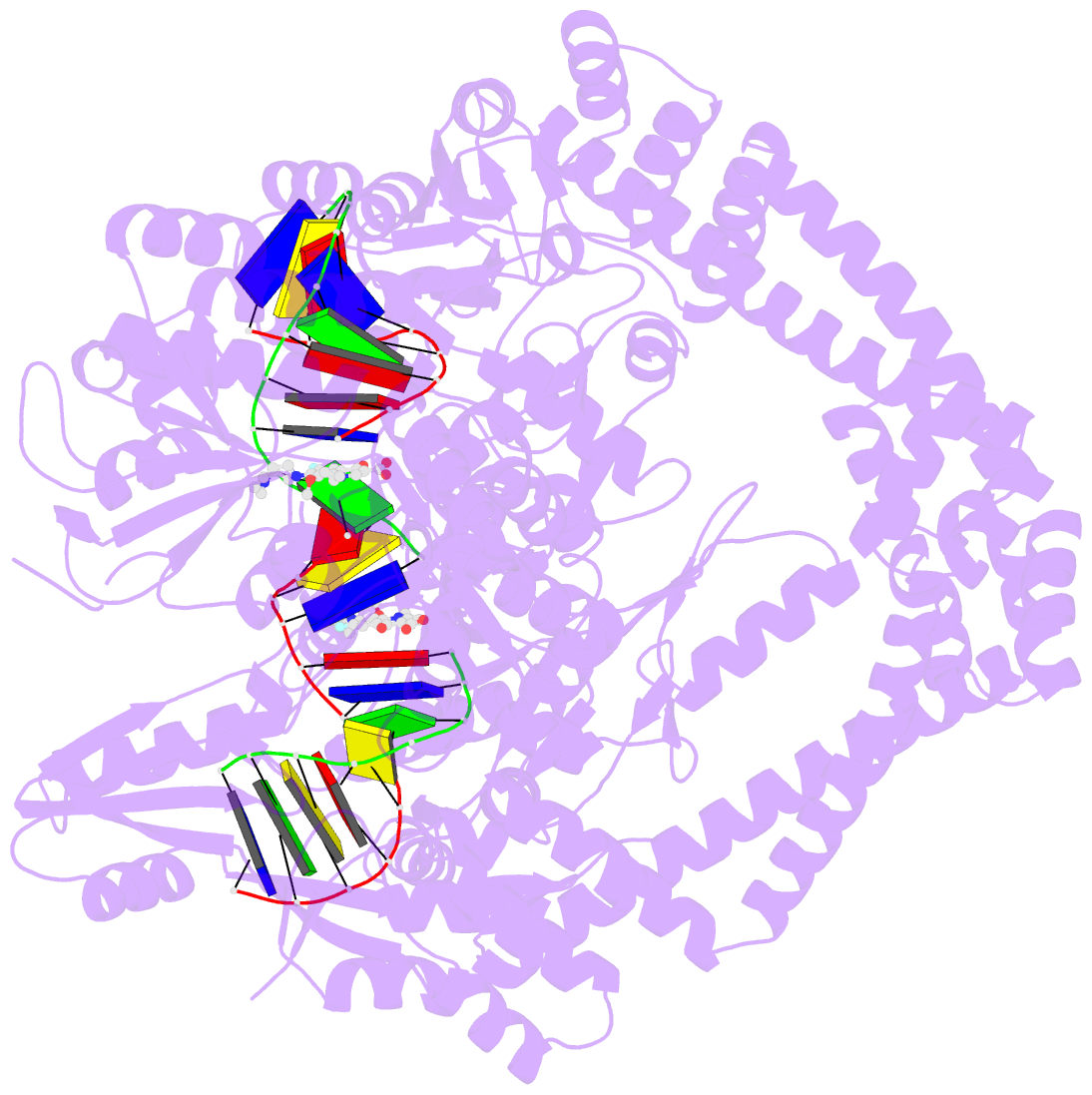
- Crystal structure of a topoisomerase ii complex
- Reference
-
Blower TR, Williamson BH, Kerns RJ, Berger JM (2016):
"Crystal
structure and stability of gyrase-fluoroquinolone cleaved
complexes from Mycobacterium tuberculosis."
Proc.Natl.Acad.Sci.USA, 113,
1706-1713. doi: 10.1073/pnas.1525047113.
- Abstract
- Mycobacterium tuberculosis (Mtb) infects one-third of
the world's population and in 2013 accounted for 1.5
million deaths. Fluoroquinolone antibacterials, which
target DNA gyrase, are critical agents used to halt the
progression from multidrug-resistant tuberculosis to
extensively resistant disease; however, fluoroquinolone
resistance is emerging and new ways to bypass resistance
are required. To better explain known differences in
fluoroquinolone action, the crystal structures of the WT
Mtb DNA gyrase cleavage core and a
fluoroquinolone-sensitized mutant were determined in
complex with DNA and five fluoroquinolones. The structures,
ranging from 2.4- to 2.6-Å resolution, show that the
intrinsically low susceptibility of Mtb to fluoroquinolones
correlates with a reduction in contacts to the water shell
of an associated magnesium ion, which bridges
fluoroquinolone-gyrase interactions. Surprisingly, the
structural data revealed few differences in
fluoroquinolone-enzyme contacts from drugs that have very
different activities against Mtb. By contrast, a stability
assay using purified components showed a clear relationship
between ternary complex reversibility and inhibitory
activities reported with cultured cells. Collectively, our
data indicate that the stability of fluoroquinolone/DNA
interactions is a major determinant of fluoroquinolone
activity and that moieties that have been appended to the
C7 position of different quinolone scaffolds do not take
advantage of specific contacts that might be made with the
enzyme. These concepts point to new approaches for
developing quinolone-class compounds that have increased
potency against Mtb and the ability to overcome
resistance.