Summary information and primary citation
- PDB-id
-
4glc;
DSSR-derived features in text and
JSON formats
- Class
- DNA
- Method
- X-ray (1.831 Å)
- Summary
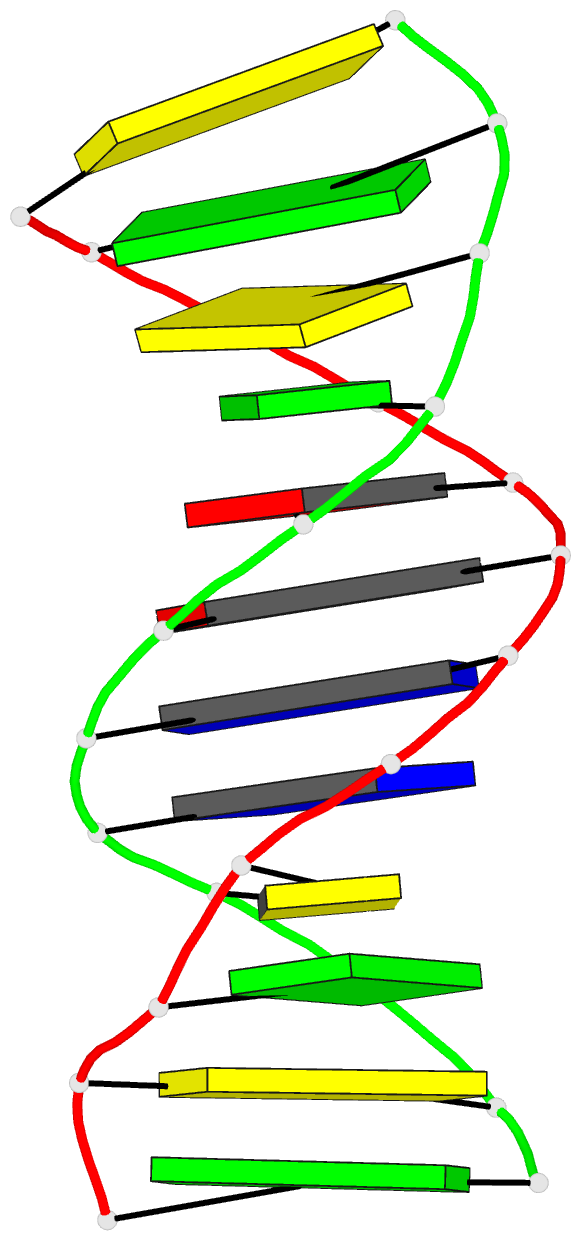
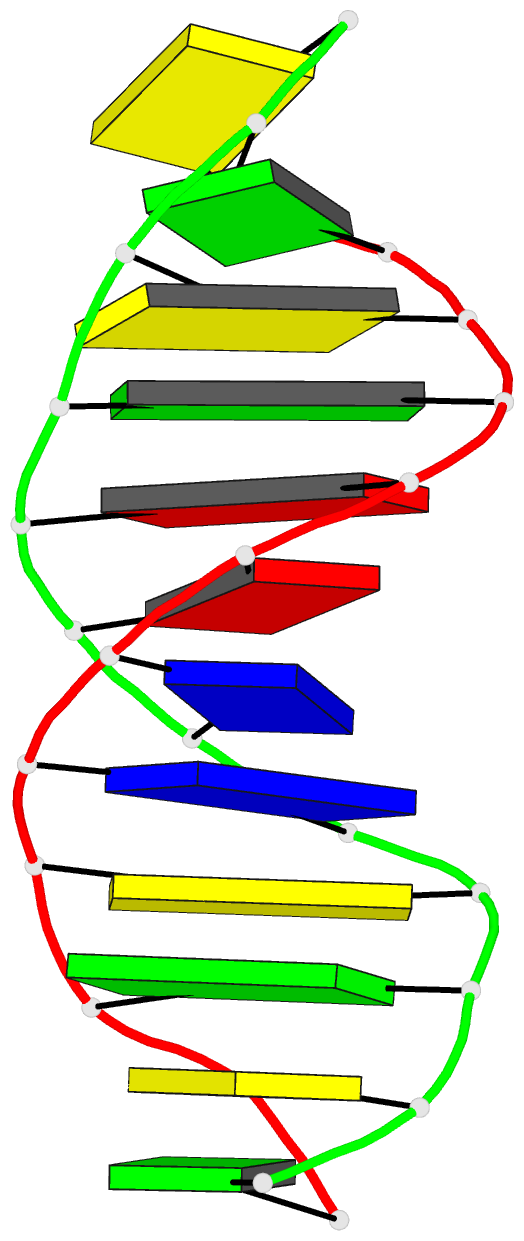
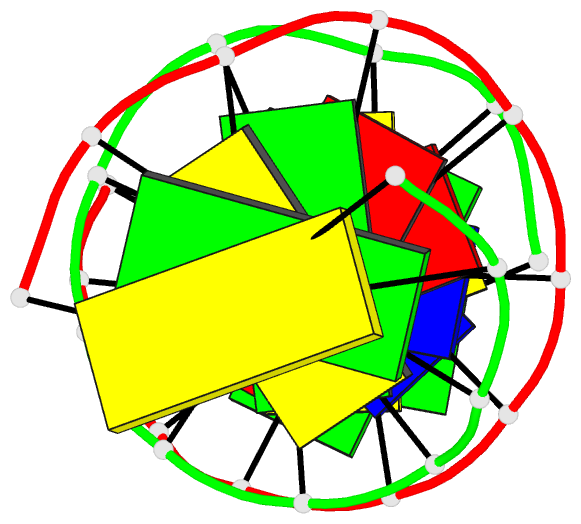
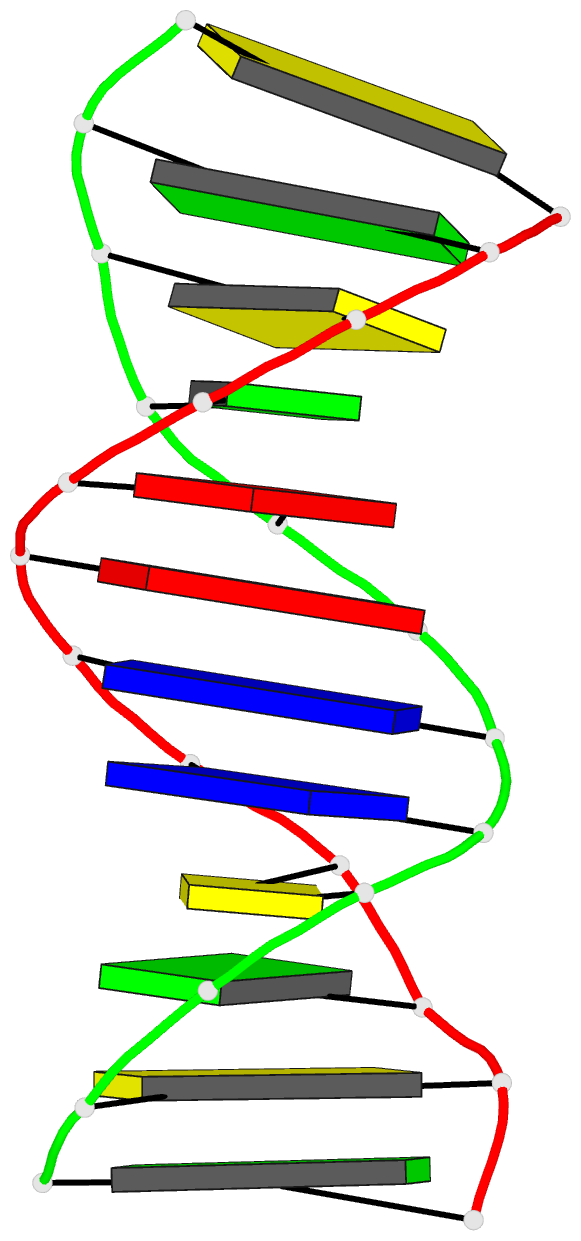
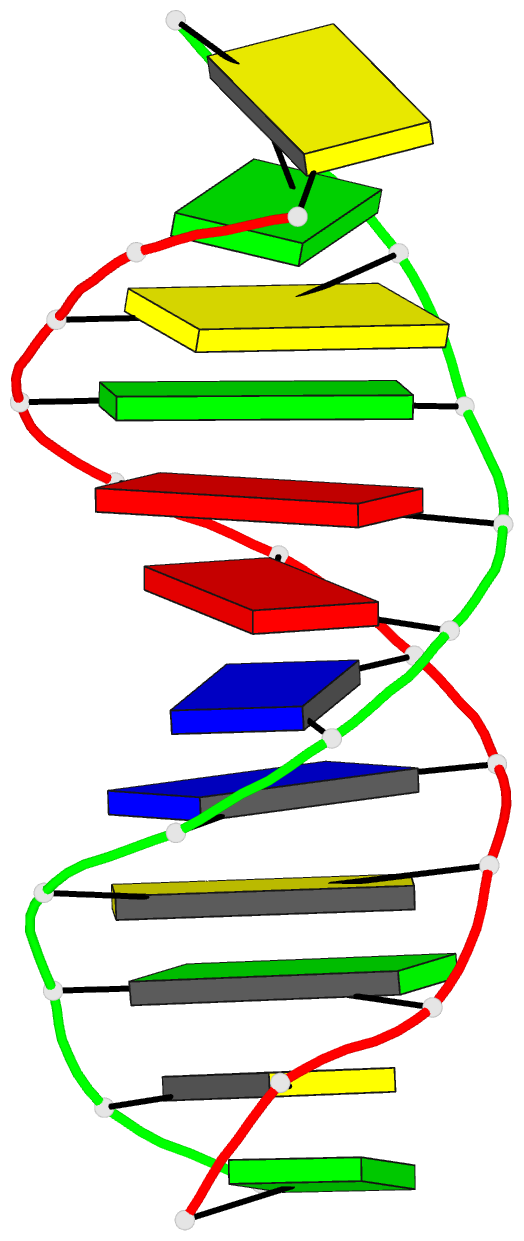
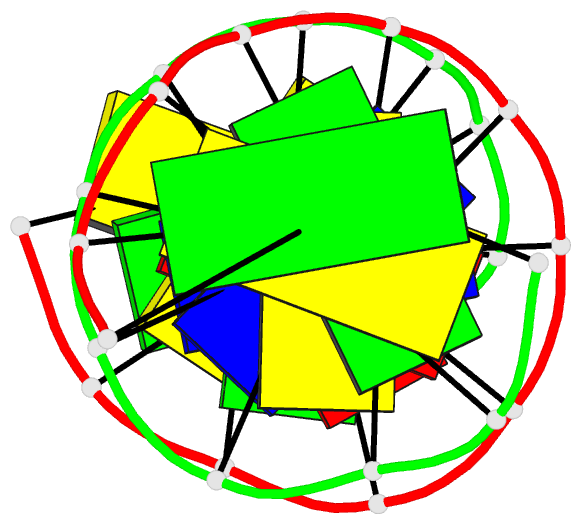
- DNA dodecamer containing 5-hydroxymethyl-cytosine
- Reference
-
Renciuk D, Blacque O, Vorlickova M, Spingler B (2013):
"Crystal
structures of B-DNA dodecamer containing the epigenetic
modifications 5-hydroxymethylcytosine or
5-methylcytosine." Nucleic Acids Res.,
41, 9891-9900. doi: 10.1093/nar/gkt738.
- Abstract
- 5-Hydroxymethylcytosine (5-hmC) was recently identified
as a relatively frequent base in eukaryotic genomes. Its
physiological function is still unclear, but it is supposed
to serve as an intermediate in DNA de novo demethylation.
Using X-ray diffraction, we solved five structures of four
variants of the d(CGCGAATTCGCG) dodecamer, containing
either 5-hmC or 5-methylcytosine (5-mC) at position 3 or at
position 9. The observed resolutions were between 1.42 and
1.99 Å. Cytosine modification in all cases influences
neither the whole B-DNA double helix structure nor the
modified base pair geometry. The additional hydroxyl group
of 5-hmC with rotational freedom along the C5-C5A bond is
preferentially oriented in the 3' direction. A comparison
of thermodynamic properties of the dodecamers shows no
effect of 5-mC modification and a sequence-dependent only
slight destabilizing effect of 5-hmC modification. Also
taking into account the results of a previous functional
study [Münzel et al. (2011) (Improved synthesis and
mutagenicity of oligonucleotides containing
5-hydroxymethylcytosine, 5-formylcytosine and
5-carboxylcytosine. Chem. Eur. J., 17, 13782-13788)], we
conclude that the 5 position of cytosine is an ideal place
to encode epigenetic information. Like this, neither the
helical structure nor the thermodynamics are changed, and
polymerases cannot distinguish 5-hmC and 5-mC from
unmodified cytosine, all these effects are making the
former ones non-mutagenic.