Summary information and primary citation
- PDB-id
-
4aik;
DSSR-derived features in text and
JSON formats
- Class
- transcription
- Method
- X-ray (1.85 Å)
- Summary
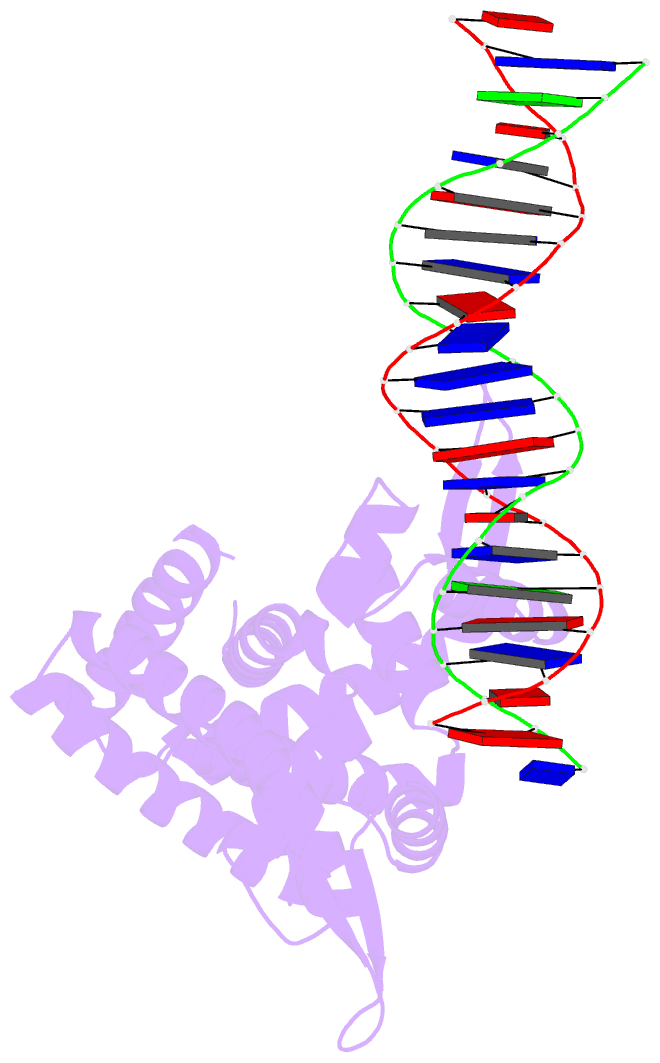
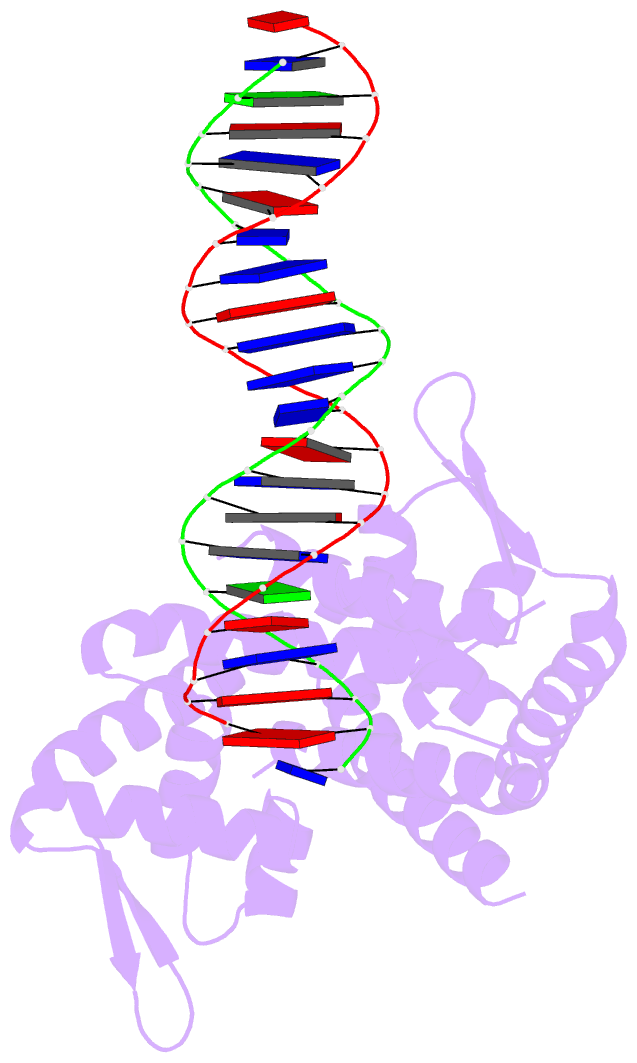
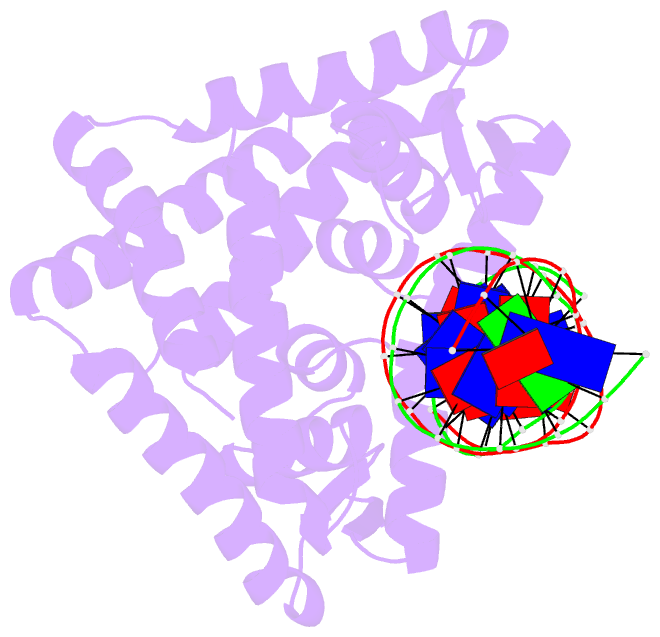
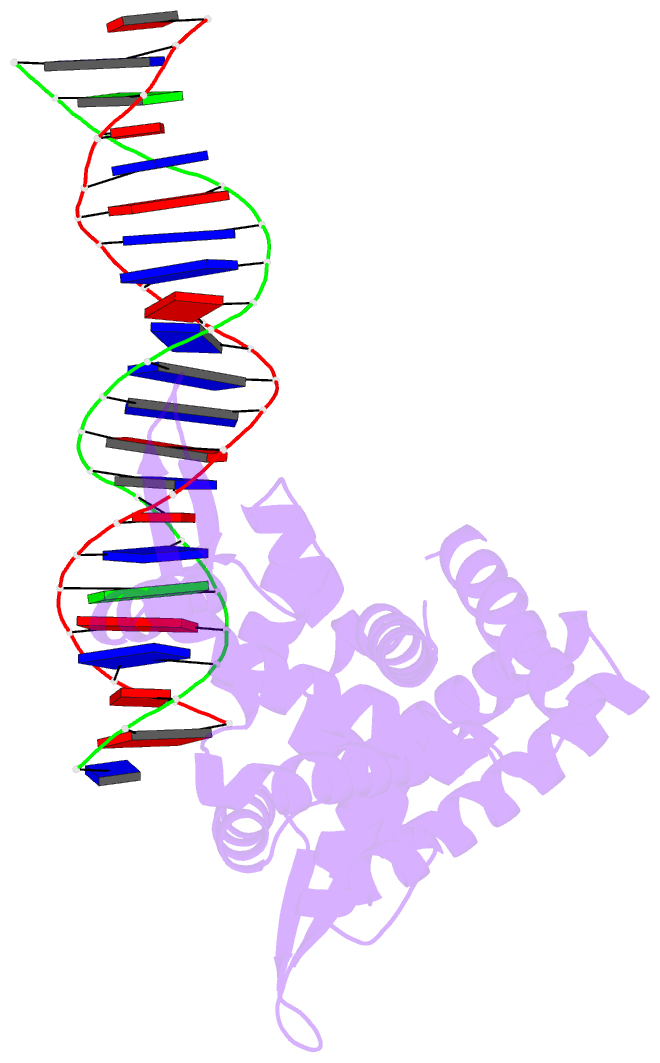
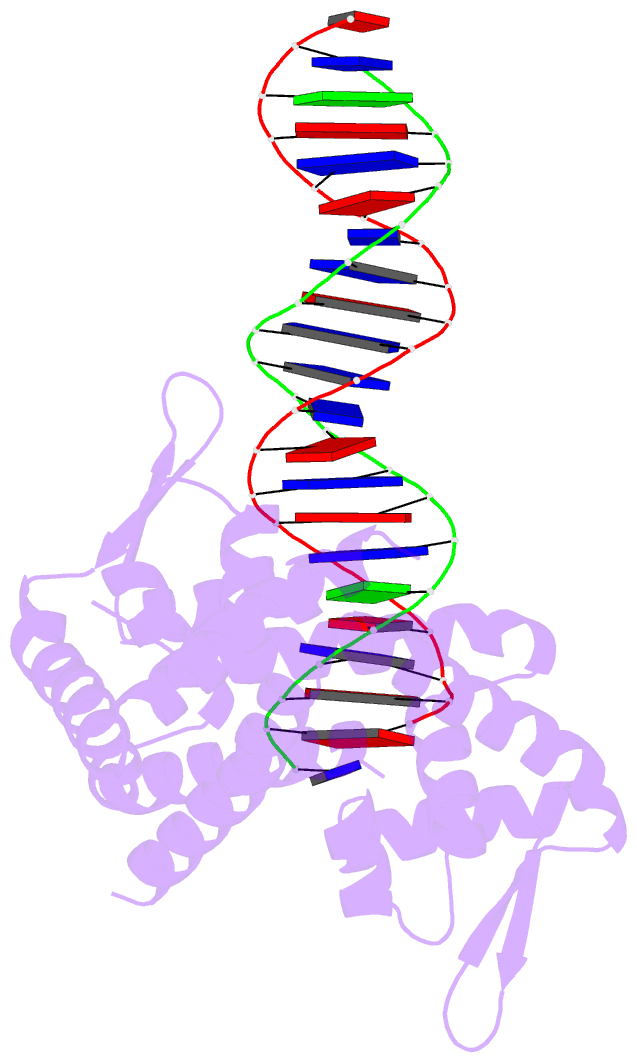
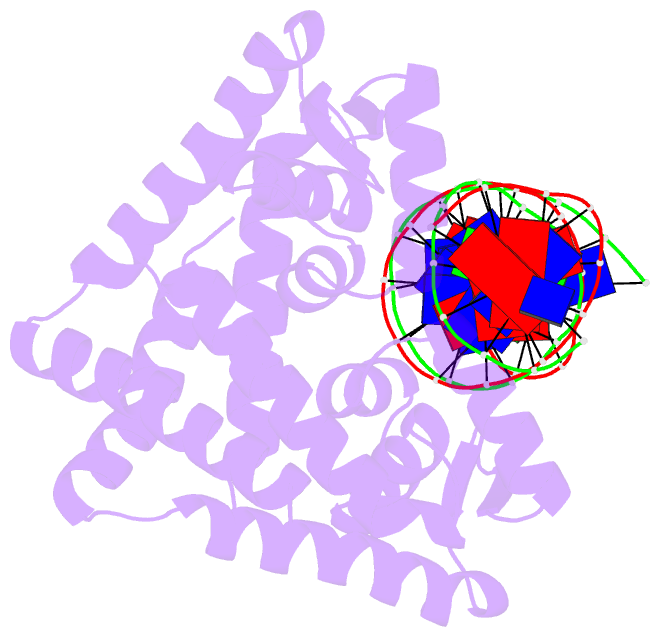
- Crystal structure of rova from yersinia in complex with
an invasin promoter fragment
- Reference
-
Quade N, Mendonca C, Herbst K, Heroven AK, Ritter C,
Heinz DW, Dersch P (2012): "Structural
Basis for Intrinsic Thermosensing by the Master Virulence
Regulator Rova of Yersinia." J.Biol.Chem.,
287, 35796. doi: 10.1074/JBC.M112.379156.
- Abstract
- Pathogens often rely on thermosensing to adjust
virulence gene expression. In yersiniae, important
virulence-associated traits are under the control of the
master regulator RovA, which uses a built-in thermosensor
to control its activity. Thermal upshifts encountered upon
host entry induce conformational changes in the RovA dimer
that attenuate DNA binding and render the protein more
susceptible to proteolysis. Here, we report the crystal
structure of RovA in the free and DNA-bound forms and
provide evidence that thermo-induced loss of RovA activity
is promoted mainly by a thermosensing loop in the
dimerization domain and residues in the adjacent C-terminal
helix. These determinants allow partial unfolding of the
regulator upon an upshift to 37 °C. This structural
distortion is transmitted to the flexible DNA-binding
domain of RovA. RovA contacts mainly the DNA backbone in a
low-affinity binding mode, which allows the immediate
release of RovA from its operator sites. We also show that
SlyA, a close homolog of RovA from Salmonella with a very
similar structure, is not a thermosensor and remains active
and stable at 37 °C. Strikingly, changes in only three
amino acids, reflecting evolutionary replacements in SlyA,
result in a complete loss of the thermosensing properties
of RovA and prevent degradation. In conclusion, only minor
alterations can transform a thermotolerant regulator into a
thermosensor that allows adjustment of virulence and
fitness determinants to their thermal environment.