Summary information and primary citation
- PDB-id
-
3rje;
DSSR-derived features in text and
JSON formats
- Class
- transferase, lyase-DNA
- Method
- X-ray (2.1 Å)
- Summary
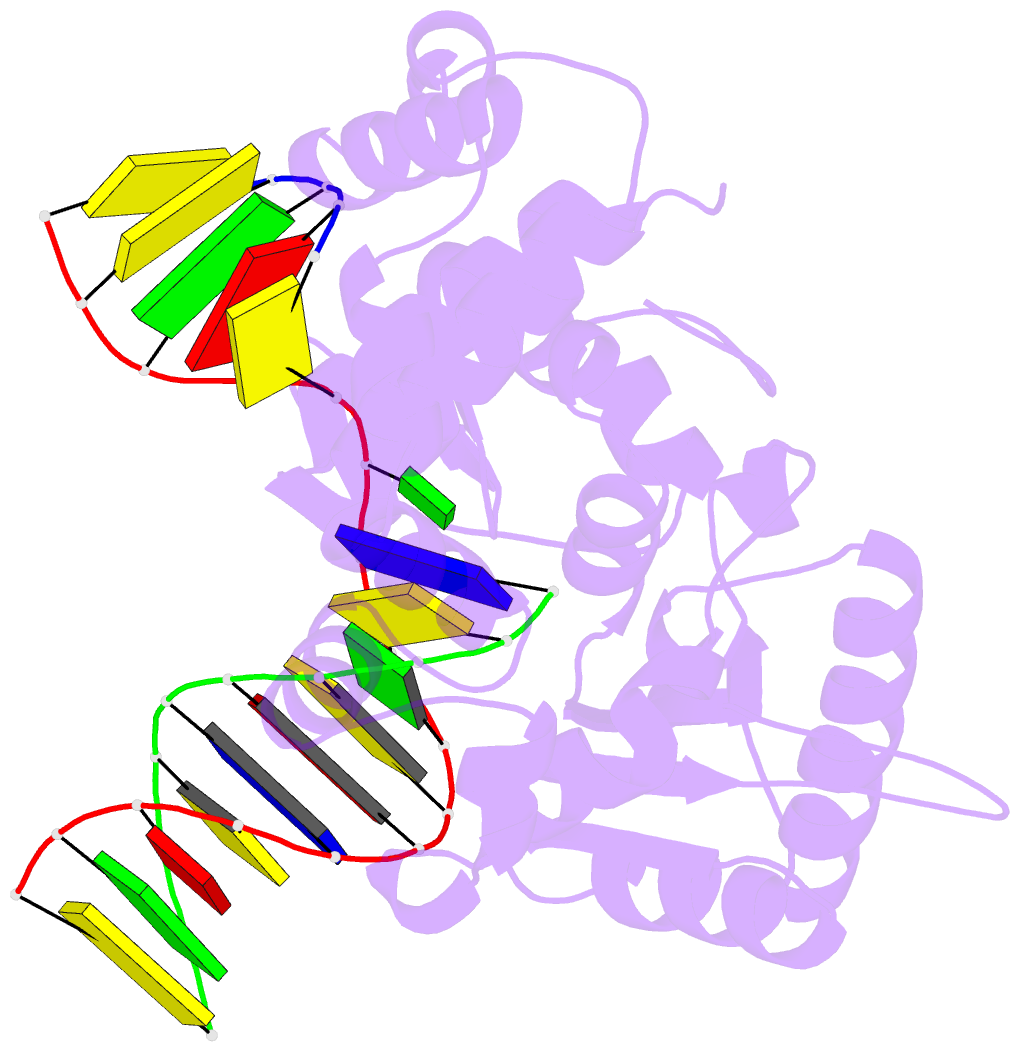
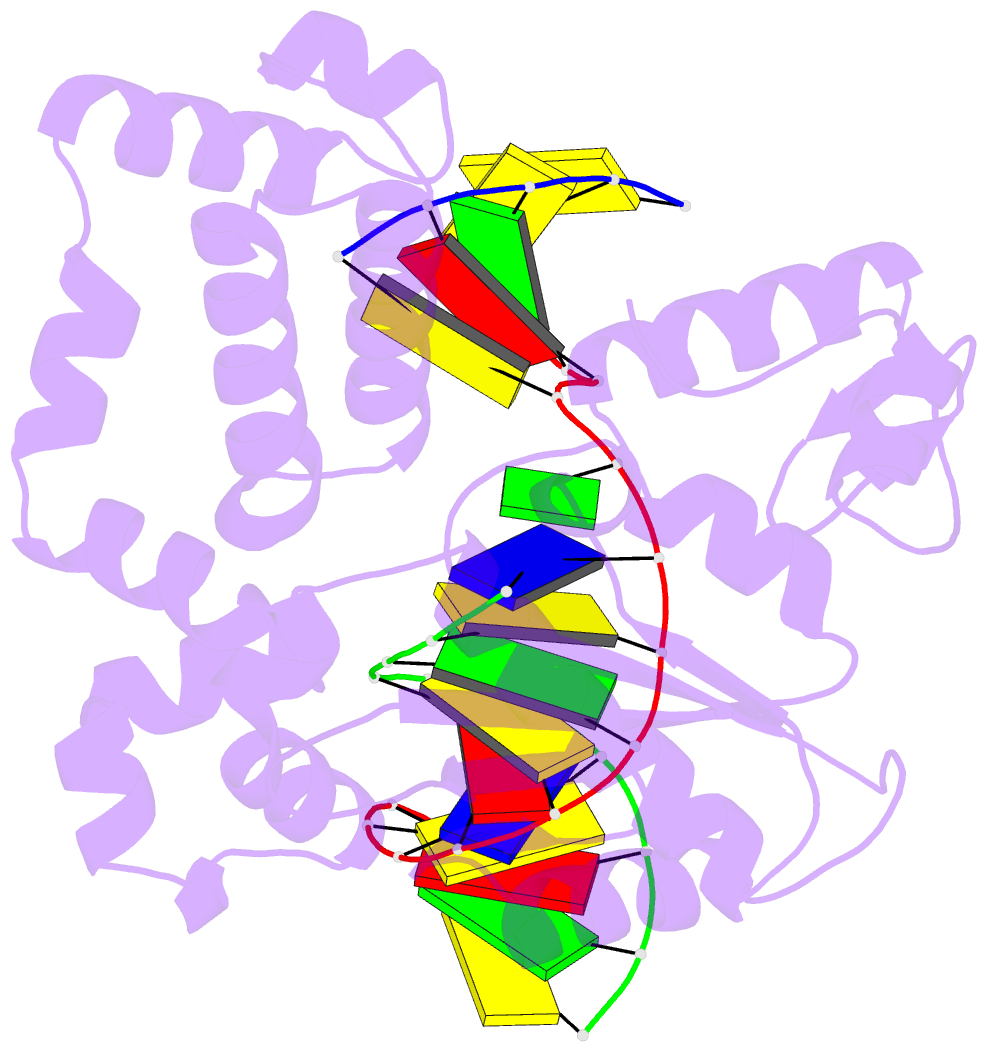
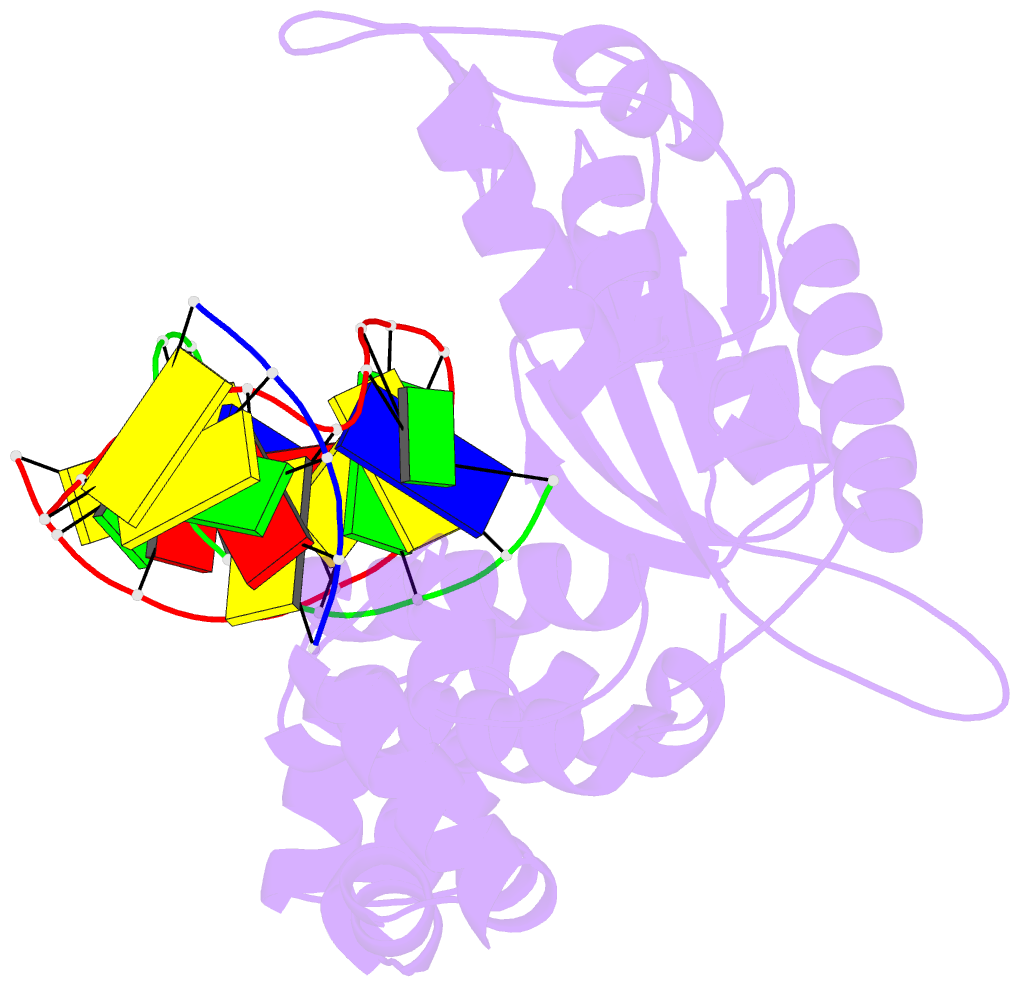
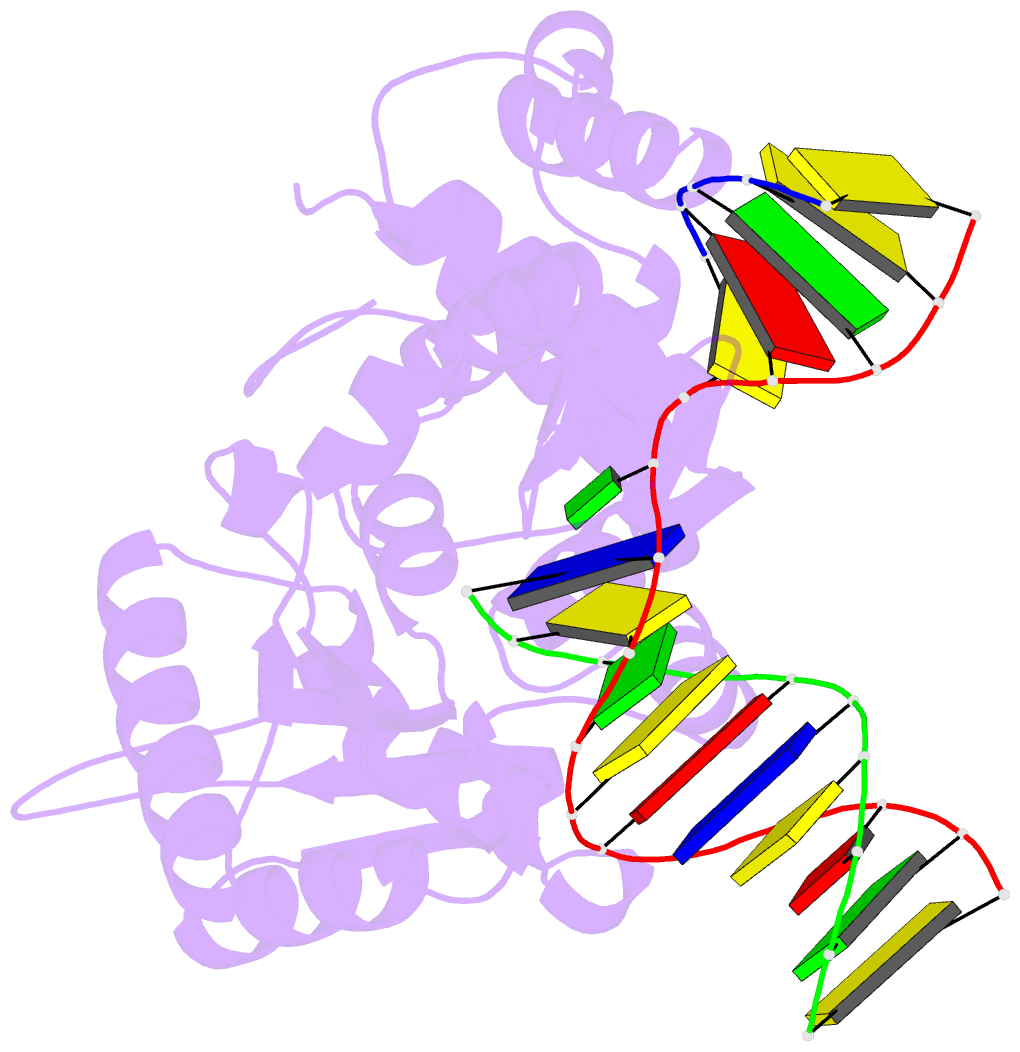
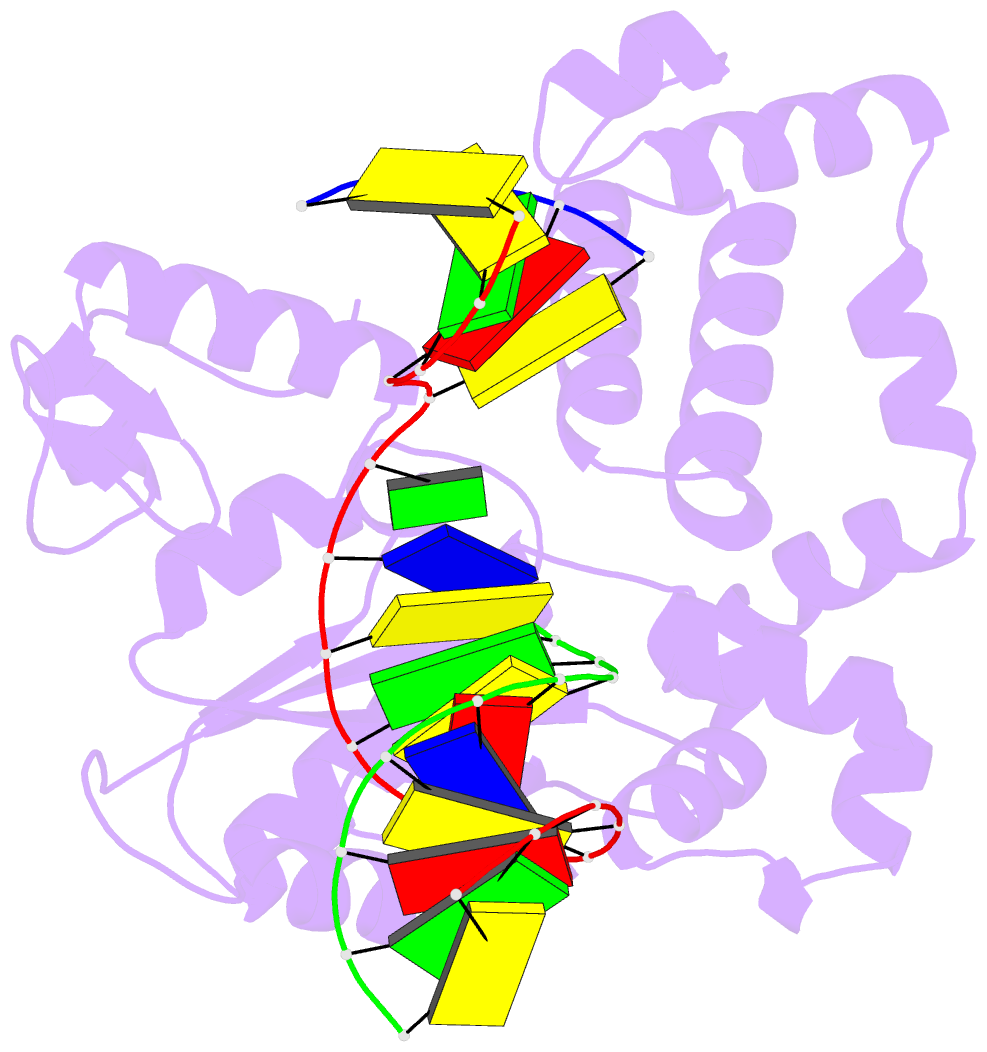
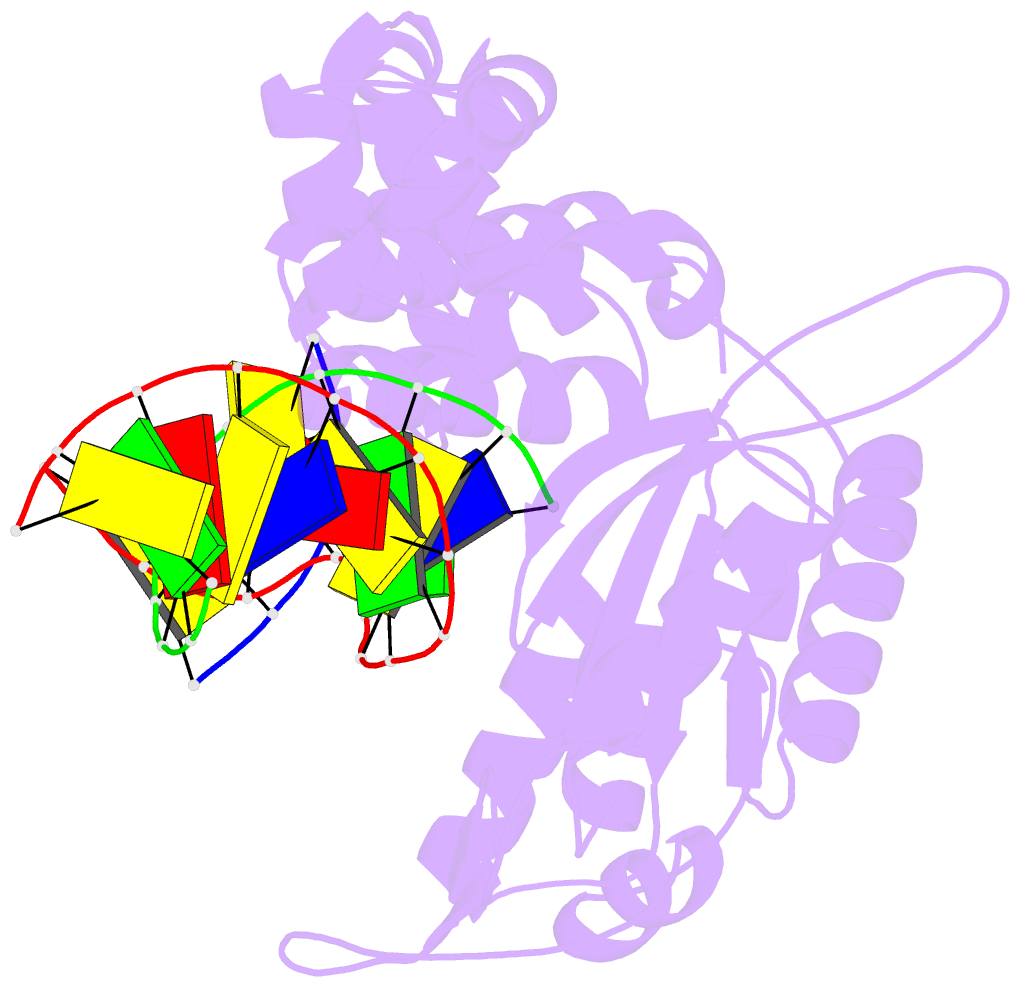
- Ternary complex of DNA polymerase beta with a gapped
DNA containing 8odg at template position
- Reference
-
Batra VK, Shock DD, Beard WA, McKenna CE, Wilson SH
(2012): "Binary
complex crystal structure of DNA polymerase beta reveals
multiple conformations of the templating 8-oxoguanine
lesion." Proc.Natl.Acad.Sci.USA,
109, 113-118. doi: 10.1073/pnas.1112235108.
- Abstract
- Oxidation of genomic DNA forms the guanine lesion
7,8-dihydro-8-oxoguanine (8-oxoG). When in the template
base position during DNA synthesis the 8-oxoG lesion has
dual coding potential by virtue of its anti- and
syn-conformations, base pairing with cytosine and adenine,
respectively. This impacts mutagenesis, because insertion
of adenine opposite template 8-oxoG can result in a G to T
transversion. DNA polymerases vary by orders of magnitude
in their preferences for mutagenic vs. error-free 8-oxoG
lesion bypass. Yet, the structural basis for lesion bypass
specificity is not well understood. The DNA base excision
repair enzyme DNA polymerase (pol) β is presented with
gap-filling synthesis opposite 8-oxoG during repair and has
similar insertion efficiencies for dCTP and dATP. We report
the structure of pol β in binary complex with template
8-oxoG in a base excision repair substrate. The structure
reveals both the syn- and anti-conformations of template
8-oxoG in the confines of the polymerase active site,
consistent with the dual coding observed kinetically for
this enzyme. A ternary complex structure of pol β with the
syn-8-oxoG:anti-A Hoogsteen base pair in the closed fully
assembled preinsertion active site is also reported. The
syn-conformation of 8-oxoG is stabilized by minor groove
hydrogen bonding between the side chain of Arg283 and O8 of
8-oxoG. An adjustment in the position of the phosphodiester
backbone 5'-phosphate enables 8-oxoG to adopt the
syn-conformation.