Summary information and primary citation
- PDB-id
-
3ksb;
DSSR-derived features in text and
JSON formats
- Class
- isomerase-DNA
- Method
- X-ray (3.5 Å)
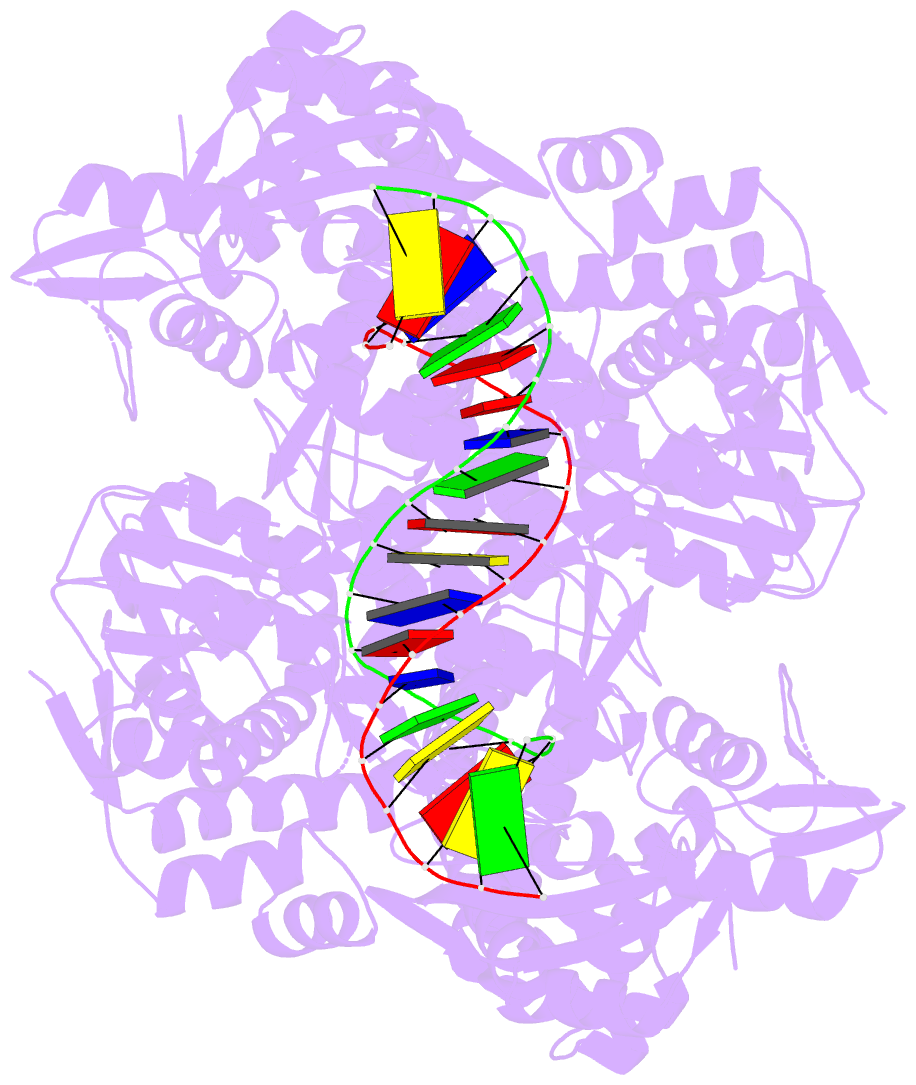
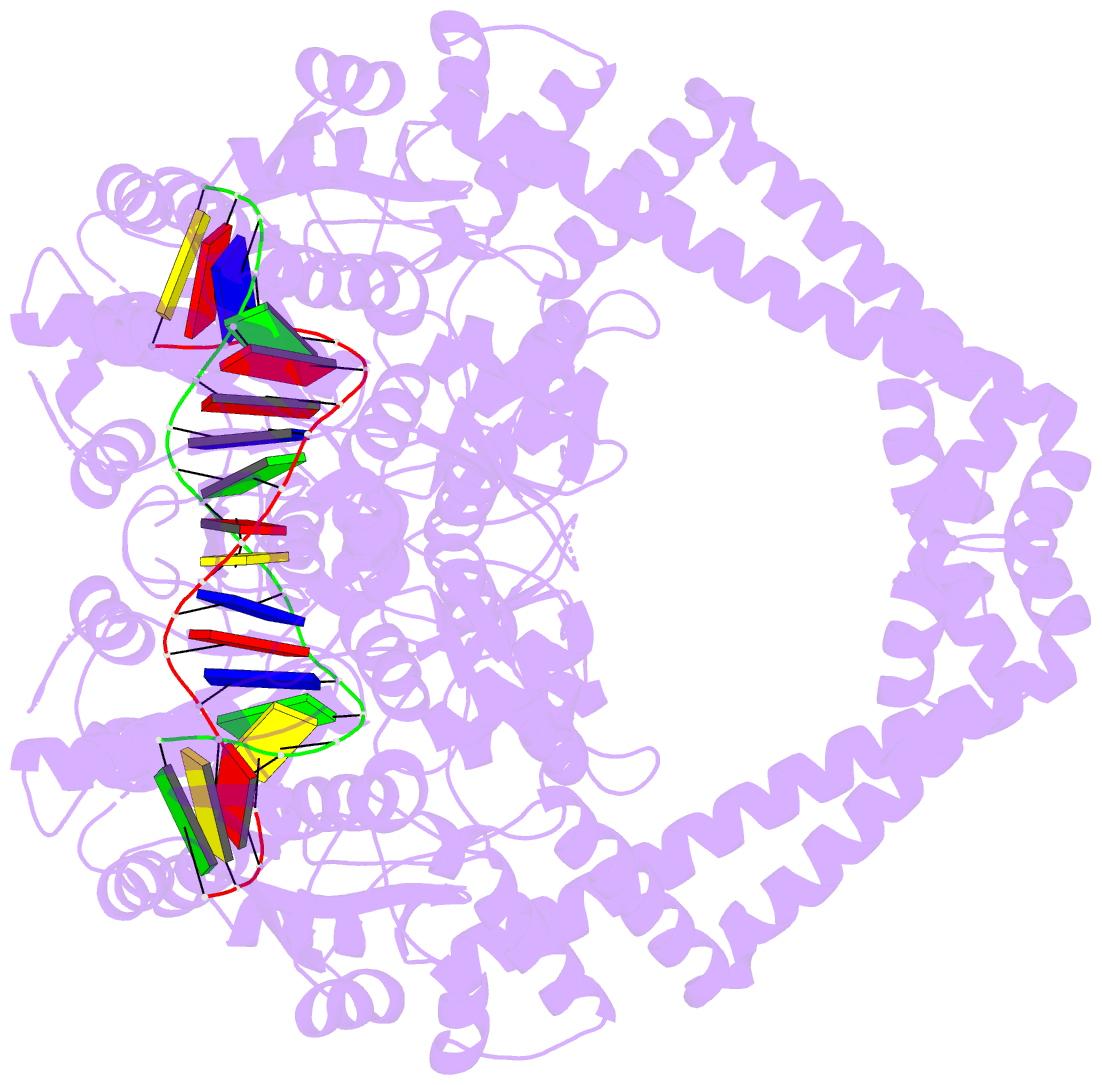
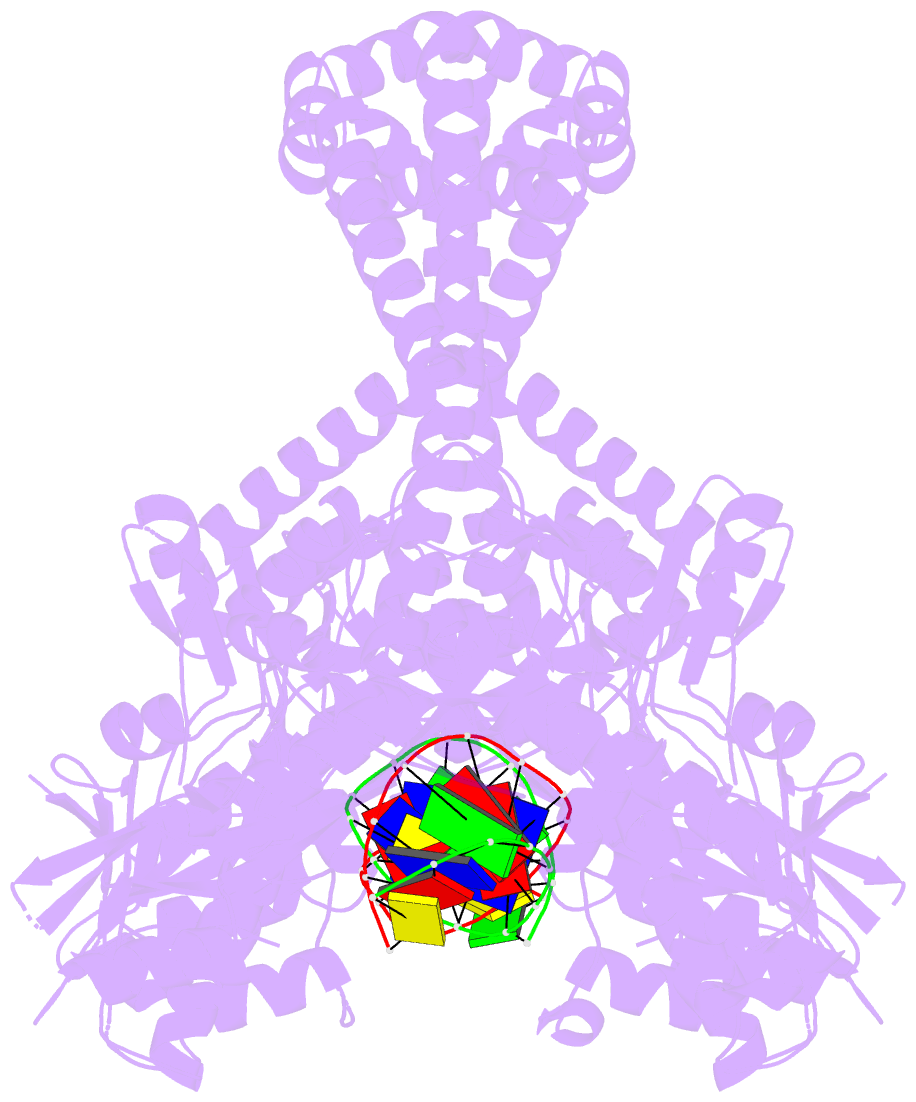
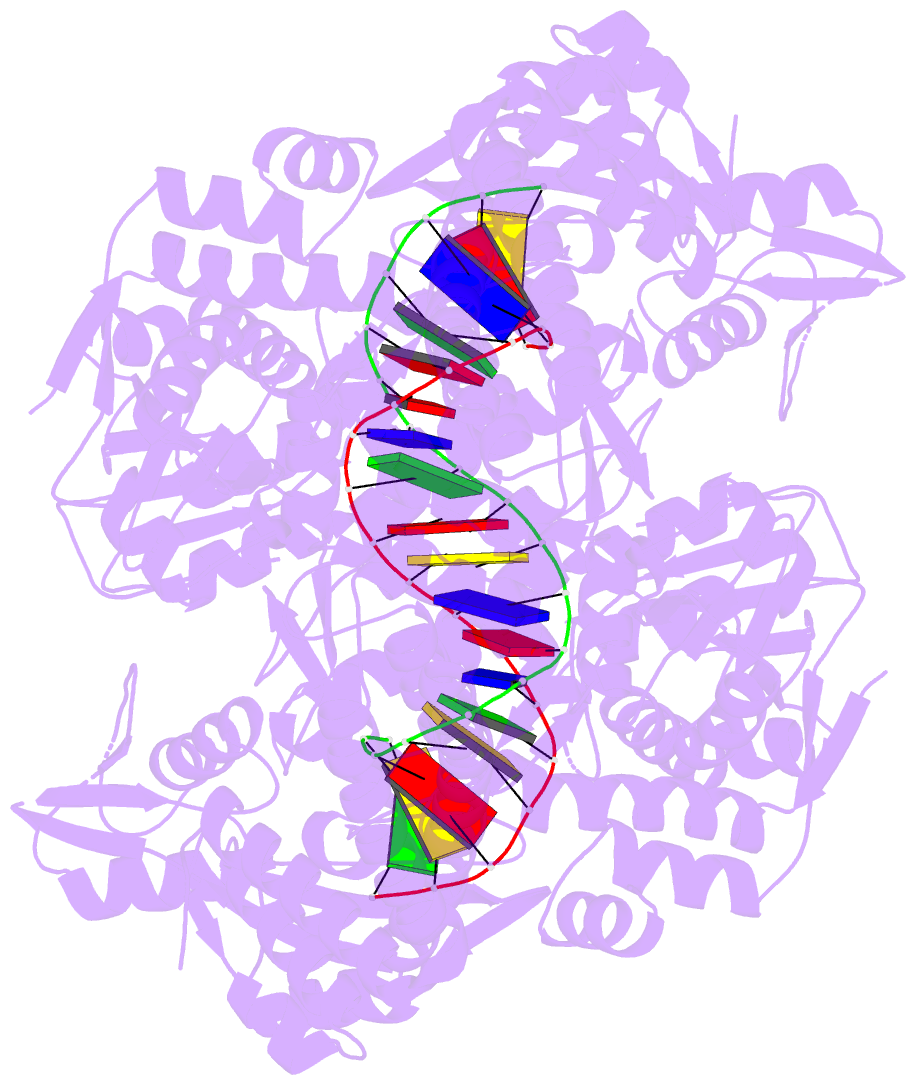
- Summary
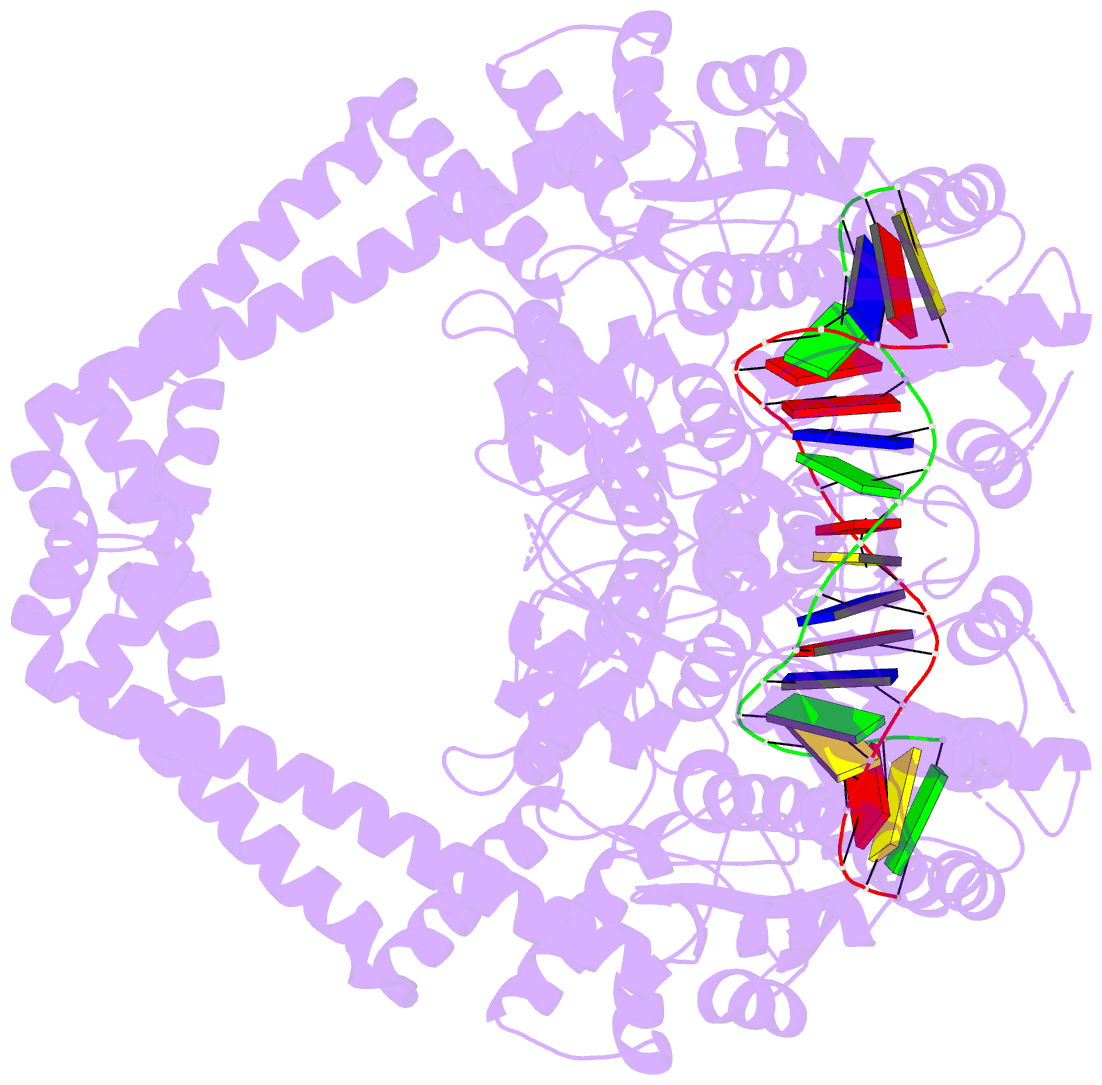
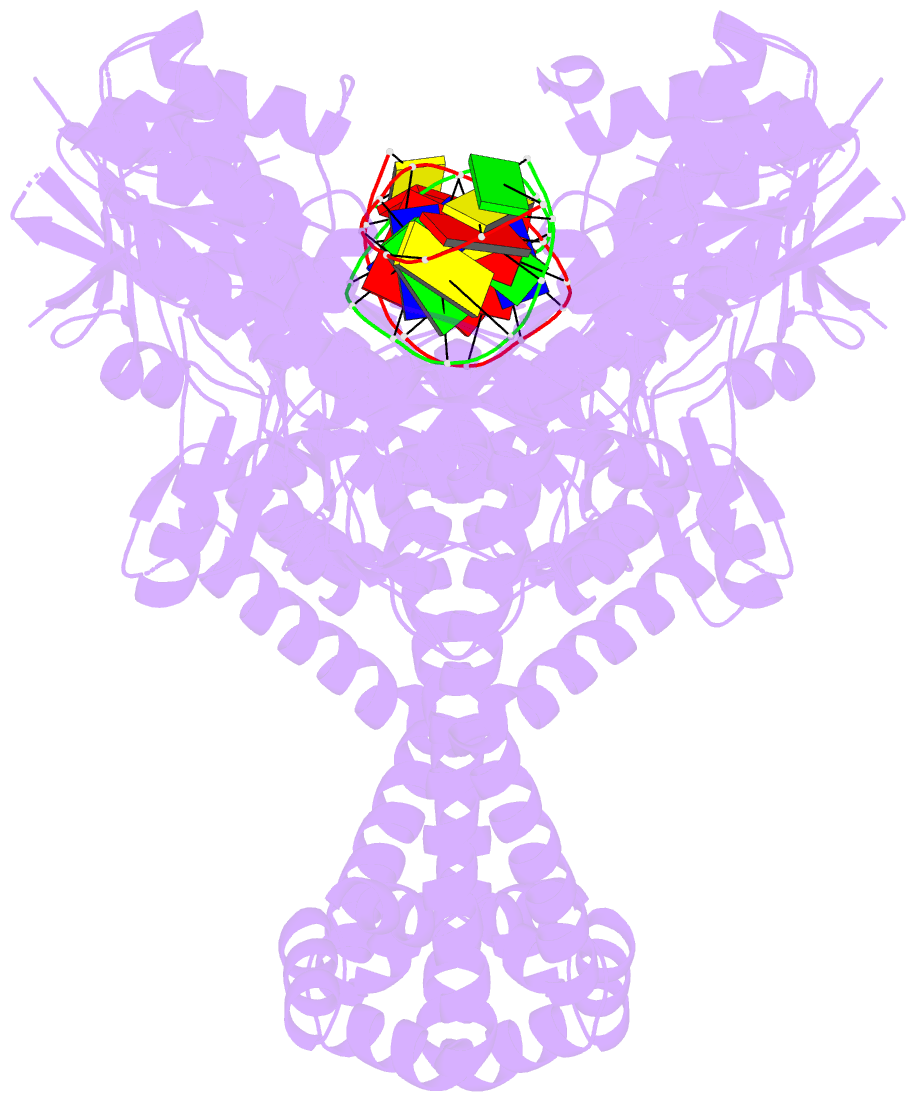
- Detailed structural insight into the DNA cleavage
complex of type iia topoisomerases (re-sealed form)
- Reference
-
Laponogov I, Pan X-S, Veselkov DA, McAuley KE, Fisher LM,
Sanderson MR (2010): "Structural
Basis of Gate-DNA Breakage and Resealing by Type II
Topoisomerases." Plos One,
5, e11338. doi: 10.1371/journal.pone.0011338.
- Abstract
- Type II DNA topoisomerases are ubiquitous enzymes with
essential functions in DNA replication, recombination and
transcription. They change DNA topology by forming a
transient covalent cleavage complex with a gate-DNA duplex
that allows transport of a second duplex though the gate.
Despite its biological importance and targeting by
anticancer and antibacterial drugs, cleavage complex
formation and reversal is not understood for any type II
enzyme. To address the mechanism, we have used X-ray
crystallography to study sequential states in the formation
and reversal of a DNA cleavage complex by topoisomerase IV
from Streptococcus pneumoniae, the bacterial type II enzyme
involved in chromosome segregation. A high resolution
structure of the complex captured by a novel antibacterial
dione reveals two drug molecules intercalated at a cleaved
B-form DNA gate and anchored by drug-specific protein
contacts. Dione release generated drug-free cleaved and
resealed DNA complexes in which the DNA gate instead adopts
an unusual A/B-form helical conformation with a Mg(2+) ion
repositioned to coordinate each scissile phosphodiester
group and promote reversible cleavage by active-site
tyrosines. These structures, the first for putative
reaction intermediates of a type II topoisomerase, suggest
how a type II enzyme reseals DNA during its normal reaction
cycle and illuminate aspects of drug arrest important for
the development of new topoisomerase-targeting
therapeutics.