Summary information and primary citation
- PDB-id
-
3i0x;
DSSR-derived features in text and
JSON formats
- Class
- hydrolase,lyase-DNA
- Method
- X-ray (1.8 Å)
- Summary
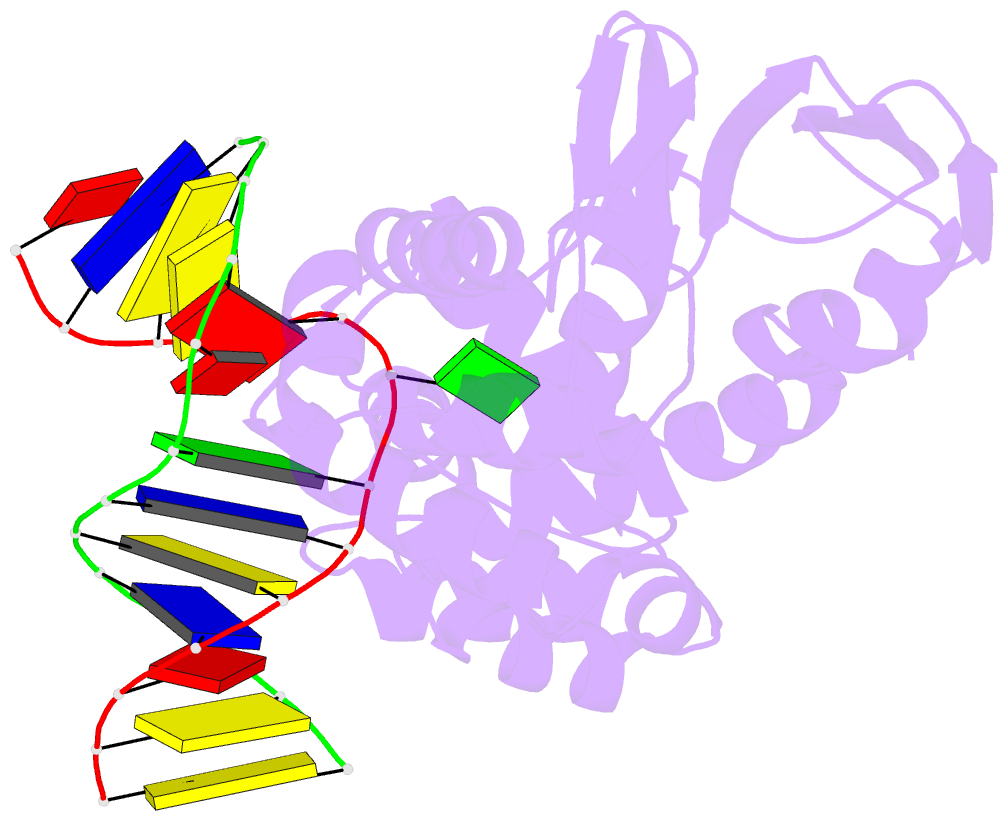
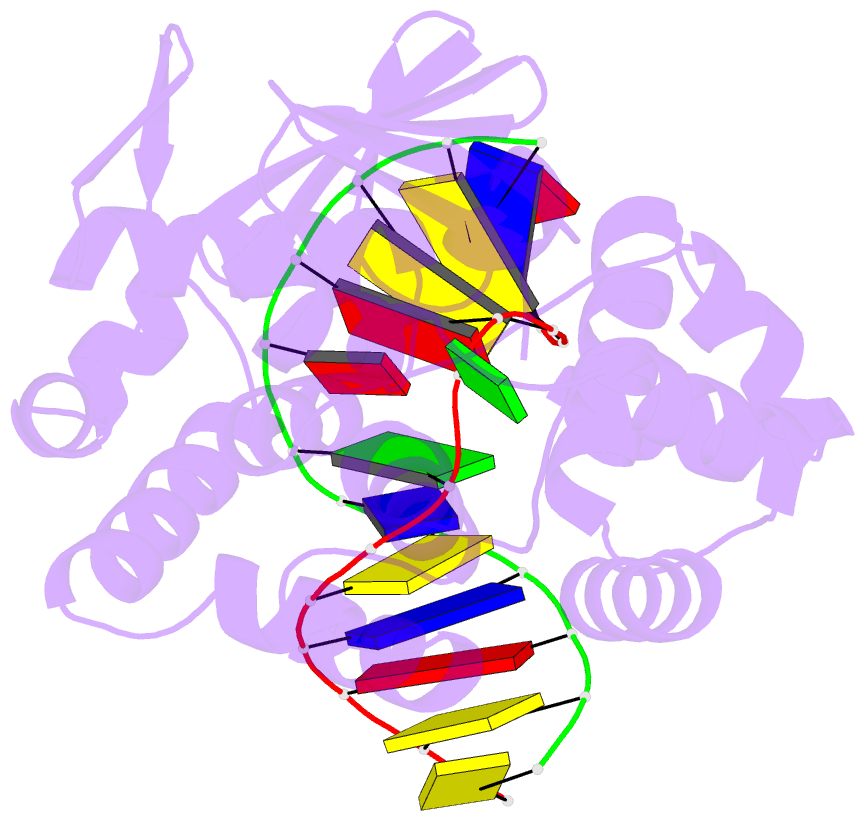
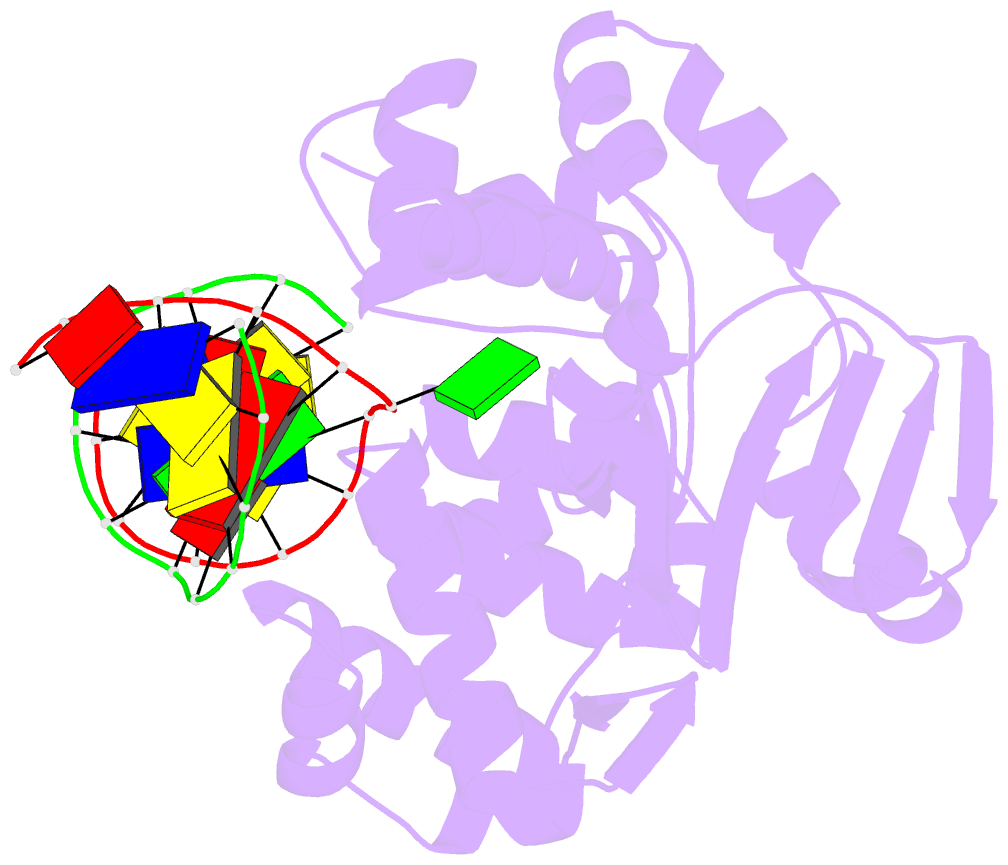
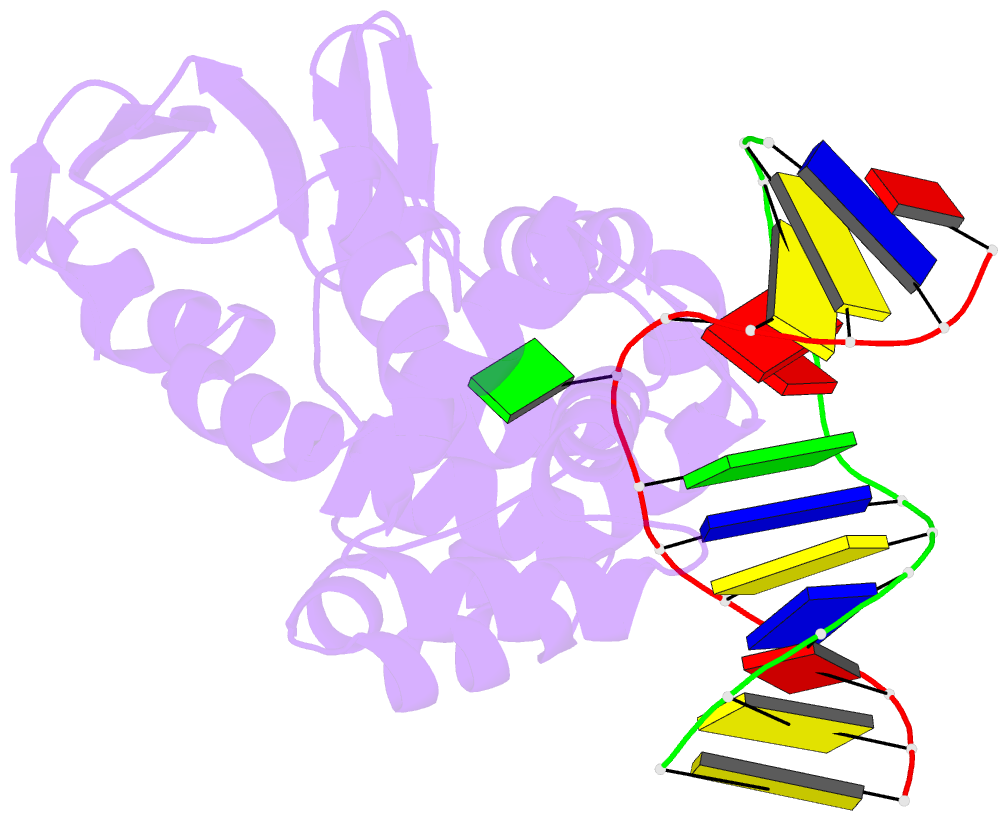
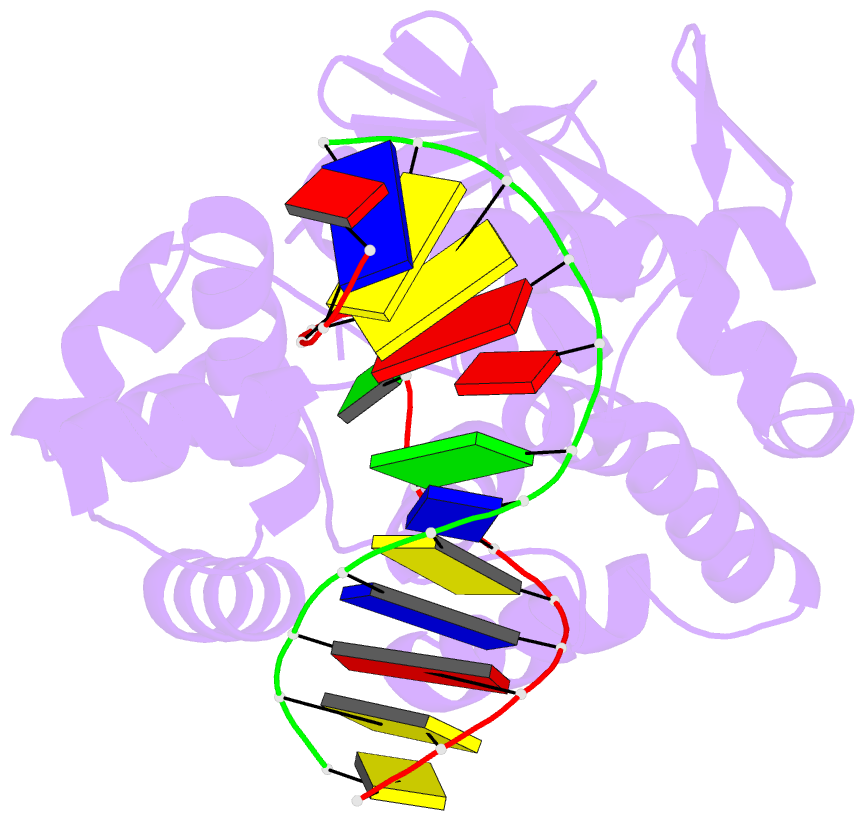
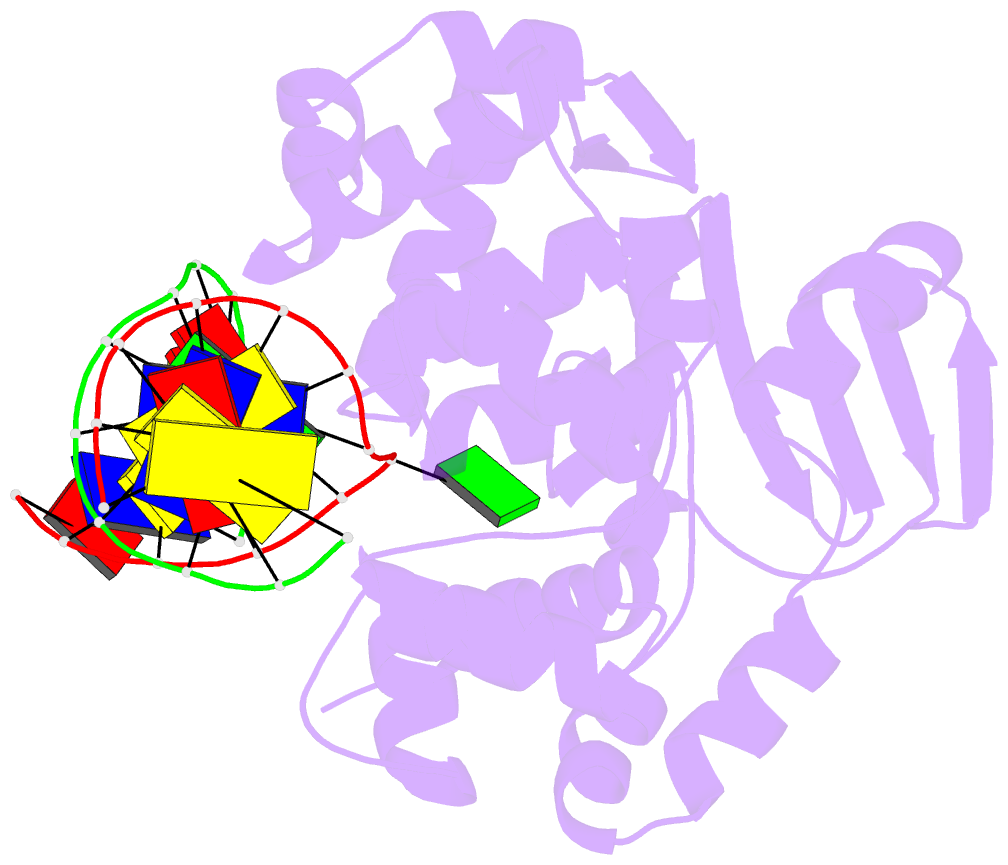
- Crystal structure of clostridium acetobutylicum
8-oxoguanine glycosylase-lyase in complex with dsDNA
containing adenine opposite to 8-oxog
- Reference
-
Faucher F, Wallace SS, Doublie S (2009): "Structural
basis for the lack of opposite base specificity of
Clostridium acetobutylicum 8-oxoguanine DNA
glycosylase." Dna Repair,
8, 1283-1289. doi: 10.1016/j.dnarep.2009.08.002.
- Abstract
- 7,8-Dihydro-8-oxoguanine (8-oxoG) is the major
oxidative product of guanine and the most prevalent base
lesion observed in DNA molecules. Because 8-oxoG has the
capability to form a Hoogsteen pair with adenine (8-oxoG:A)
in addition to a normal Watson-Crick pair with cytosine
(8-oxoG:C), this lesion can lead to a G:C-->T:A
transversion after replication. However, 8-oxoG is
recognized and excised by the 8-oxoguanine DNA glycosylase
(Ogg) of the base excision repair pathway. Members of the
Ogg1 family usually display a strong preference for a C
opposite the lesion. In contrast, the atypical Ogg1 from
Clostridium actetobutylicum (CacOgg) can excise 8-oxoG when
paired with either one of the four bases, albeit with a
preference for C and A. Here we describe the first
high-resolution crystal structures of CacOgg in complex
with duplex DNA containing the 8-oxoG lesion paired to
cytosine and to adenine. A structural comparison with human
OGG1 provides a rationale for the lack of opposite base
specificity displayed by the bacterial Ogg.