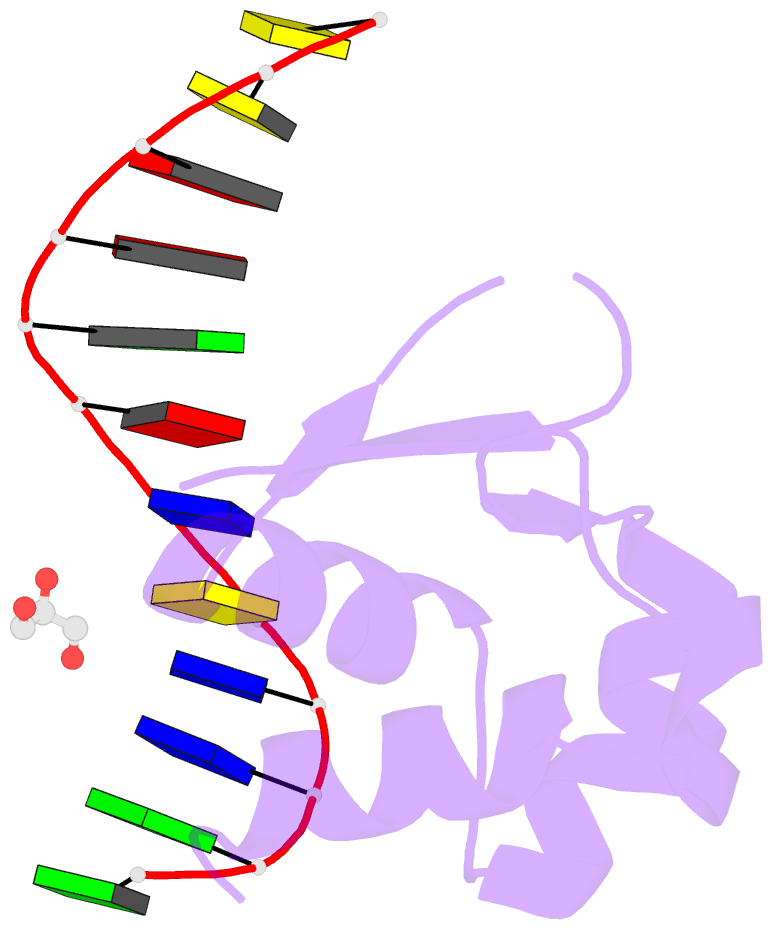
Summary information and primary citation
- PDB-id
-
3hts;
DSSR-derived features in text and
JSON formats
- Class
- transcription-DNA
- Method
- X-ray (1.75 Å)
- Summary
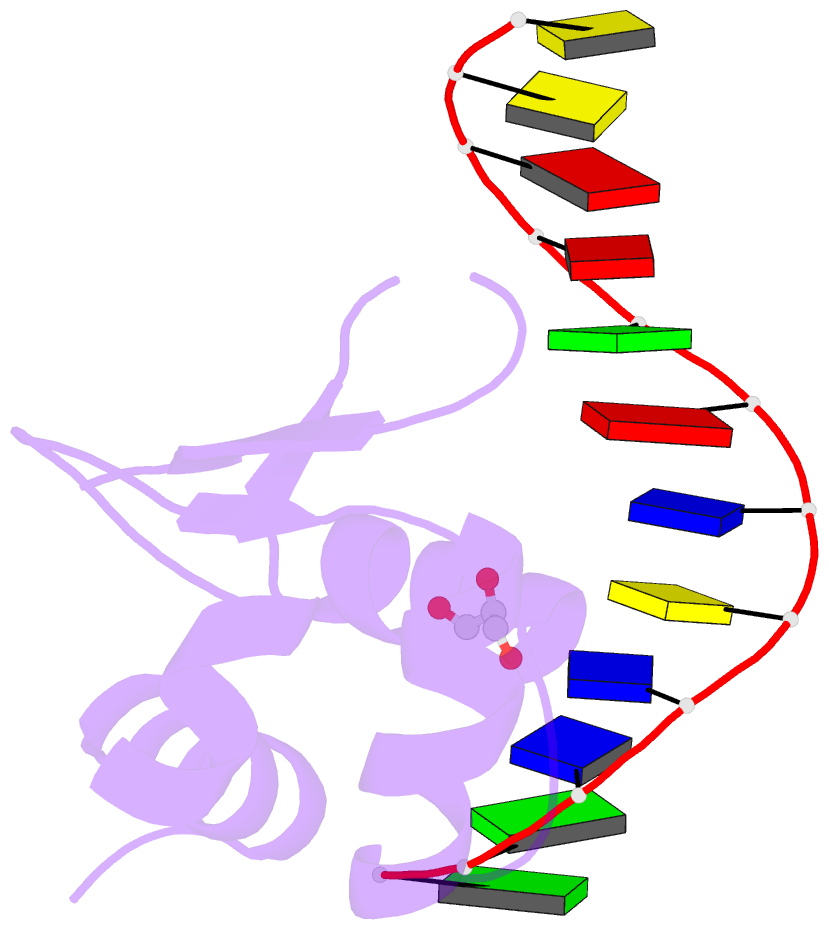
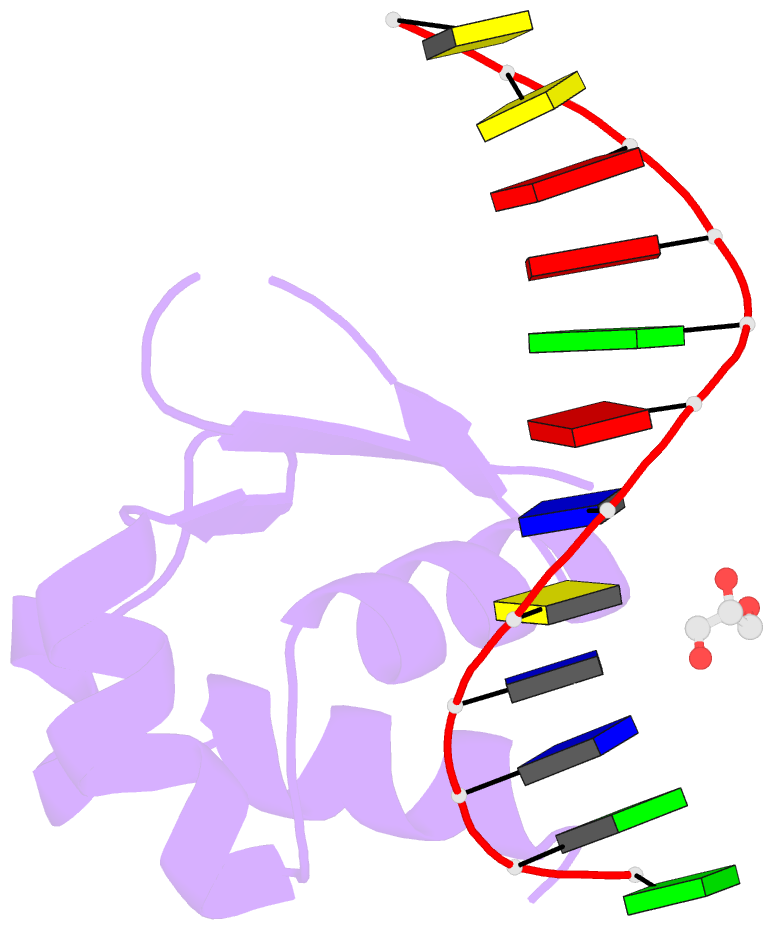
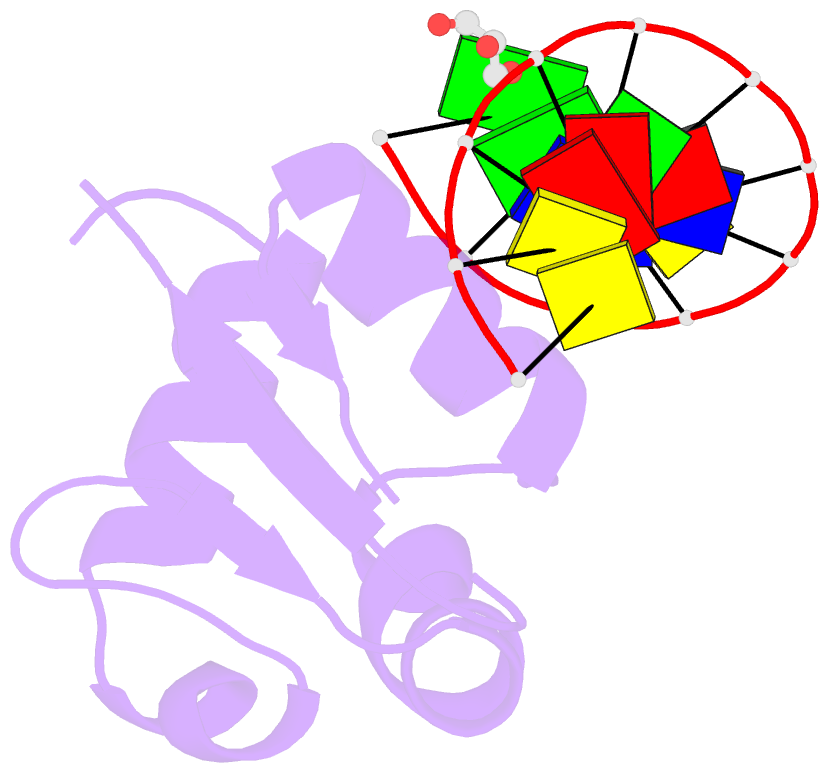
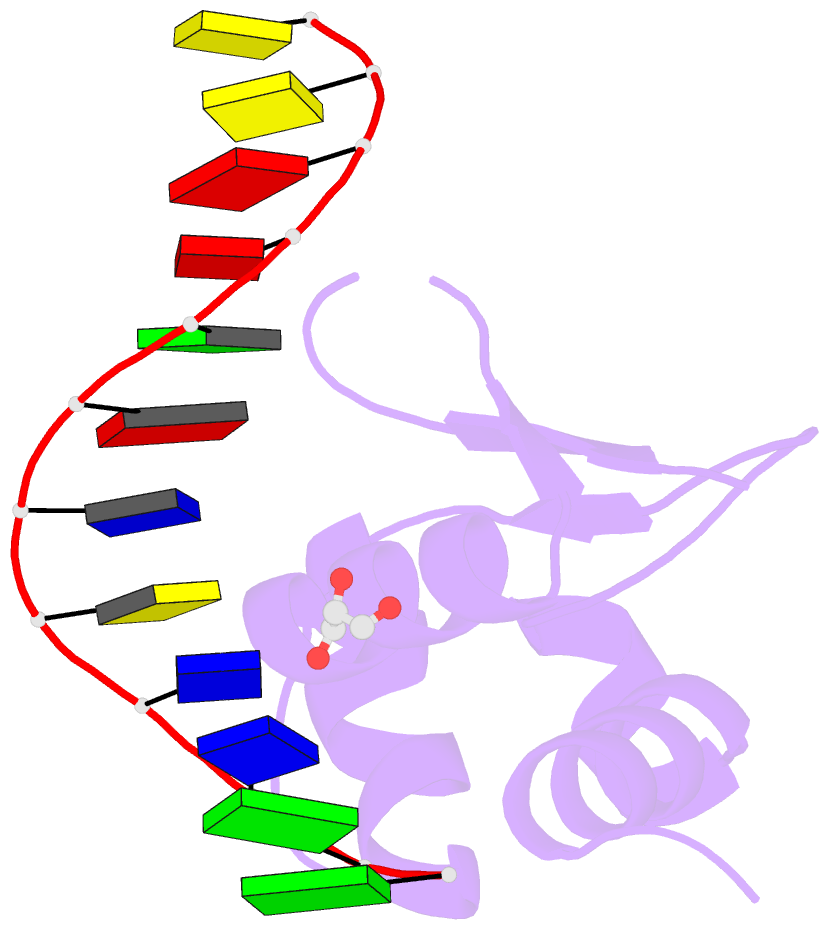
- Heat shock transcription factor-DNA complex
- Reference
-
Littlefield O, Nelson HC (1999): "A new use
for the 'wing' of the 'winged' helix-turn-helix motif in
the HSF-DNA cocrystal." Nat.Struct.Biol.,
6, 464-470. doi: 10.1038/8269.
- Abstract
- The 1.75 A crystal structure of the Kluyveromyces
lactis heat shock transcription factor (HSF) DNA-binding
domain (DBD) complexed with DNA reveals a protein-DNA
interface with few direct major groove contacts and a
number of phosphate backbone contacts that are primarily
water-mediated interactions. The DBD, a 'winged'
helix-turn-helix protein, displays a novel mode of binding
in that the 'wing' does not contact DNA like all others of
that class. Instead, the monomeric DBD, which crystallized
as a symmetric dimer to a pair of nGAAn inverted repeats,
uses the 'wing' to form part of the protein-protein
contacts. This dimer interface is likely important for
increasing the DNA-binding specificity and affinity of the
trimeric form of HSF, as well as for increasing
cooperativity between adjacent trimers.