Summary information and primary citation
- PDB-id
-
3b0v;
DSSR-derived features in text and
JSON formats
- Class
- oxidoreductase-RNA
- Method
- X-ray (3.51 Å)
- Summary
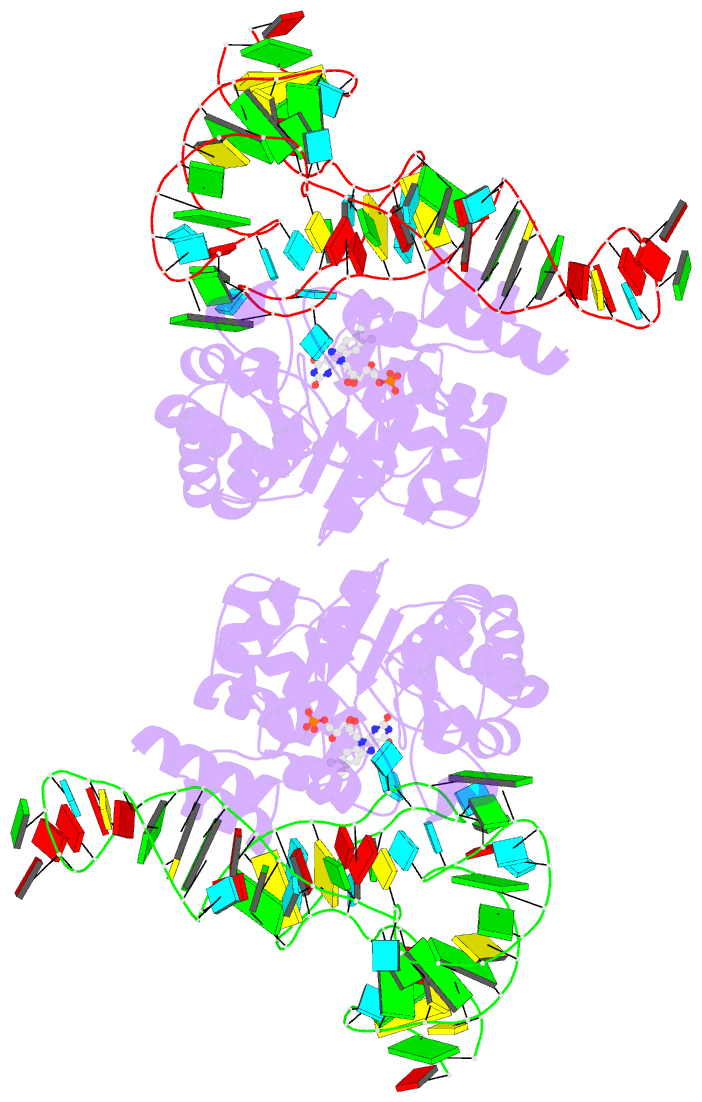
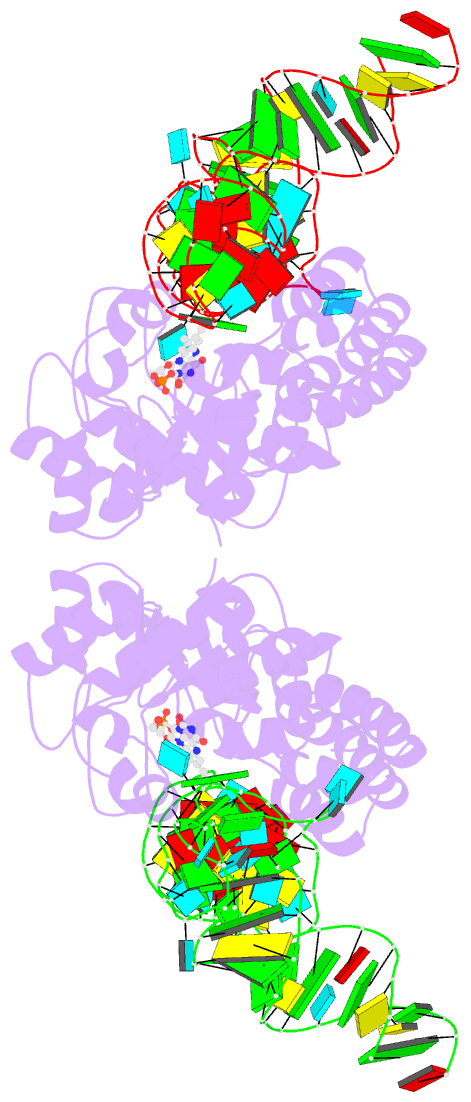
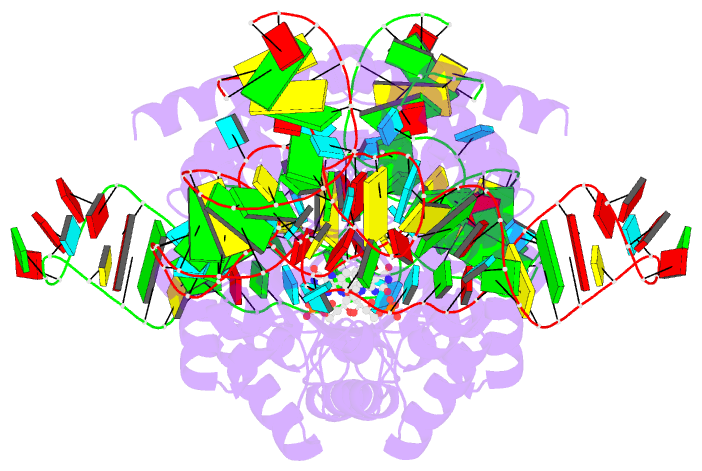
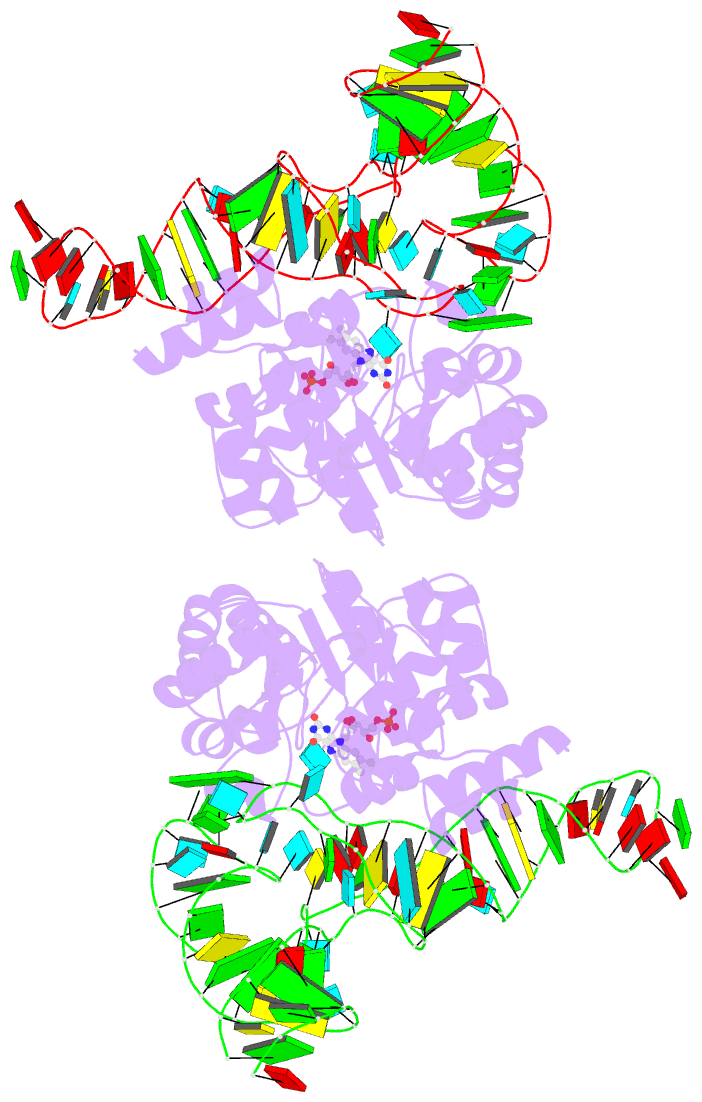
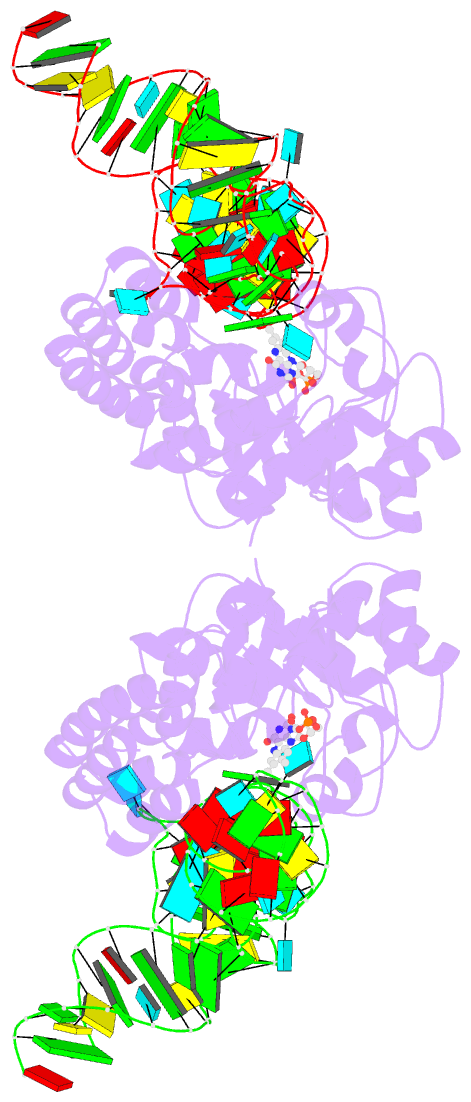
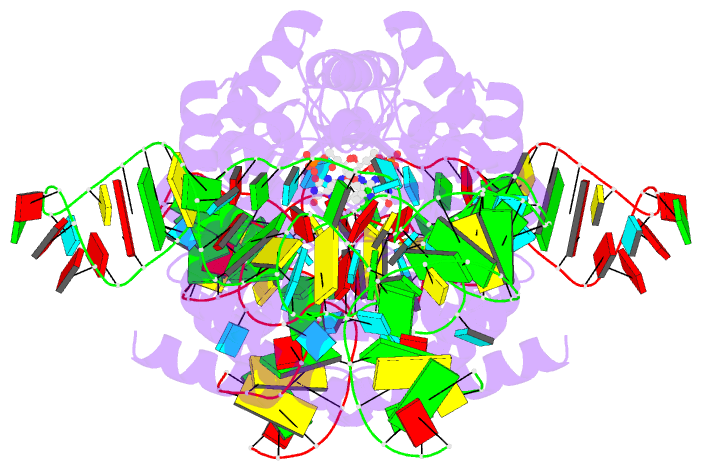
- Trna-dihydrouridine synthase from thermus thermophilus
in complex with trna
- Reference
-
Yu F, Tanaka Y, Yamashita K, Suzuki T, Nakamura A, Hirano
N, Suzuki T, Yao M, Tanaka I (2011): "Molecular
basis of dihydrouridine formation on tRNA."
Proc.Natl.Acad.Sci.USA, 108,
19593-19598. doi: 10.1073/pnas.1112352108.
- Abstract
- Dihydrouridine (D) is a highly conserved modified base
found in tRNAs from all domains of life. Dihydrouridine
synthase (Dus) catalyzes the D formation of tRNA through
reduction of uracil base with flavin mononucleotide (FMN)
as a cofactor. Here, we report the crystal structures of
Thermus thermophilus Dus (TthDus), which is responsible for
D formation at positions 20 and 20a, in complex with tRNA
and with a short fragment of tRNA (D-loop). Dus interacts
extensively with the D-arm and recognizes the elbow region
composed of the kissing loop interaction between T- and
D-loops in tRNA, pulling U20 into the catalytic center for
reduction. Although distortion of the D-loop structure was
observed upon binding of Dus to tRNA, the canonical
D-loop/T-loop interaction was maintained. These results
were consistent with the observation that Dus
preferentially recognizes modified rather than unmodified
tRNAs, indicating that Dus introduces D20 by monitoring the
complete L-shaped structure of tRNAs. In the active site,
U20 is stacked on the isoalloxazine ring of FMN, and C5 of
the U20 uracil ring is covalently cross linked to the thiol
group of Cys93, implying a catalytic mechanism of D20
formation. In addition, the involvement of a cofactor
molecule in uracil ring recognition was proposed. Based on
a series of mutation analyses, we propose a molecular basis
of tRNA recognition and D formation catalyzed by Dus.