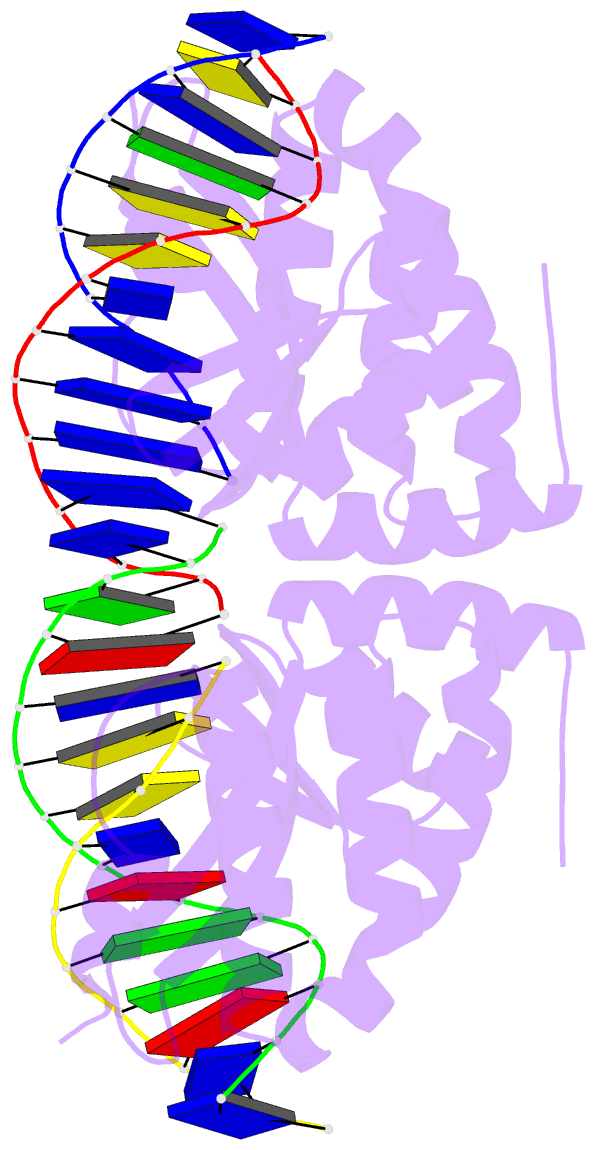
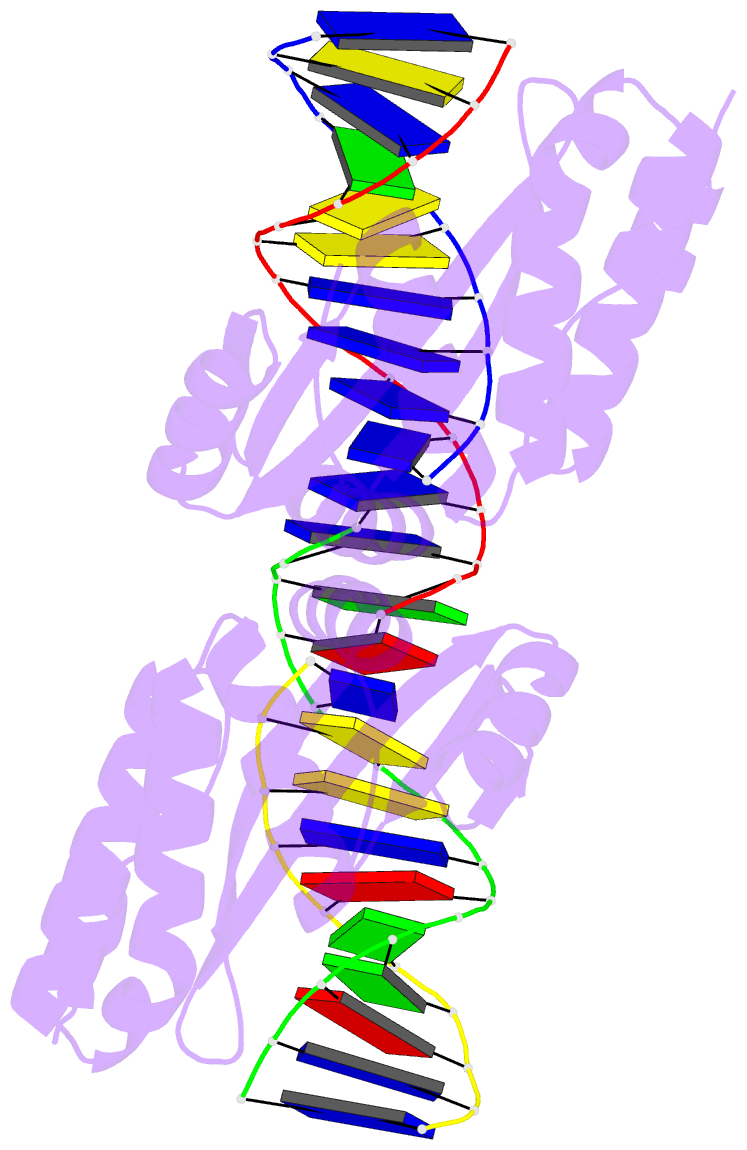
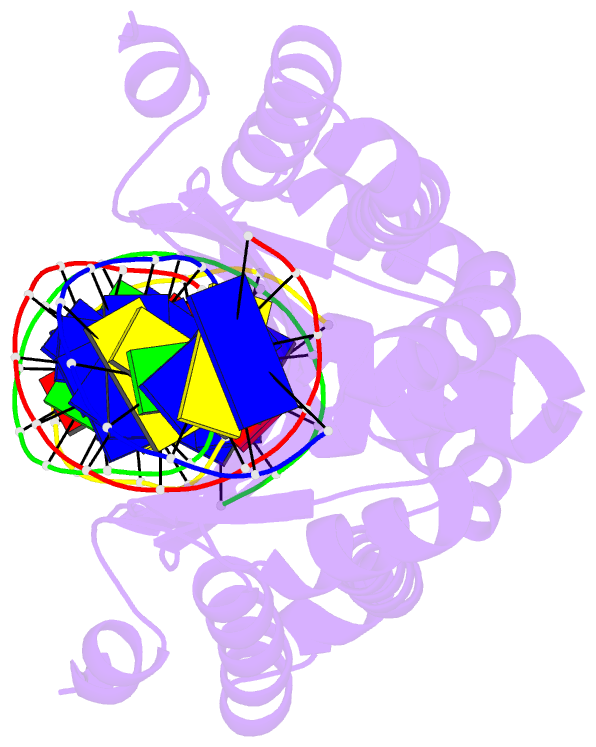
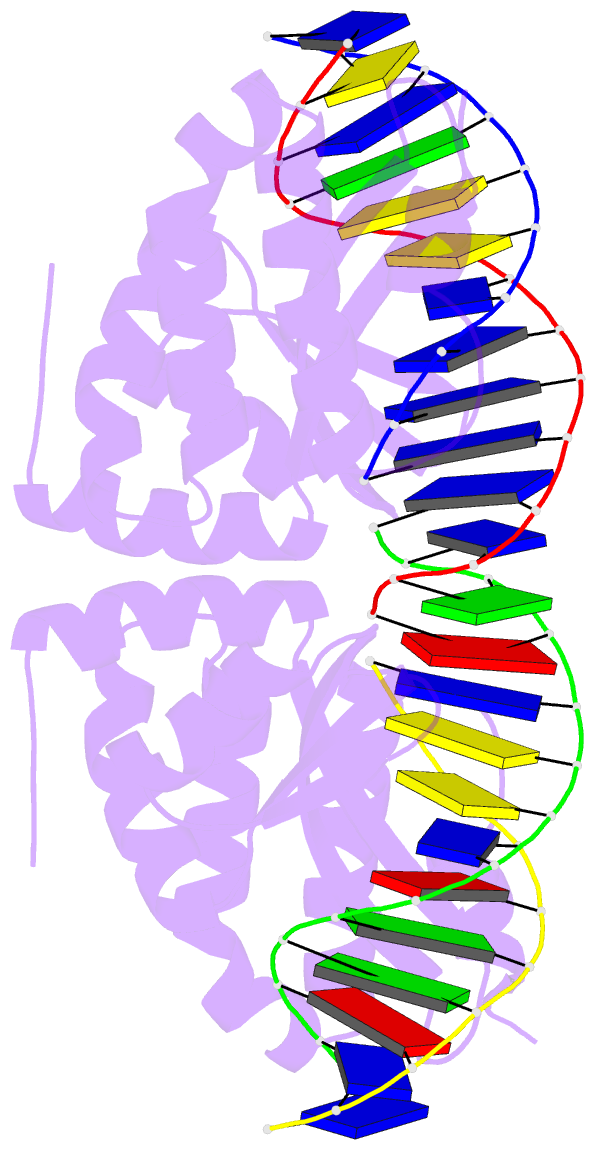
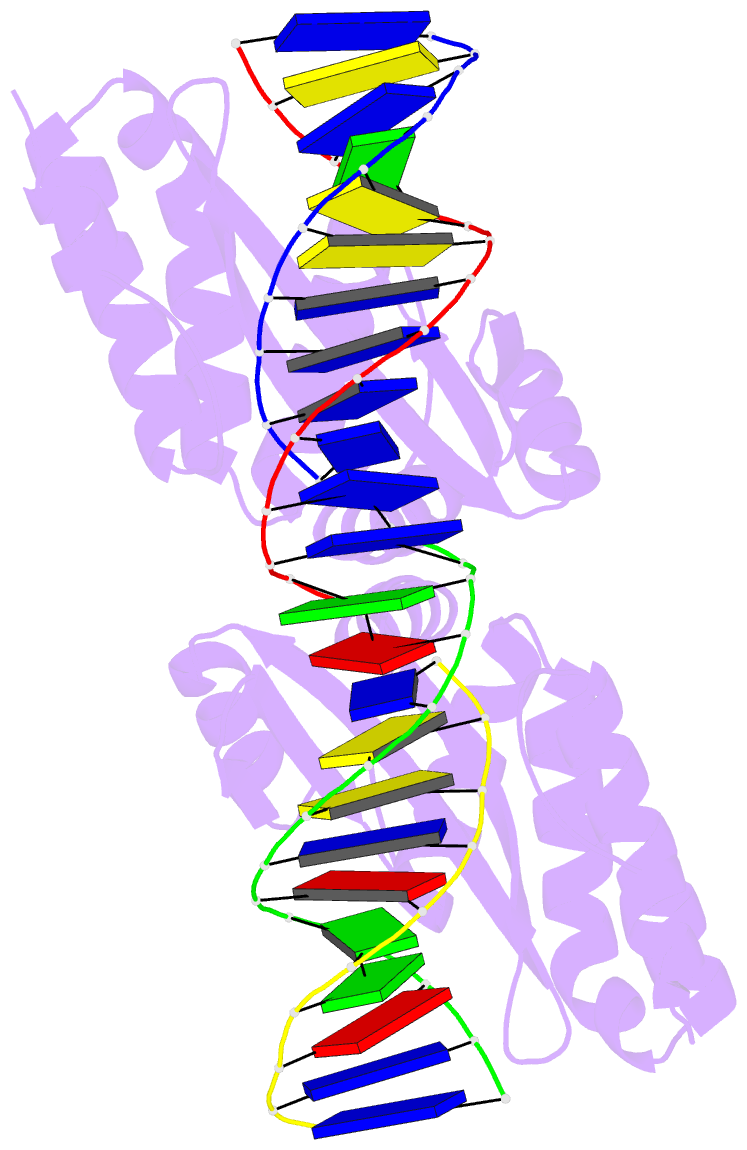
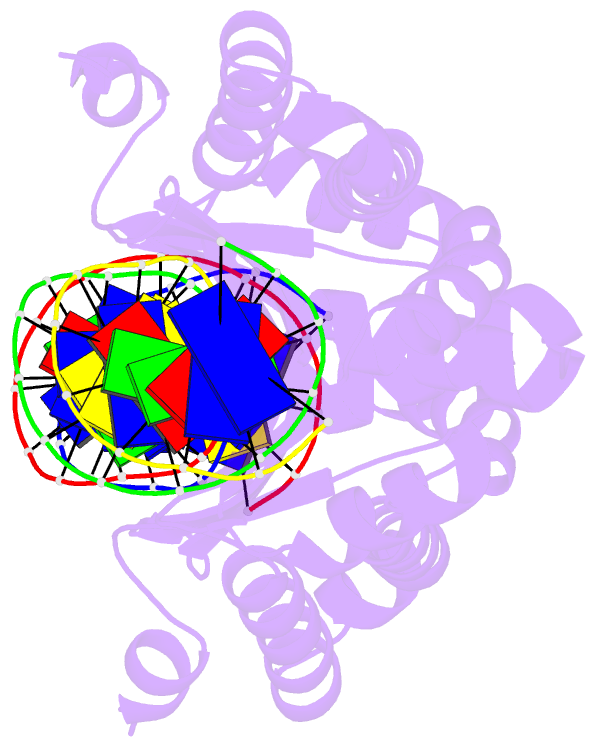
Summary information and primary citation
- PDB-id
-
2vbl;
DSSR-derived features in text and
JSON formats
- Class
- hydrolase
- Method
- X-ray (1.8 Å)
- Summary
- Molecular basis of human xpc gene recognition and
cleavage by engineered homing endonuclease
heterodimers
- Reference
-
Redondo P, Prieto J, Munoz IG, Alibes A, Stricher F,
Serrano L, Cabaniols JP, Daboussi F, Arnould S, Perez C,
Duchateau P, Paques F, Blanco FJ, Montoya G (2008):
"Molecular
Basis of Xeroderma Pigmentosum Group C DNA Recognition by
Engineered Meganucleases." Nature,
456, 107. doi: 10.1038/NATURE07343.
- Abstract
- Xeroderma pigmentosum is a monogenic disease
characterized by hypersensitivity to ultraviolet light. The
cells of xeroderma pigmentosum patients are defective in
nucleotide excision repair, limiting their capacity to
eliminate ultraviolet-induced DNA damage, and resulting in
a strong predisposition to develop skin cancers. The use of
rare cutting DNA endonucleases-such as homing
endonucleases, also known as meganucleases-constitutes one
possible strategy for repairing DNA lesions. Homing
endonucleases have emerged as highly specific molecular
scalpels that recognize and cleave DNA sites, promoting
efficient homologous gene targeting through
double-strand-break-induced homologous recombination. Here
we describe two engineered heterodimeric derivatives of the
homing endonuclease I-CreI, produced by a semi-rational
approach. These two molecules-Amel3-Amel4 and
Ini3-Ini4-cleave DNA from the human XPC gene (xeroderma
pigmentosum group C), in vitro and in vivo. Crystal
structures of the I-CreI variants complexed with intact and
cleaved XPC target DNA suggest that the mechanism of DNA
recognition and cleavage by the engineered homing
endonucleases is similar to that of the wild-type I-CreI.
Furthermore, these derivatives induced high levels of
specific gene targeting in mammalian cells while displaying
no obvious genotoxicity. Thus, homing endonucleases can be
designed to recognize and cleave the DNA sequences of
specific genes, opening up new possibilities for genome
engineering and gene therapy in xeroderma pigmentosum
patients whose illness can be treated ex vivo.