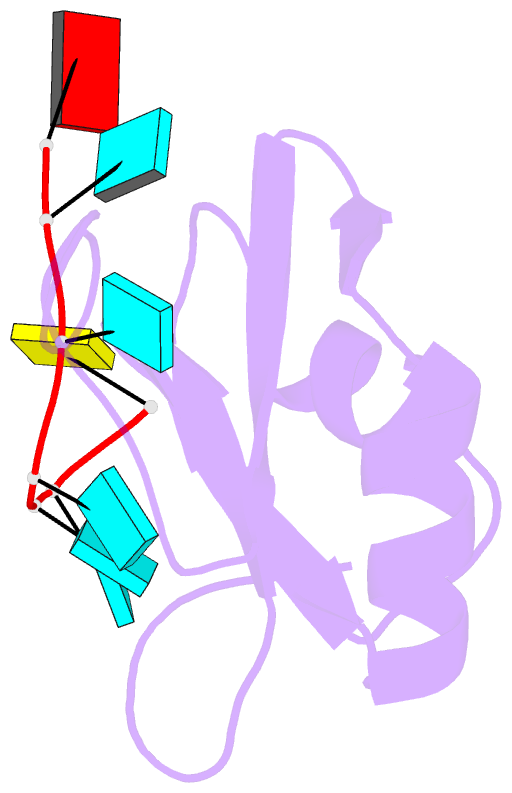
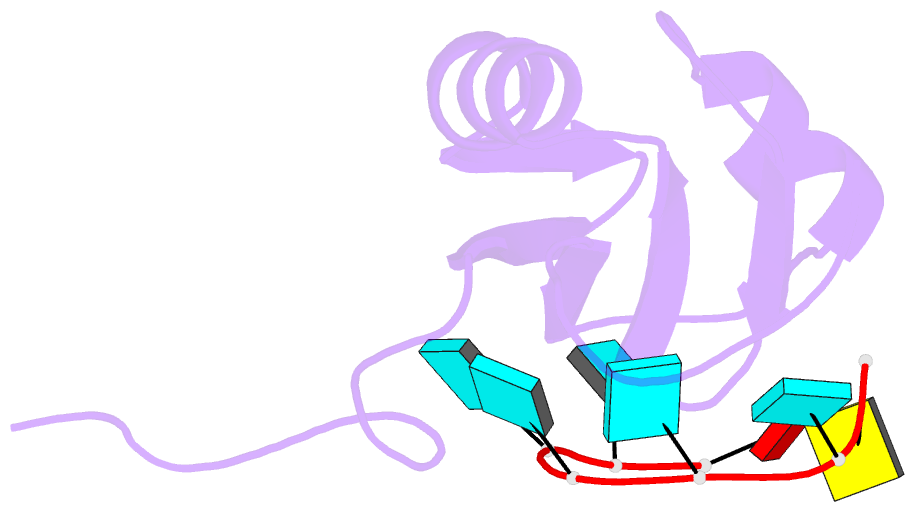
Summary information and primary citation
- PDB-id
-
2mxy;
DSSR-derived features in text and
JSON formats
- Class
- RNA binding protein-RNA
- Method
- NMR
- Summary
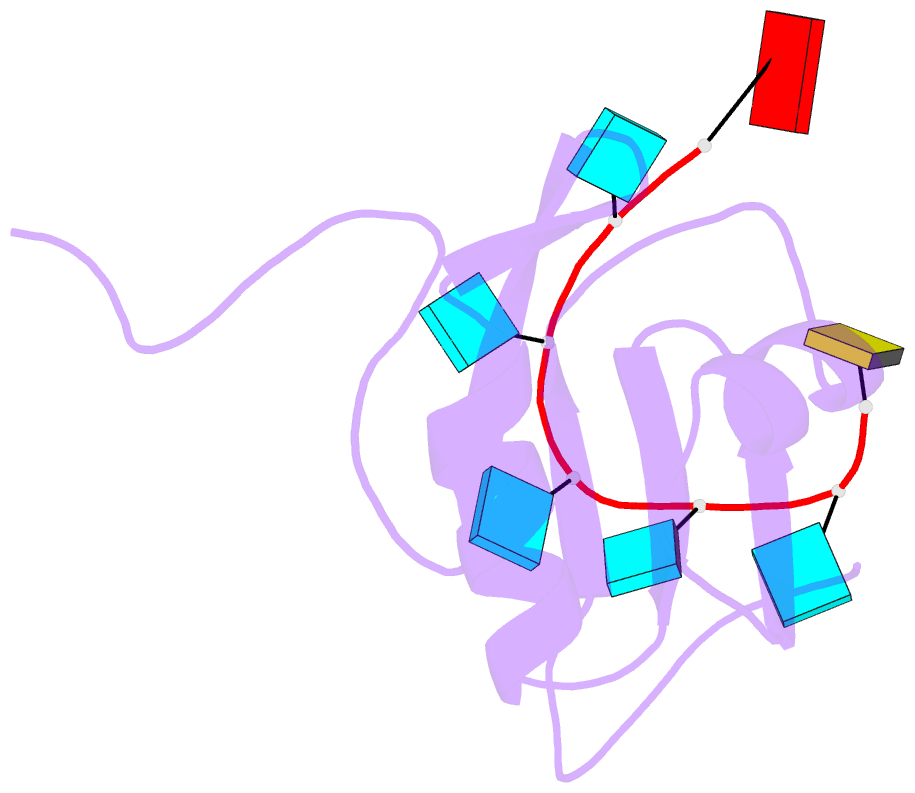
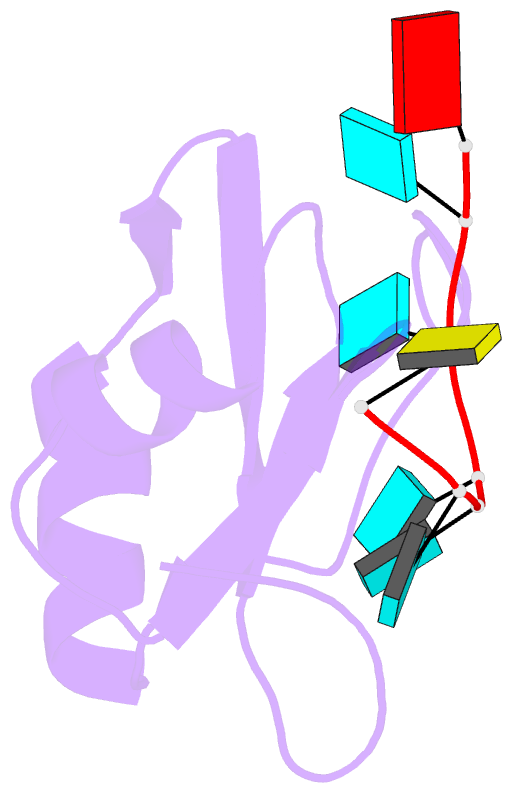
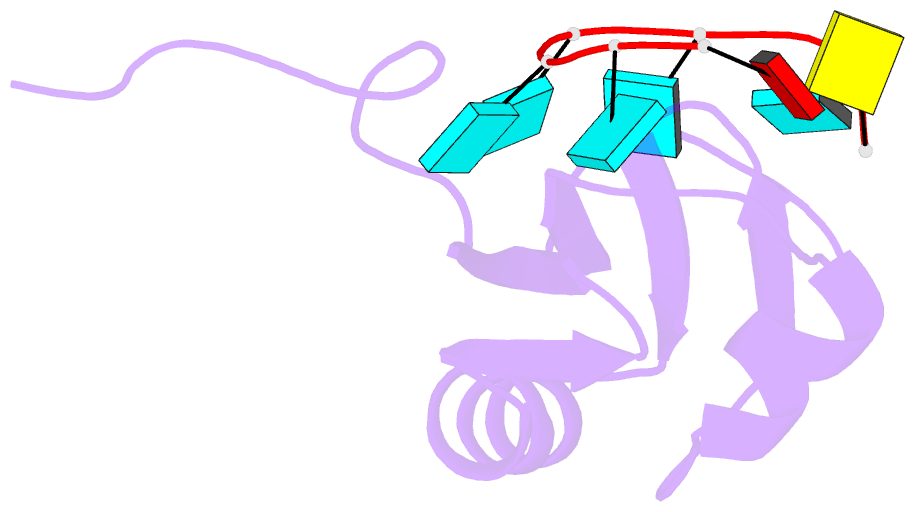
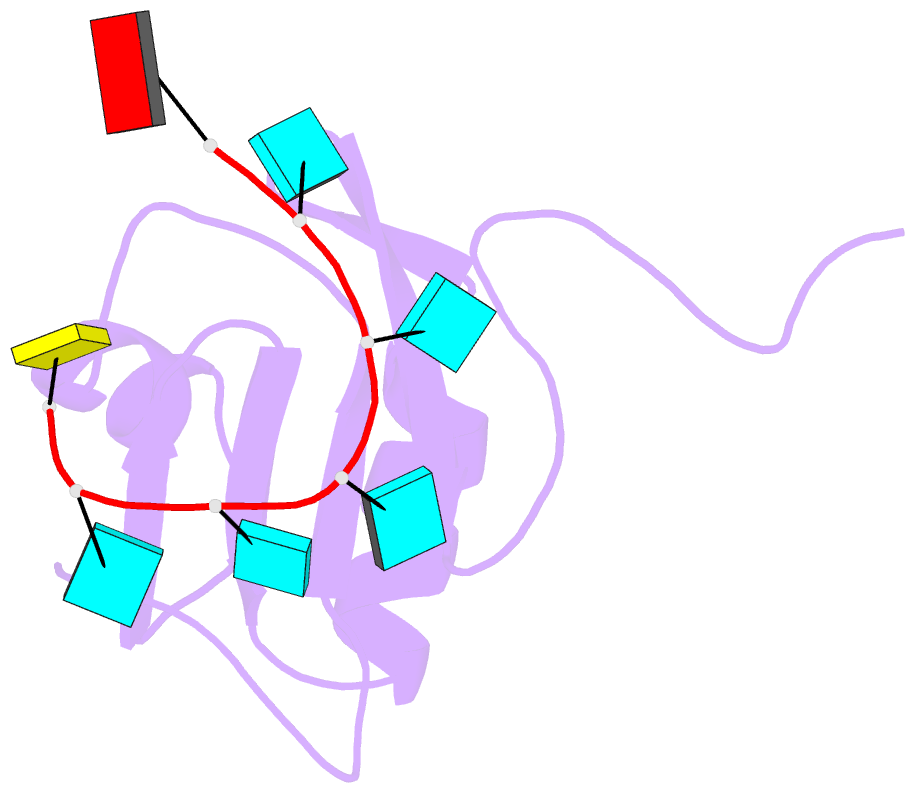
- Solution structure of hnrnp c rrm in complex with
5'-auuuuuc-3' RNA
- Reference
-
Cienikova Z, Damberger FF, Hall J, Allain FH, Maris C
(2014): "Structural
and mechanistic insights into poly(uridine) tract
recognition by the hnRNP C RNA recognition motif."
J.Am.Chem.Soc., 136,
14536-14544. doi: 10.1021/ja507690d.
- Abstract
- HnRNP C is a ubiquitous RNA regulatory factor and the
principal constituent of the nuclear hnRNP core
particle. The protein contains one amino-terminal RNA
recognition motif (RRM) known to bind uridine (U)-rich
sequences. This work provides a molecular and mechanistic
understanding of this interaction. We solved the solution
structures of the RRM in complex with poly(U) oligomers of
five and seven nucleotides. The five binding pockets of RRM
recognize uridines with an unusual 5'-to-3' gradient of
base selectivity. The target recognition is therefore
strongly sensitive to base clustering, explaining the
preference for contiguous uridine tracts. Using a novel
approach integrating the structurally derived recognition
consensus of the RRM with a thermodynamic description of
its multi-register binding, we modeled the saturation of
cellular uridine tracts by this protein. The binding
pattern is remarkably consistent with the experimentally
observed transcriptome-wide cross-link distribution of the
full-length hnRNP C on short uridine tracts. This
result re-establishes the RRM as the primary RNA-binding
domain of the hnRNP C tetramer and provides a proof of
concept for interpreting high-throughput interaction data
using structural approaches.