Summary information and primary citation
- PDB-id
-
2m3y;
DSSR-derived features in text and
JSON formats
- Class
- DNA
- Method
- NMR
- Summary
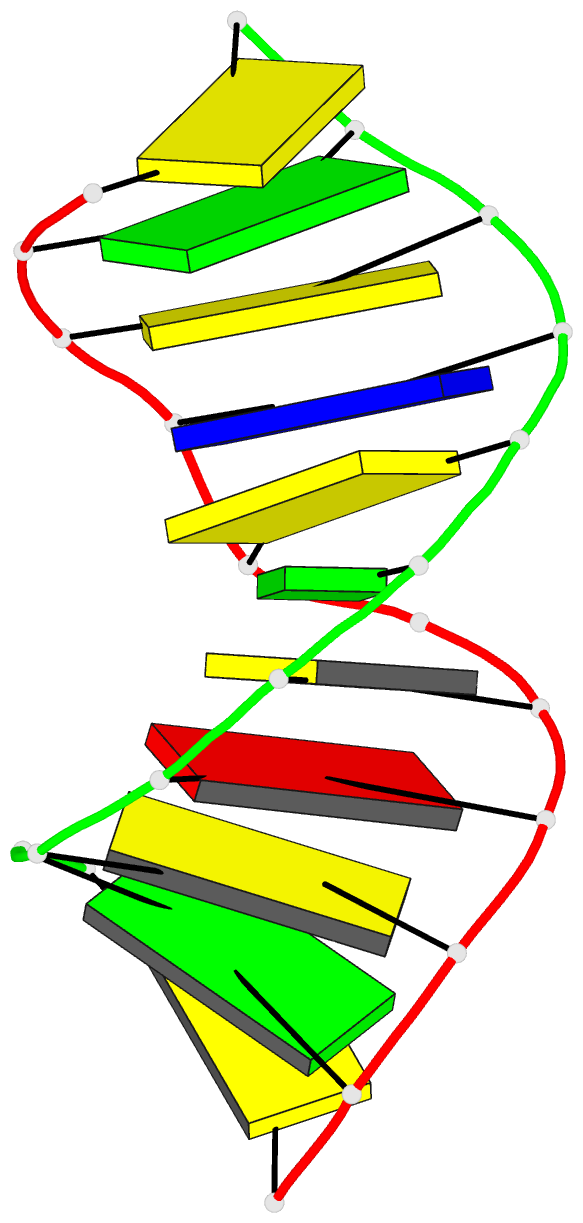
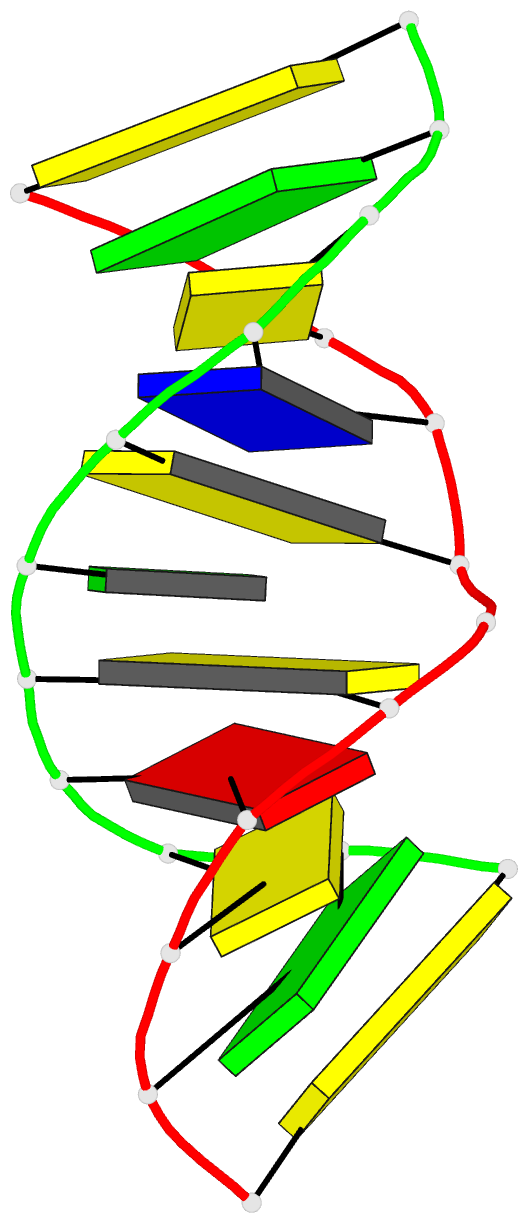
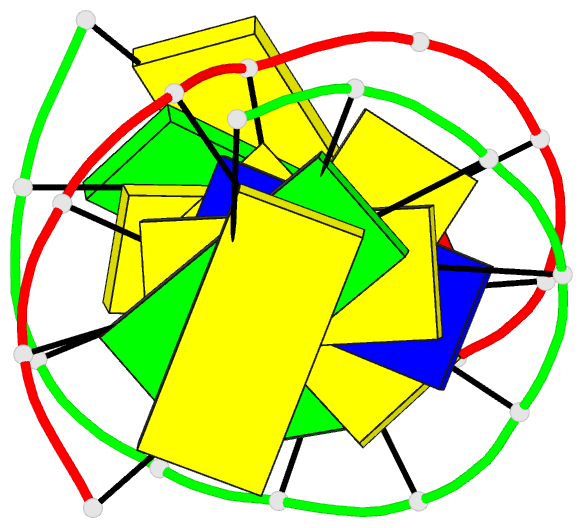
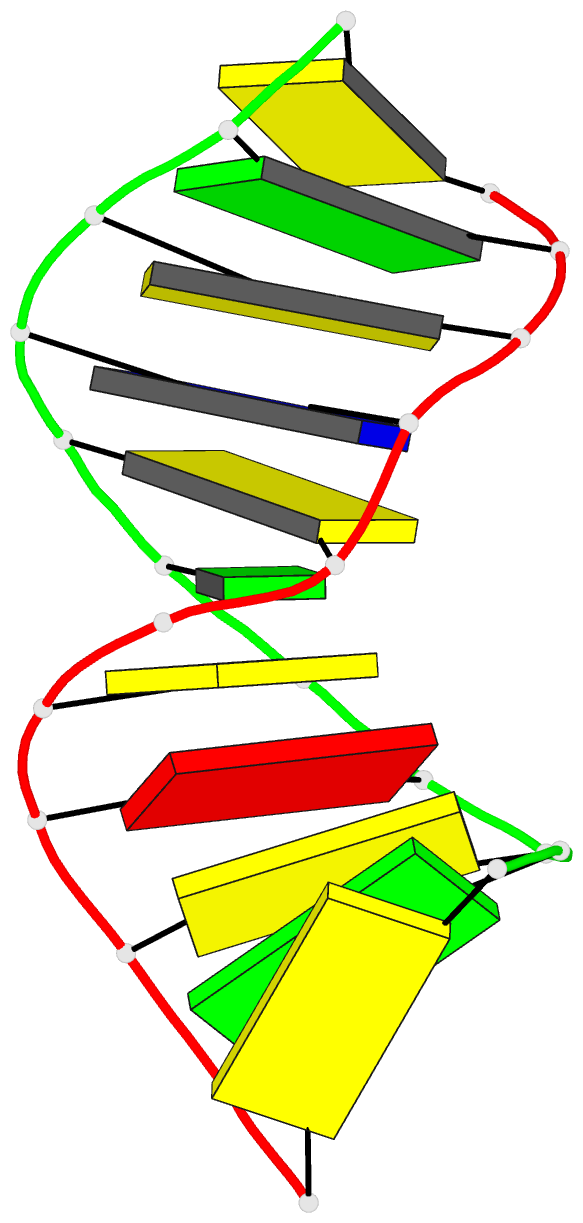
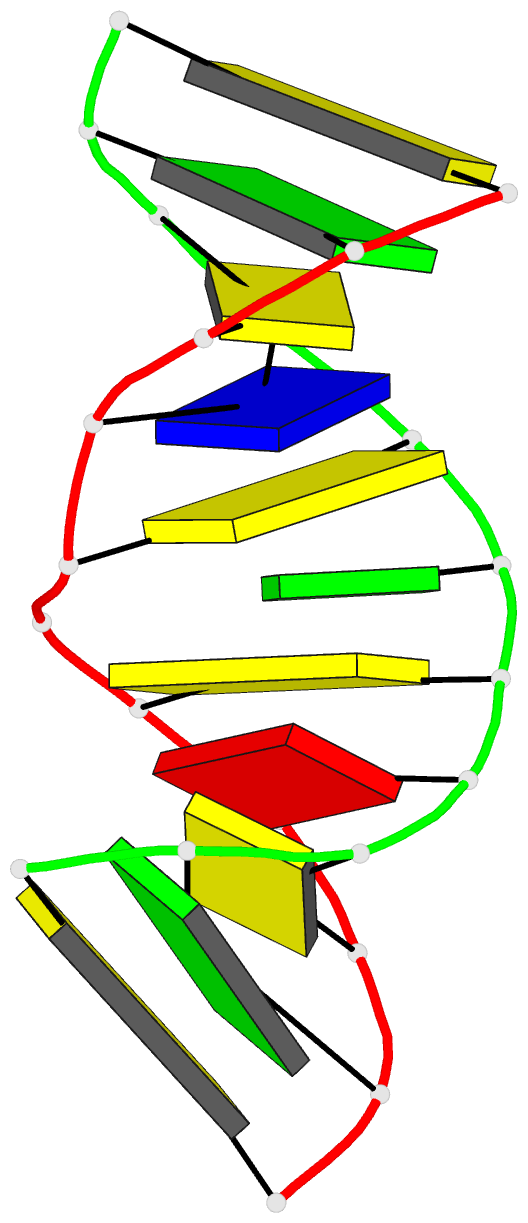
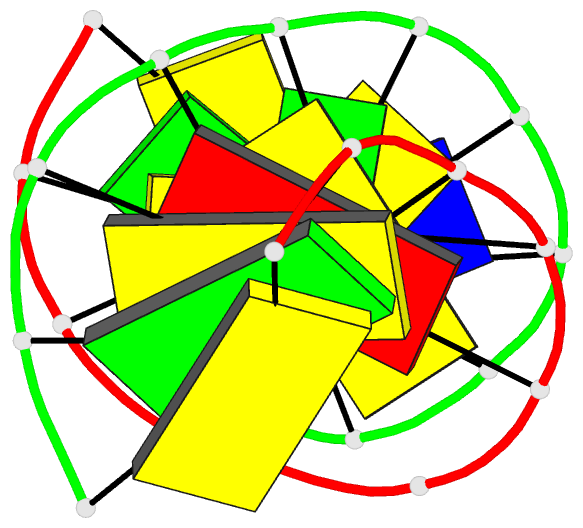
- DNA containing a cluster of 8-oxo-guanine and abasic
site lesion: beta anomer
- Reference
-
Zalesak J, Lourdin M, Krejc L, Constant JF, Jourdan M
(2014): "Structure
and dynamics of DNA duplexes containing a cluster of
mutagenic 8-oxoguanine and abasic site lesions."
J.Mol.Biol., 426, 1524-1538.
doi: 10.1016/j.jmb.2013.12.022.
- Abstract
- Clustered DNA damage sites are caused by ionizing
radiation. They are much more difficult to repair than are
isolated single lesions, and their biological outcomes in
terms of mutagenesis and repair inhibition are strongly
dependent on the type, relative position and orientation of
the lesions present in the cluster. To determine whether
these effects on repair mechanism could be due to local
structural properties within DNA, we used (1)H NMR
spectroscopy and restrained molecular dynamics simulation
to elucidate the structures of three DNA duplexes
containing bistranded clusters of lesions. Each DNA
sequence contained an abasic site in the middle of one
strand and differed by the relative position of the
8-oxoguanine, staggered on either the 3' or the 5' side of
the complementary strand. Their repair by base excision
repair protein Fpg was either complete or inhibited. All
the studied damaged DNA duplexes adopt an overall B-form
conformation and the damaged residues remain intrahelical.
No striking deformations of the DNA chain have been
observed as a result of close proximity of the lesions.
These results rule out the possibility that differential
recognition of clustered DNA lesions by the Fpg protein
could be due to changes in the DNA's structural features
induced by those lesions and provide new insight into the
Fpg recognition process.