Summary information and primary citation
- PDB-id
-
2lxq;
DSSR-derived features in text and
JSON formats
- Class
- DNA
- Method
- NMR
- Summary
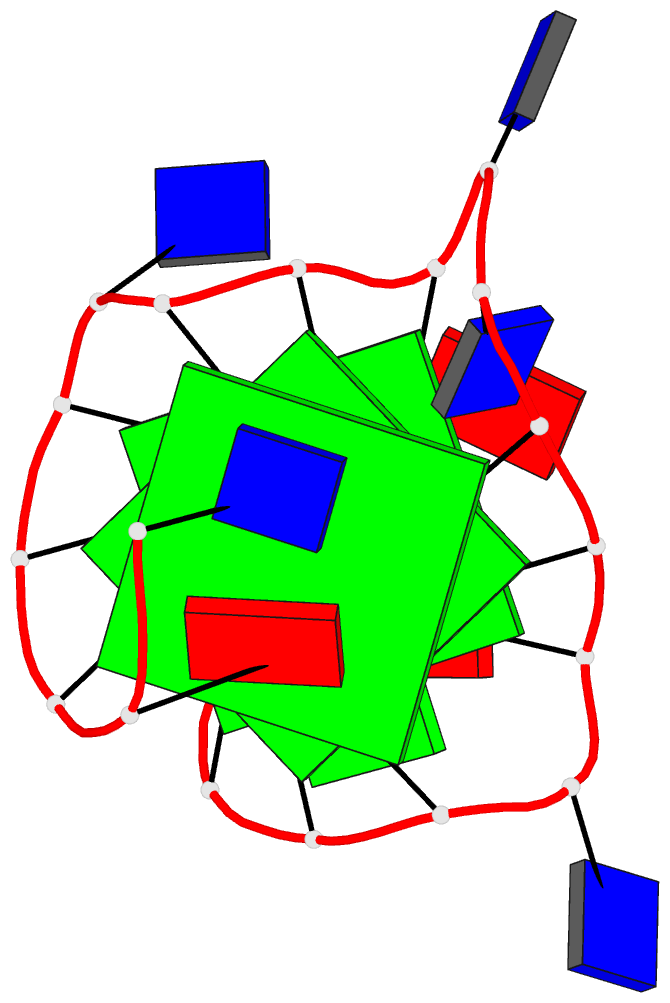
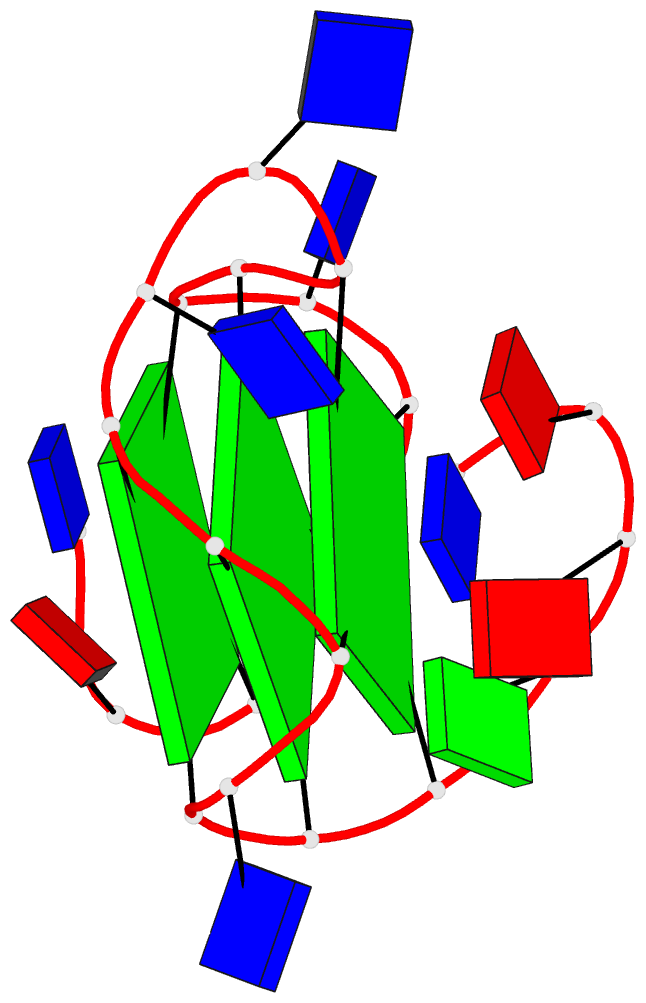
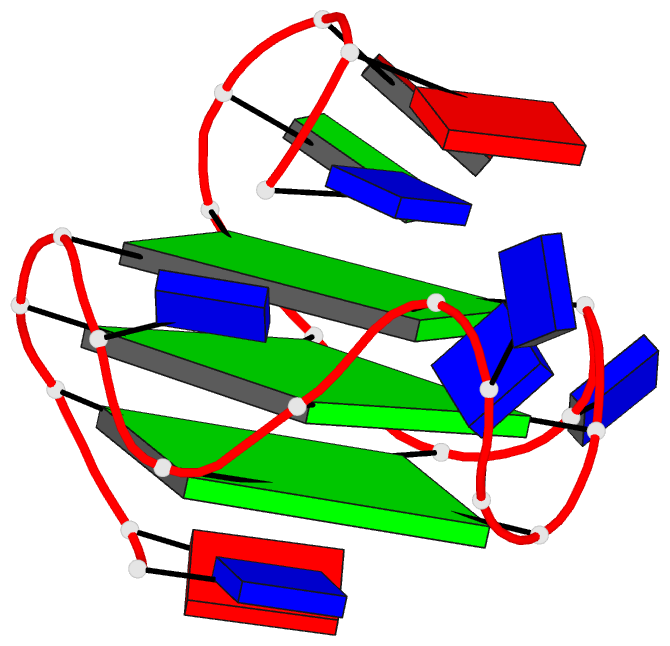
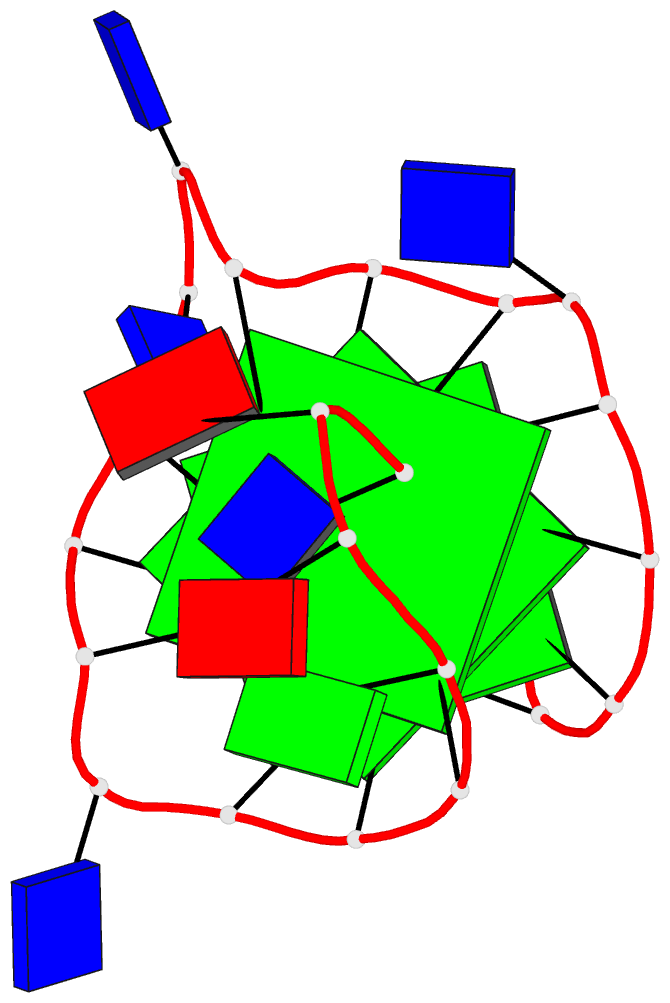
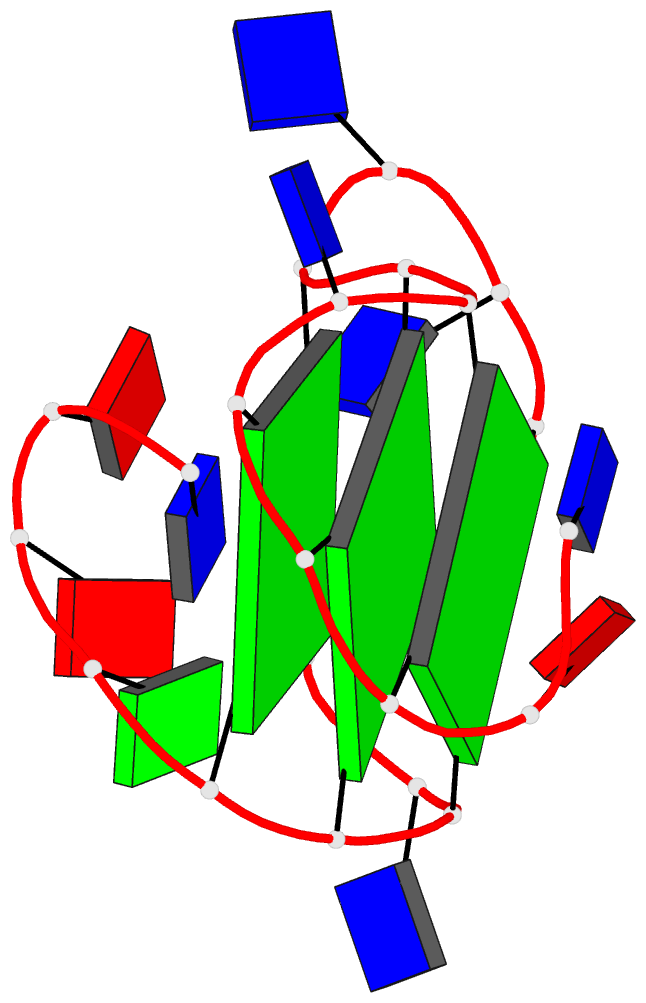
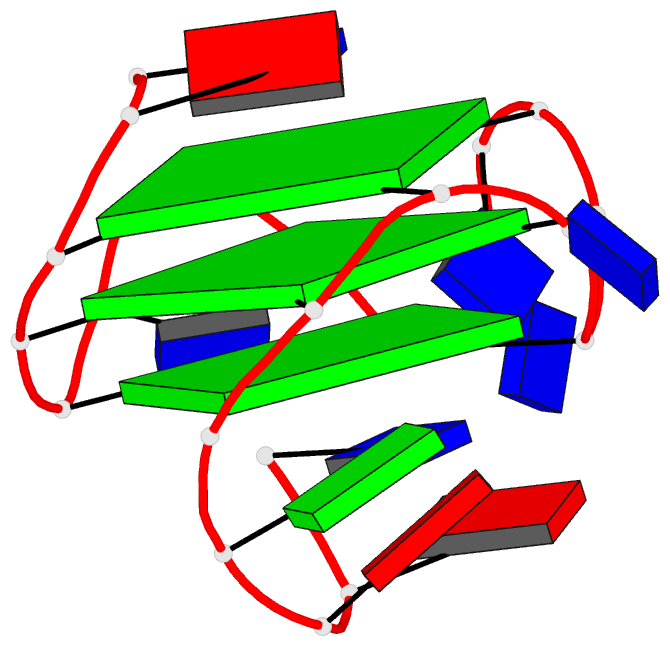
- Monomeric pile g-quadruplex DNA from neisseria
gonorrhoeae
- Reference
-
Kuryavyi V, Cahoon LA, Seifert HS, Patel DJ (2012):
"RecA-Binding
pilE G4 Sequence Essential for Pilin Antigenic Variation
Forms Monomeric and 5' End-Stacked Dimeric Parallel
G-Quadruplexes." Structure,
20, 2090-2102. doi: 10.1016/j.str.2012.09.013.
- Abstract
- Neisseria gonorrhoeae is an obligate human pathogen
that can escape immune surveillance through antigenic
variation of surface structures such as pili. A
G-quadruplex-forming (G4)
sequence (5'-G(3)TG(3)TTG(3)TG(3)) located upstream of
the N. gonorrhoeae pilin expression locus (pilE) is
necessary for initiation of pilin antigenic variation, a
recombination-based, high-frequency, diversity-generation
system. We have determined NMR-based structures of the all
parallel-stranded monomeric and 5' end-stacked dimeric
pilE G-quadruplexes in monovalent cation-containing
solutions. We demonstrate that the three-layered all
parallel-stranded monomeric pilE G-quadruplex containing
single-residue double-chain reversal loops, which can be
modeled without steric clashes into the 3 nt DNA-binding
site of RecA, binds and promotes E. coli RecA-mediated
strand exchange in vitro. We discuss how interactions
between RecA and monomeric pilE G-quadruplex could
facilitate the specialized recombination reactions leading
to pilin diversification.