Summary information and primary citation
- PDB-id
-
2lt7;
DSSR-derived features in text and
JSON formats
- Class
- metal binding protein-DNA
- Method
- NMR
- Summary
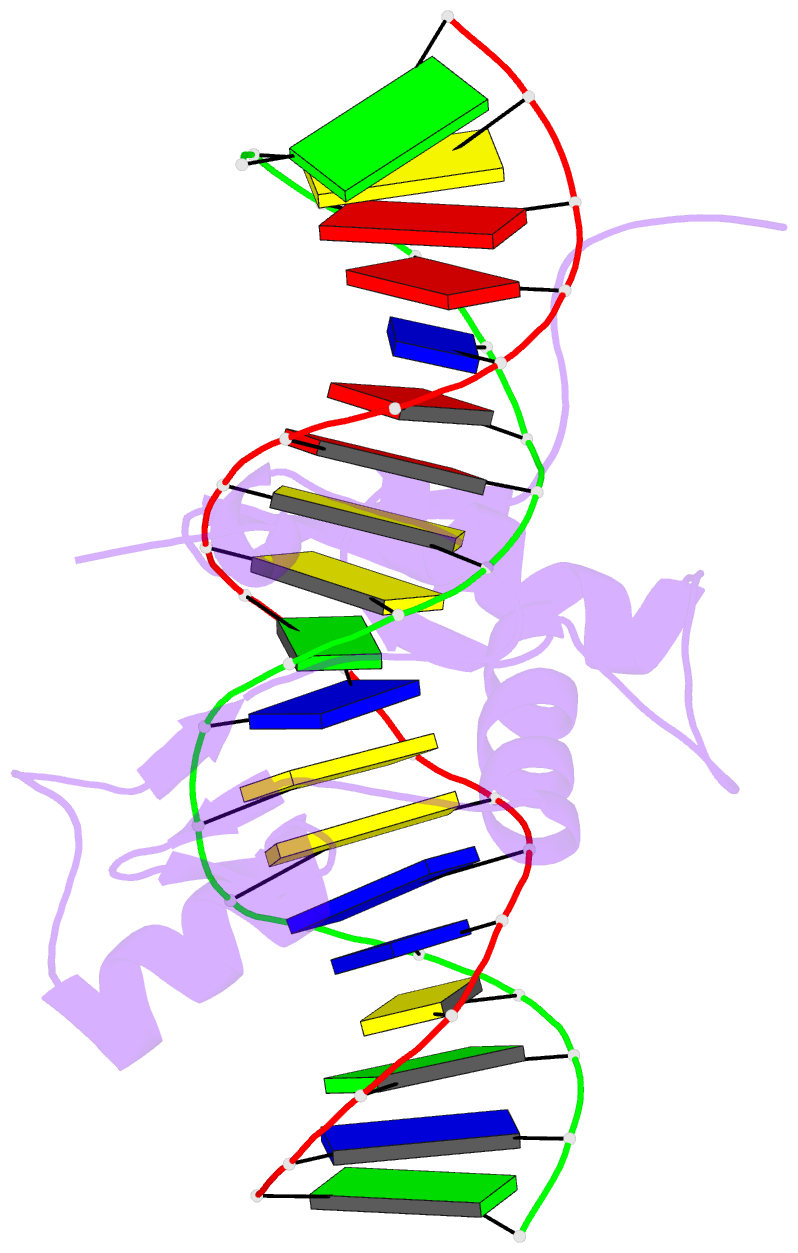
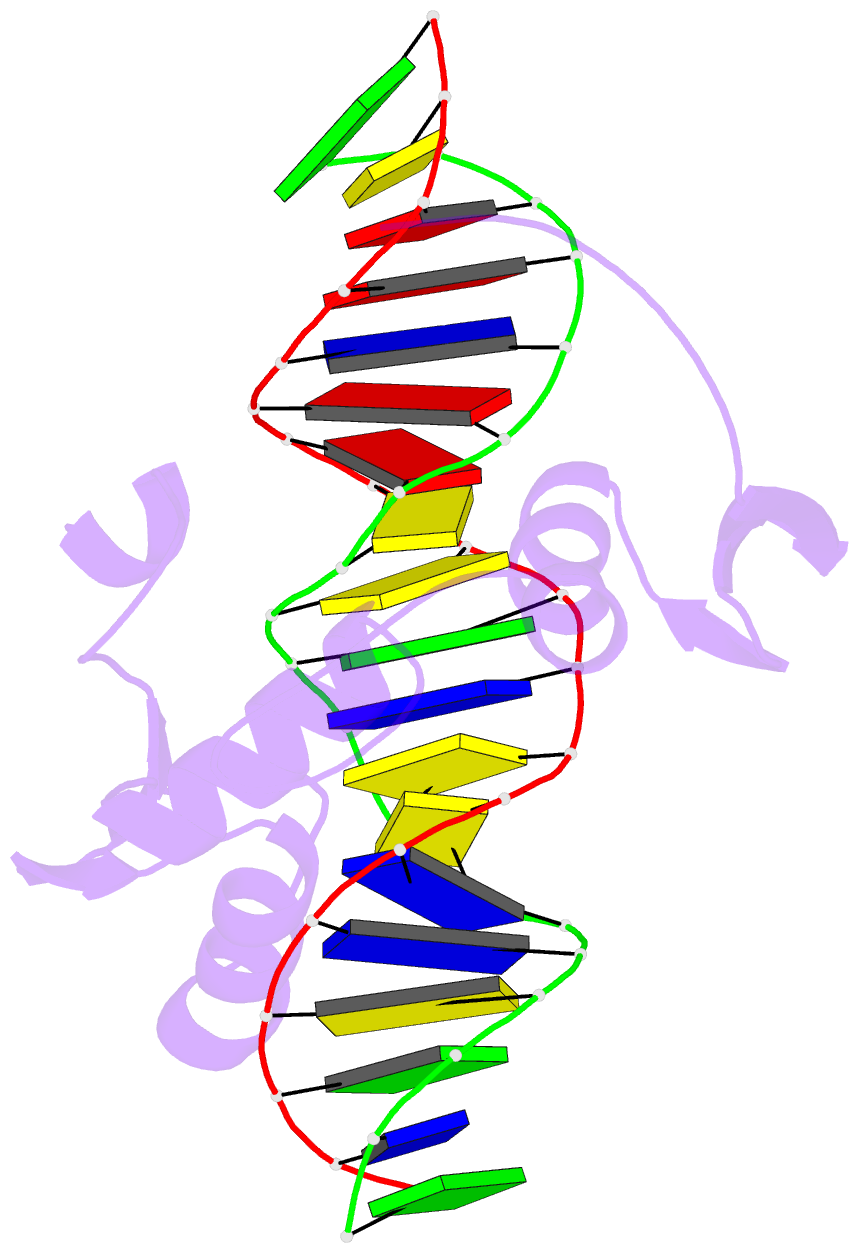
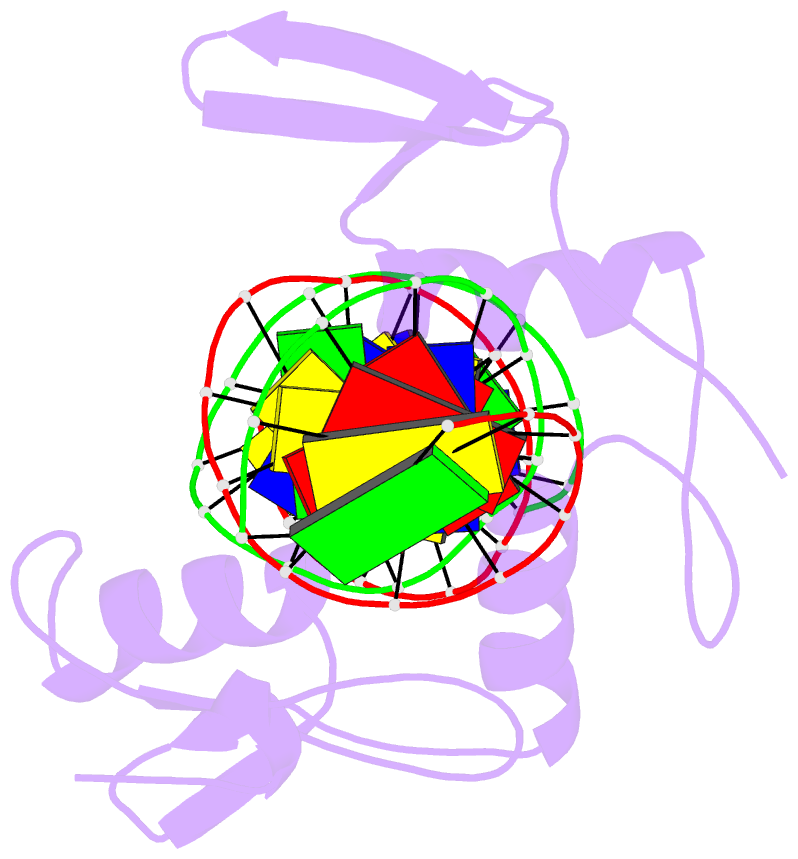
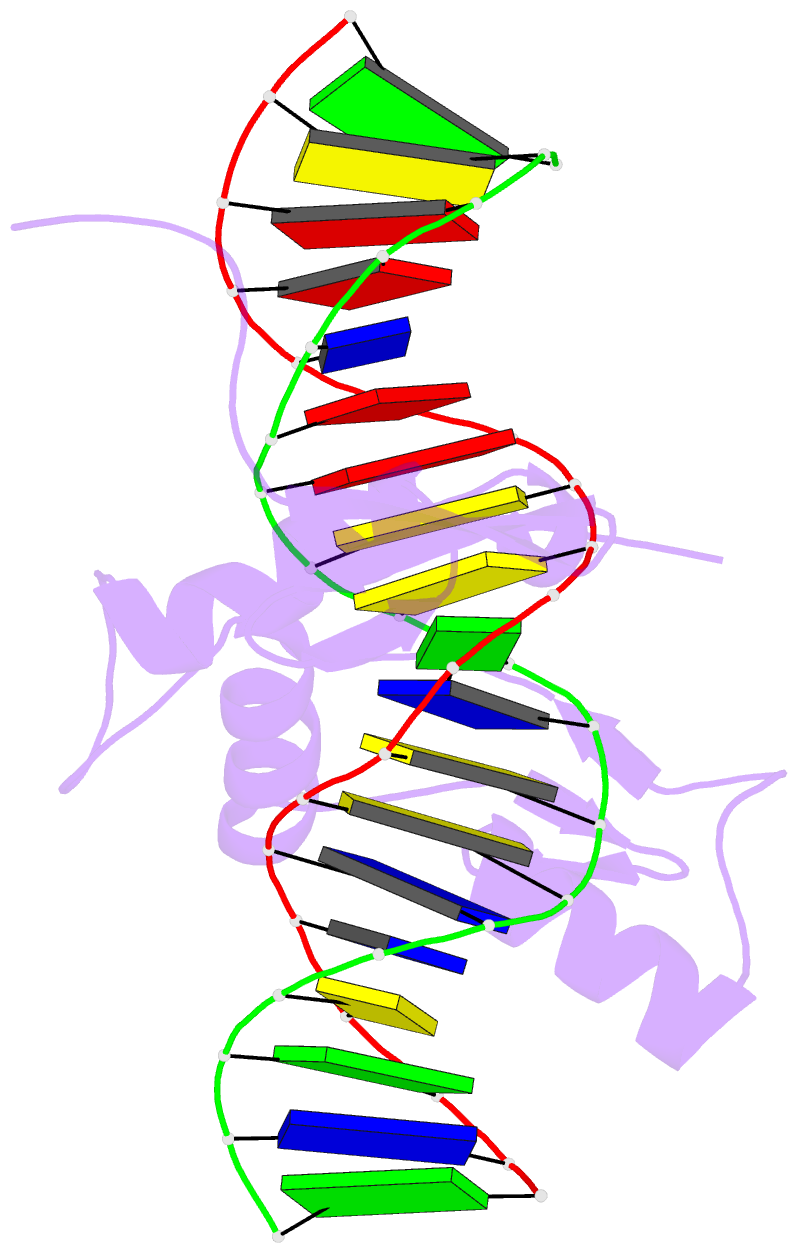
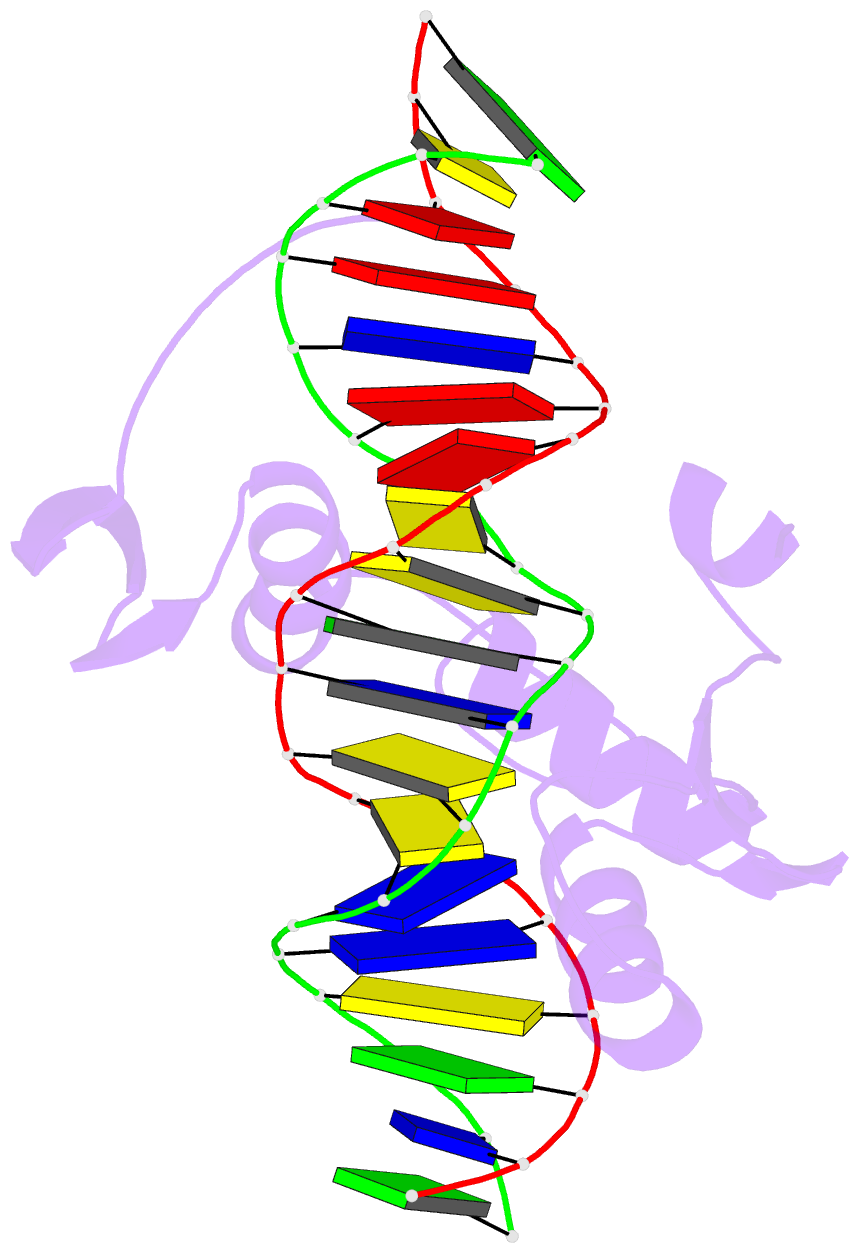
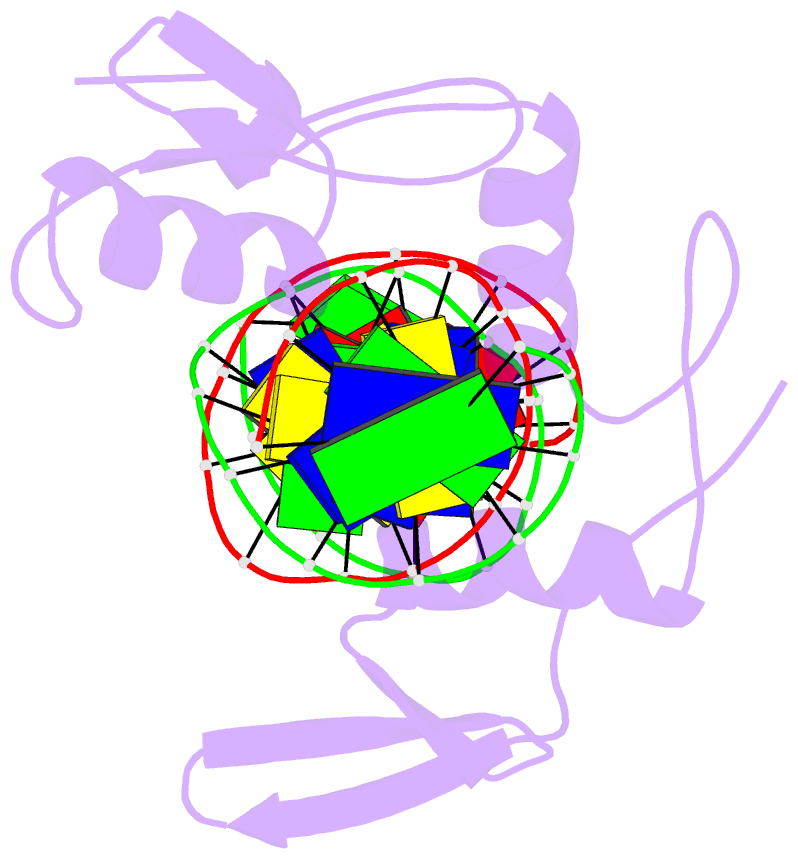
- Solution NMR structure of kaiso zinc finger DNA binding
domain in complex with kaiso binding site DNA
- Reference
-
Buck-Koehntop BA, Stanfield RL, Ekiert DC,
Martinez-Yamout MA, Dyson HJ, Wilson IA, Wright PE
(2012): "Molecular
basis for recognition of methylated and specific DNA
sequences by the zinc finger protein Kaiso."
Proc.Natl.Acad.Sci.USA, 109,
15229-15234. doi: 10.1073/pnas.1213726109.
- Abstract
- Methylation of CpG dinucleotides in DNA is a common
epigenetic modification in eukaryotes that plays a central
role in maintenance of genome stability, gene silencing,
genomic imprinting, development, and disease. Kaiso, a
bifunctional Cys(2)His(2) zinc finger protein implicated in
tumor-cell proliferation, binds to both methylated CpG
(mCpG) sites and a specific nonmethylated DNA motif
(TCCTGCNA) and represses transcription by recruiting
chromatin remodeling corepression machinery to target
genes. Here we report structures of the Kaiso zinc finger
DNA-binding domain in complex with its nonmethylated,
sequence-specific DNA target (KBS) and with a symmetrically
methylated DNA sequence derived from the promoter region of
E-cadherin. Recognition of specific bases in the major
groove of the core KBS and mCpG sites is accomplished
through both classical and methyl CH···O hydrogen-bonding
interactions with residues in the first two zinc fingers,
whereas residues in the C-terminal extension following the
third zinc finger bind in the opposing minor groove and are
required for high-affinity binding. The C-terminal region
is disordered in the free protein and adopts an ordered
structure upon binding to DNA. The structures of these
Kaiso complexes provide insights into the mechanism by
which a zinc finger protein can recognize mCpG sites as
well as a specific, nonmethylated regulatory DNA
sequence.