Summary information and primary citation
- PDB-id
-
2ihx;
DSSR-derived features in text and
JSON formats
- Class
- viral protein-RNA
- Method
- NMR
- Summary
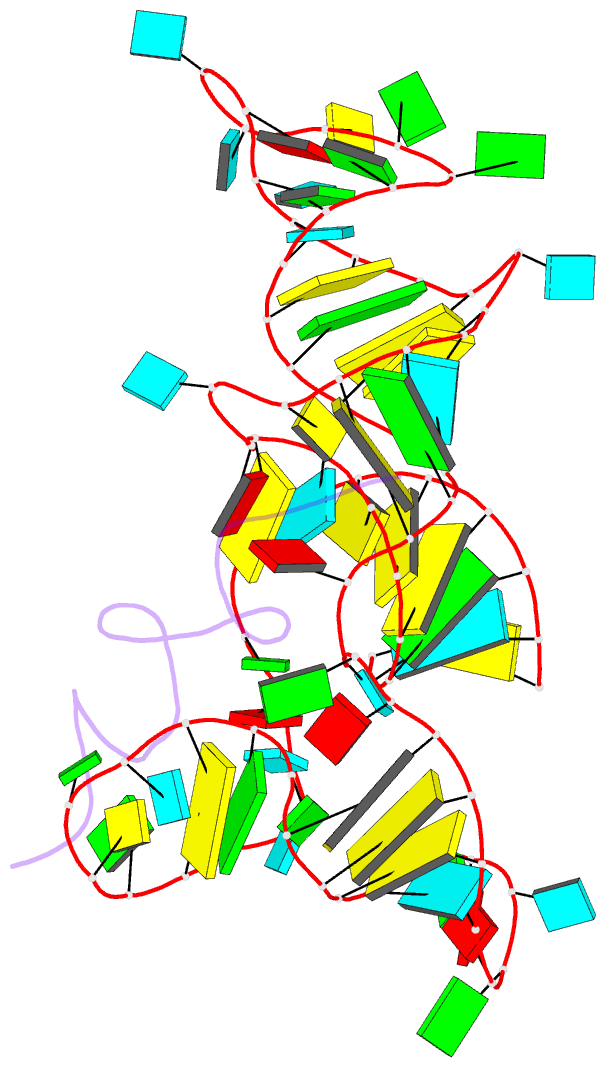
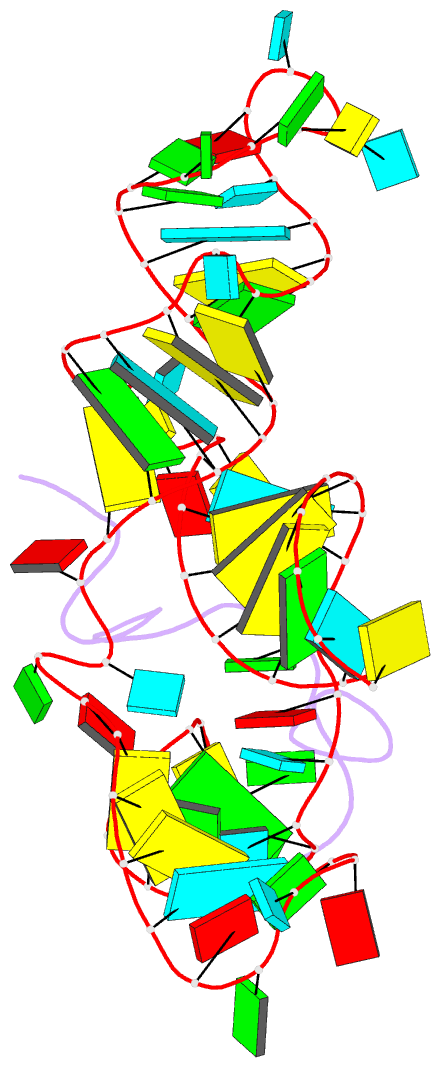
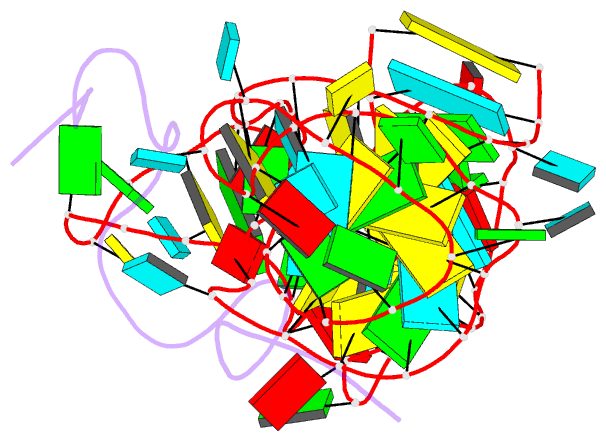
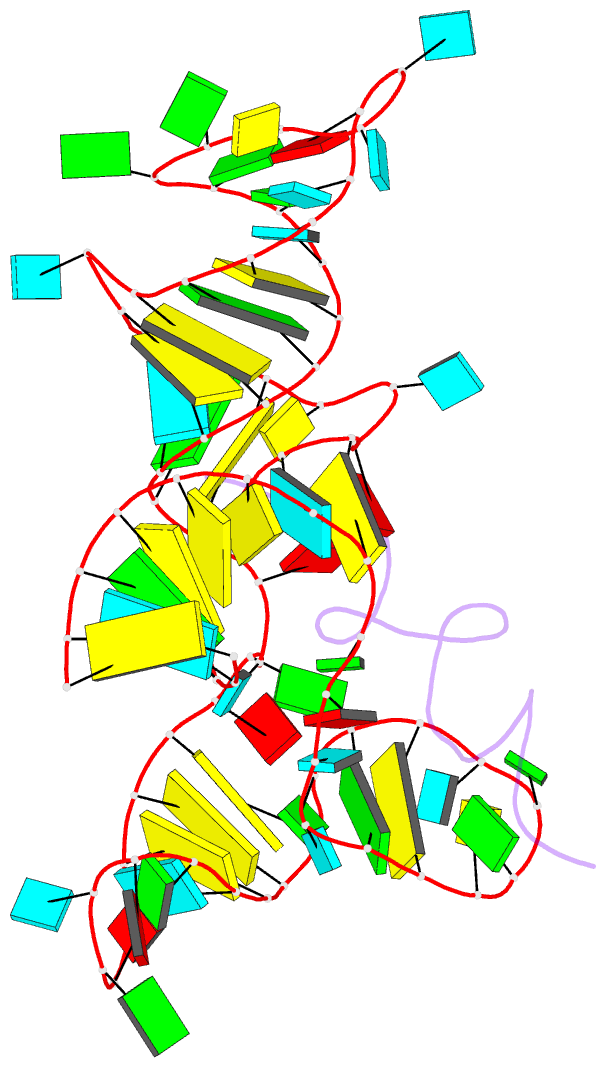
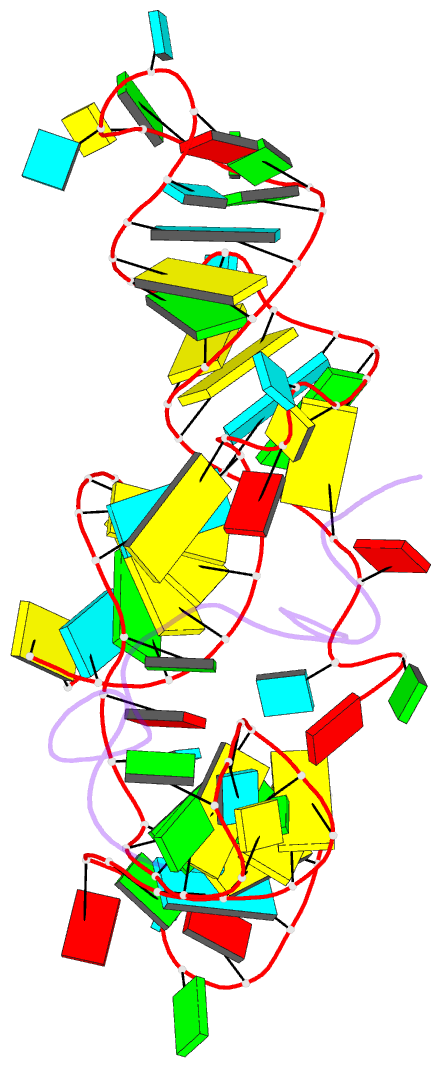
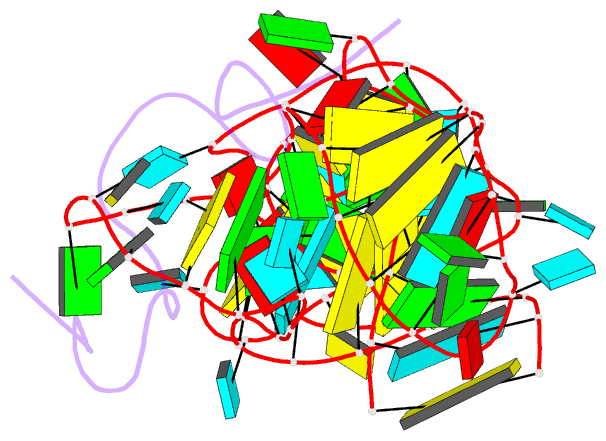
- Solution structure of the rous sarcoma virus
nucleocapsid protein:upsi RNA packaging signal complex
- Reference
-
Zhou J, Bean RL, Vogt VM, Summers M (2007): "Solution
Structure of the Rous Sarcoma Virus Nucleocapsid Protein:
muPsi RNA Packaging Signal Complex."
J.Mol.Biol., 365, 453-467. doi:
10.1016/j.jmb.2006.10.013.
- Abstract
- The 5'-untranslated region (5'-UTR) of retroviral
genomes contains elements required for genome packaging
during virus assembly. For many retroviruses, the packaging
elements reside in non-contiguous segments that span most
or all of the 5'-UTR. The Rous sarcoma virus (RSV) is an
exception, in that its genome can be packaged efficiently
by a relatively short, 82 nt segment of the 5'-UTR called
muPsi. The RSV 5'-UTR also contains three translational
start codons (AUG-1, AUG-2 and AUG-3) that have been
controvertibly implicated in translation initiation and
genome packaging, one of which (AUG-3) resides within the
muPsi sequence. We demonstrated recently that muPsi is
capable of binding to the cognate RSV nucleocapsid protein
(NC) with high affinity (dissociation constant K(d)
approximately 2 nM), and that residues of AUG-3 are
essential for tight binding. We now report the solution
structure of the NC:muPsi complex, determined using NMR
data obtained for samples containing ((13)C,(15)N)-labeled
NC and (2)H-enriched, nucleotide-specifically protonated
RNAs. Upon NC binding, muPsi adopts a stable secondary
structure that consists of three stem loops (SL-A, SL-B and
SL-C) and an 8 bp stem (O3). Binding is mediated by the two
zinc knuckle domains of NC. The N-terminal knuckle
interacts with a conserved U(217)GCG tetraloop (a member of
the UNCG family; N=A,U,G or C), and the C-terminal zinc
knuckle binds to residues that flank SL-A, including
residues of AUG-3. Mutations of critical nucleotides in
these sequences compromise or abolish viral infectivity.
Our studies reveal novel structural features important for
NC:RNA binding, and support the hypothesis that AUG-3 is
conserved for genome packaging rather than translational
control.