Summary information and primary citation
- PDB-id
-
2icz;
DSSR-derived features in text and
JSON formats
- Class
- DNA
- Method
- NMR
- Summary
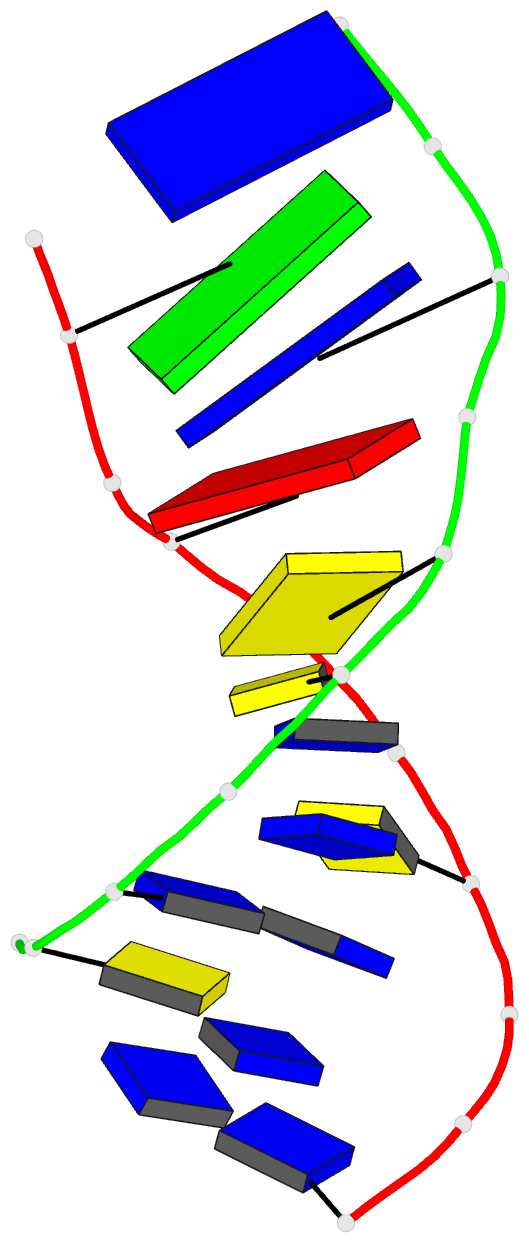
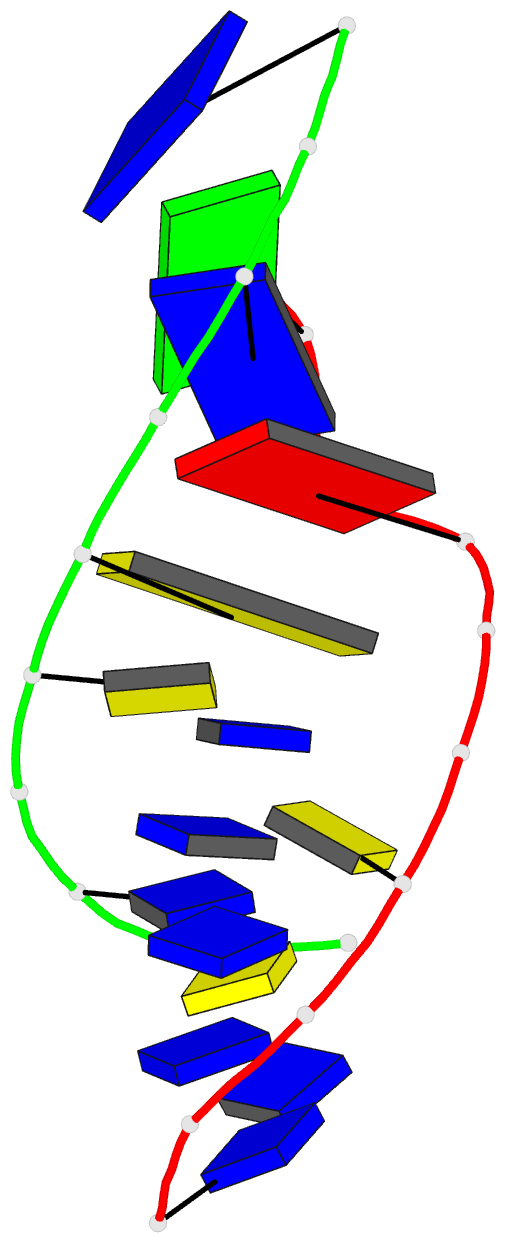
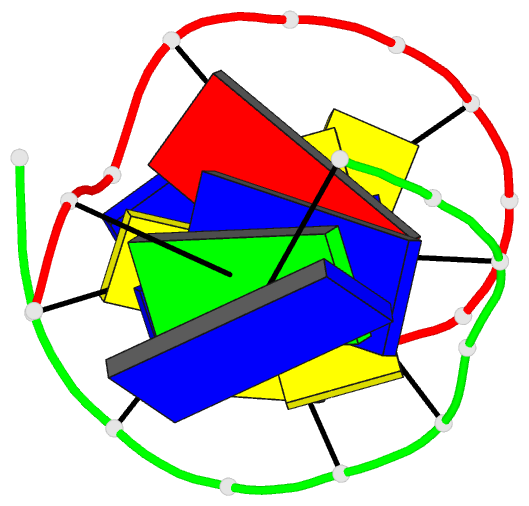
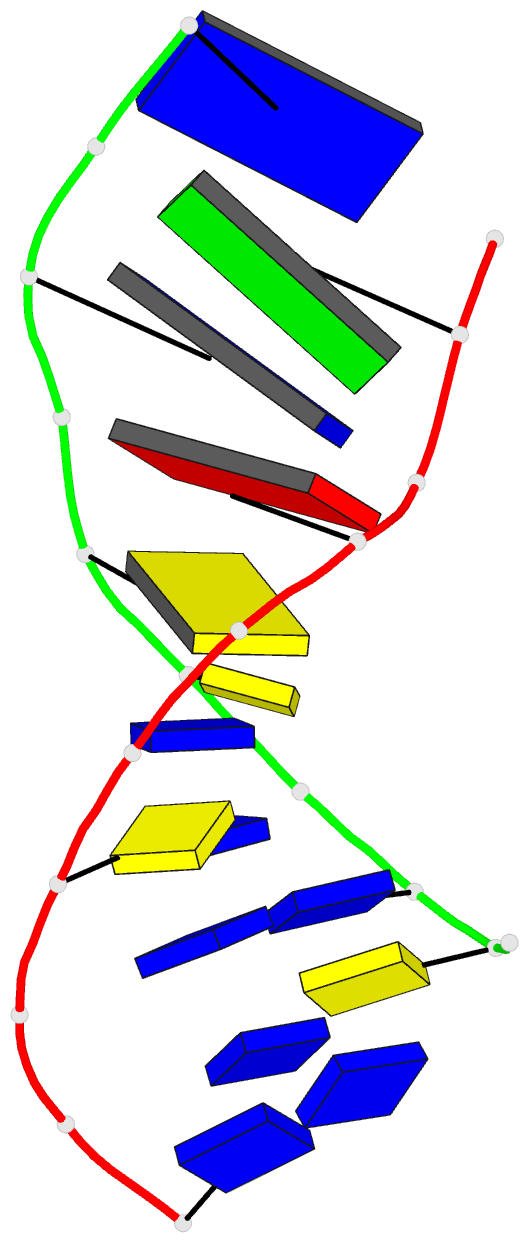
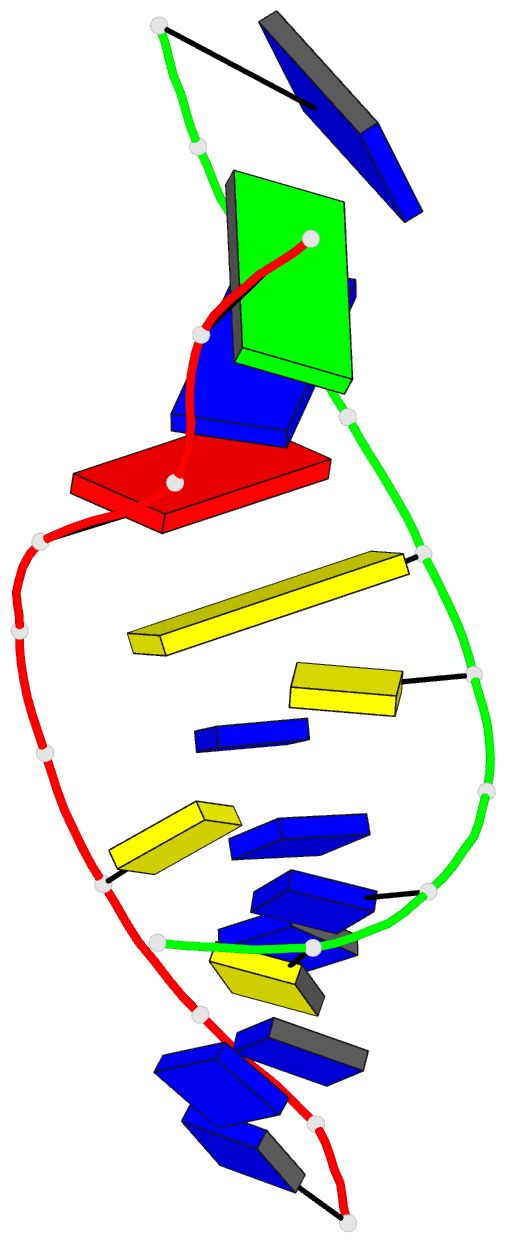
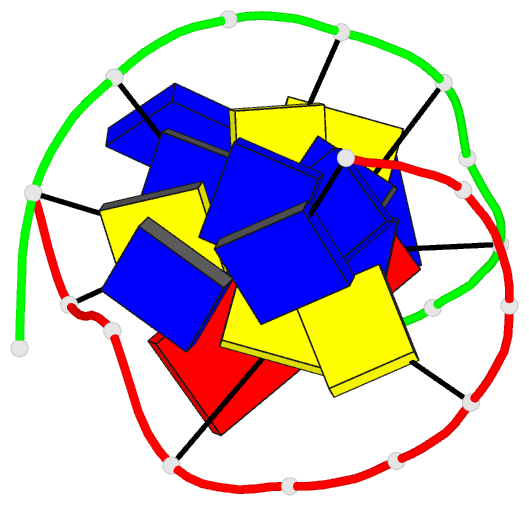
- NMR structures of the expanded DNA 10bp
xtgxtaxcxgcxaxgt:xactxgcgxtaxca
- Reference
-
Lynch SR, Liu H, Gao J, Kool ET (2006): "Toward a
Designed, Functioning Genetic System with Expanded-Size
Base Pairs: Solution Structure of the Eight-Base xDNA
Double Helix." J.Am.Chem.Soc.,
128, 14704-14711. doi: 10.1021/ja065606n.
- Abstract
- We describe the NMR-derived solution structure of the
double-helical form of a designed eight-base genetic
pairing system, termed xDNA. The benzo-homologous xDNA
design contains base pairs that are wider than natural DNA
pairs by ca. 2.4 A (the width of a benzene ring). The eight
component bases of this xDNA helix are A, C, G, T, xA, xT,
xC, and xG. The structure was solved in aqueous buffer
using 1D and 2D NMR methods combined with restrained
molecular dynamics. The data show that the decamer duplex
is right-handed and antiparallel, and hydrogen-bonded in a
way analogous to that of Watson-Crick DNA. The
sugar-phosphate backbone adopts a regular conformation
similar to that of B-form DNA, with small dihedral
adjustments due to the larger circumference of the helix.
The grooves are much wider and more shallow than those of
B-form DNA, and the helix turn is slower, with ca. 12 base
pairs per 360 degrees turn. There is an extensive intra-
and interstrand base stacking surface area, providing an
explanation for the greater stability of xDNA relative to
natural DNA. There is also evidence for greater motion in
this structure compared to a previous two-base-expanded
helix; possible chemical and structural reasons for this
are discussed. The results confirm paired self-assembly of
the designed xDNA system. This suggests the possibility
that other genetic system structures besides the natural
one might be functional in encoding information and
transferring it to new complementary strands.