Summary information and primary citation
- PDB-id
-
1t2t;
DSSR-derived features in text and
JSON formats
- Class
- hydrolase-DNA
- Method
- X-ray (2.5 Å)
- Summary
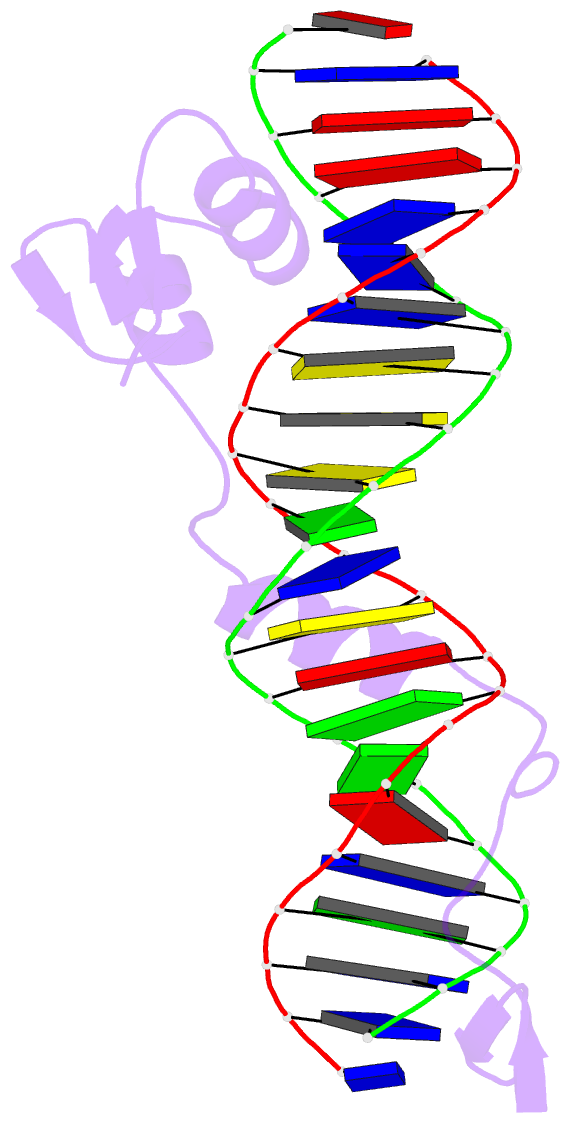
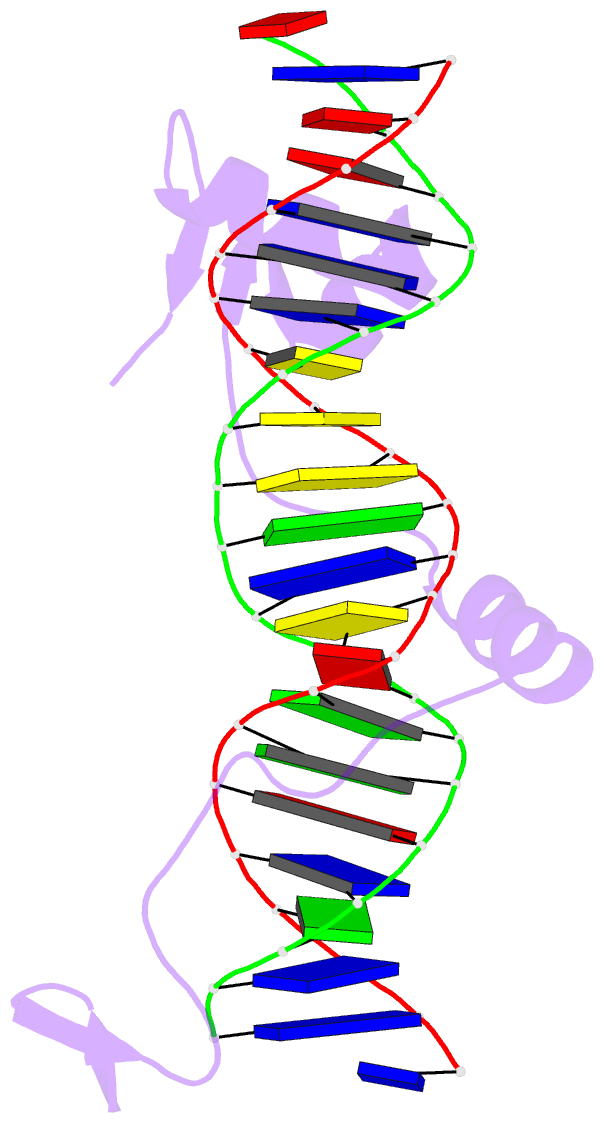
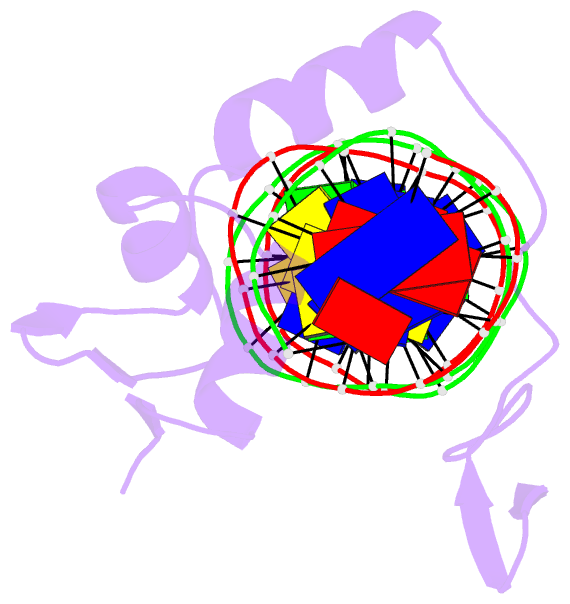
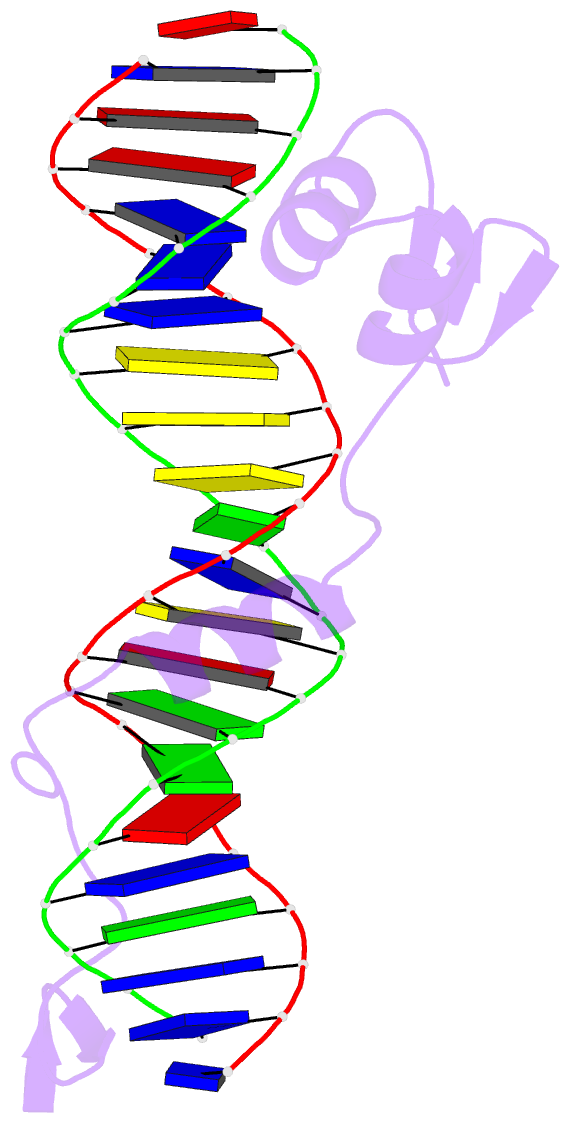
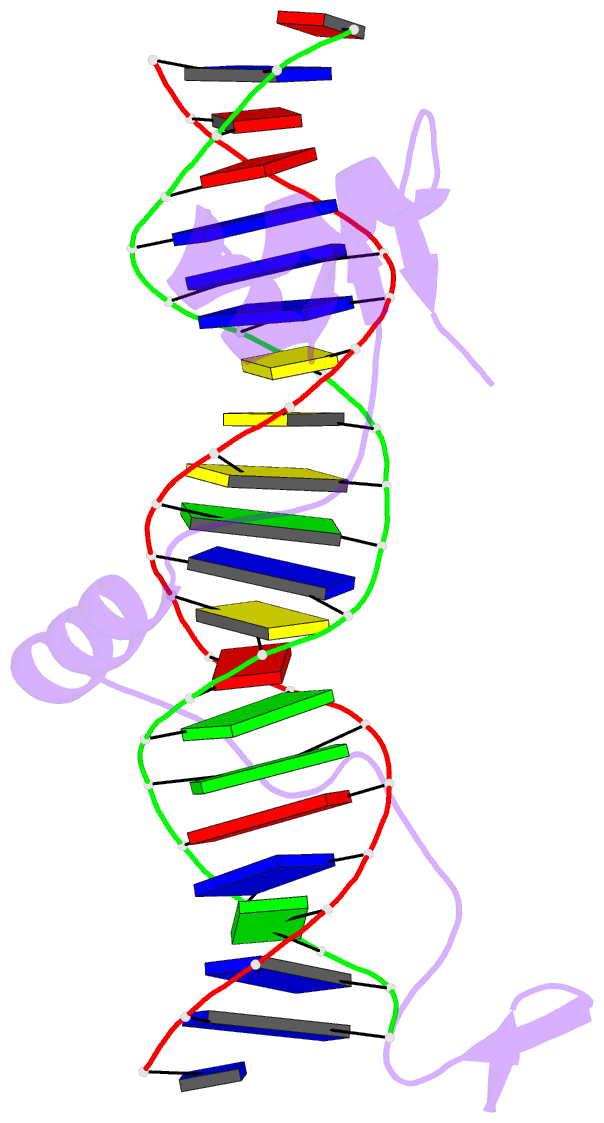
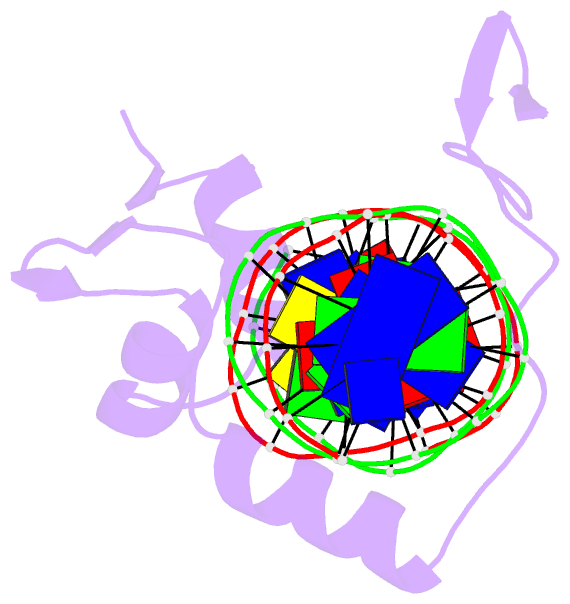
- Crystal structure of the DNA-binding domain of intron
endonuclease i-tevi with operator site
- Reference
-
Edgell DR, Derbyshire V, Van Roey P, LaBonne S, Stanger
MJ, Li Z, Boyd TM, Shub DA, Belfort M (2004): "Intron-encoded
homing endonuclease I-TevI also functions as a
transcriptional autorepressor."
Nat.Struct.Mol.Biol., 11,
936-944. doi: 10.1038/nsmb823.
- Abstract
- Customary binding sites of intron-encoded homing
endonucleases lie within cognate intronless alleles, at the
so-called homing sites. Here, we describe a novel,
high-affinity binding site for I-TevI endonuclease, encoded
within the group I td intron of phage T4. This site is an
operator that overlaps the T4 late promoter, which drives
I-TevI expression from within the td intron. I-TevI binds
the operator and homing sites with equal affinity, and
functions as a transcriptional autorepressor. Distinct
sequence and spacing requirements of the catalytic domain
result in reduced cleavage activity on operator DNA.
Crystallographic studies showed that the overall
interactions of the DNA-binding domain with the operator
and homing sites are similar, but have some different
hydrogen-bonding contacts. We present a model in which the
flexibility in protein-DNA interactions allows I-TevI to
bind variant intronless alleles to promote intron mobility
while facilitating its function in autorepression, and
thereby persistence in its host.