Summary information and primary citation
- PDB-id
-
1rgu;
DSSR-derived features in text and
JSON formats
- Class
- hydrolase-DNA
- Method
- X-ray (2.22 Å)
- Summary
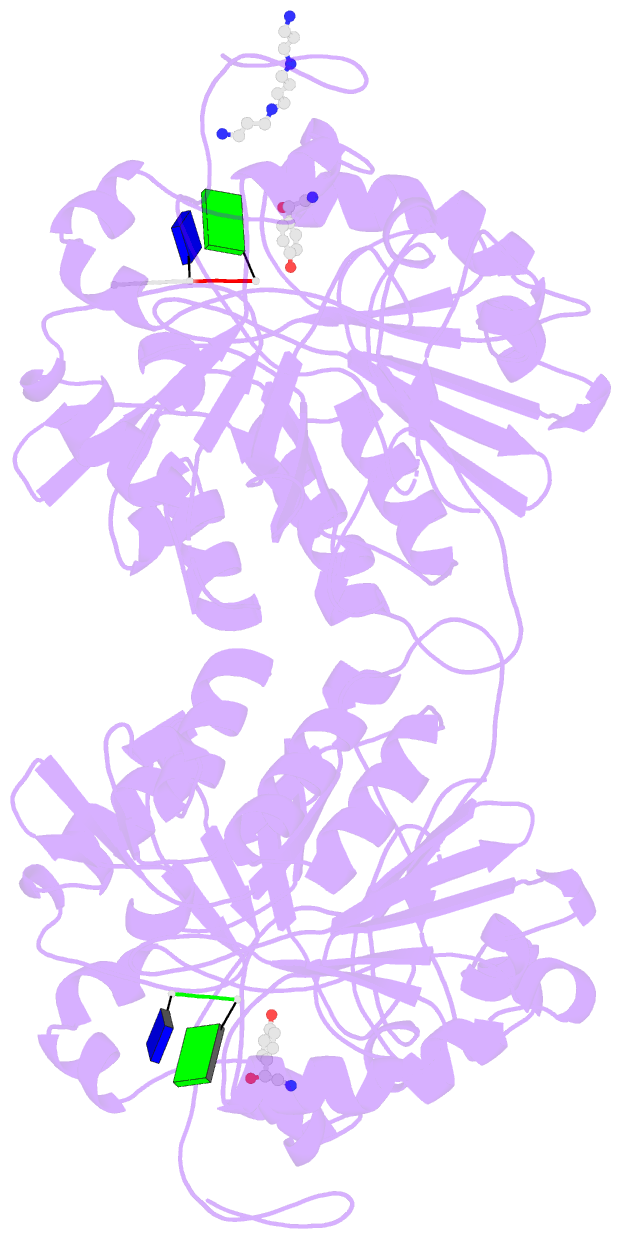
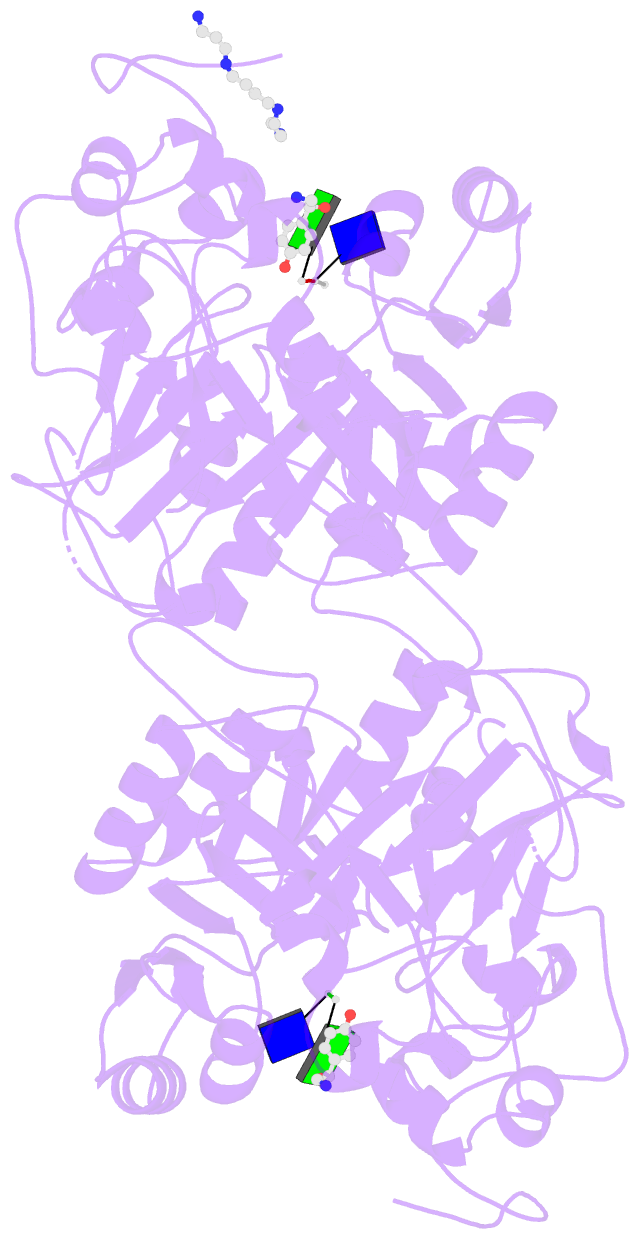
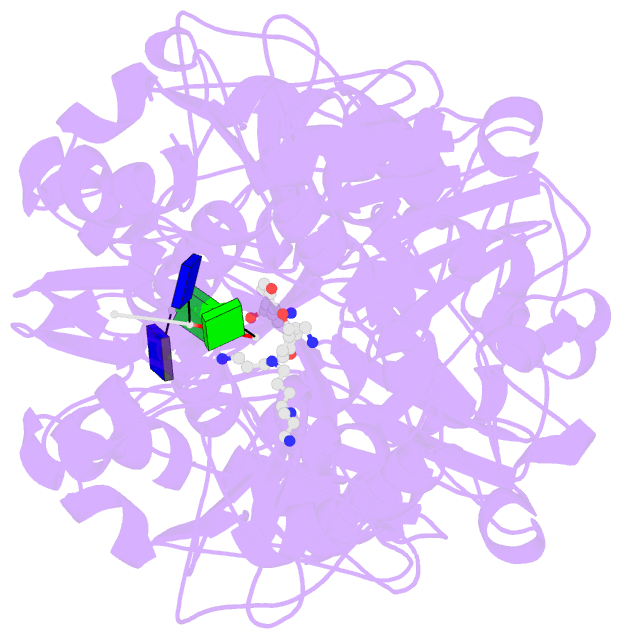
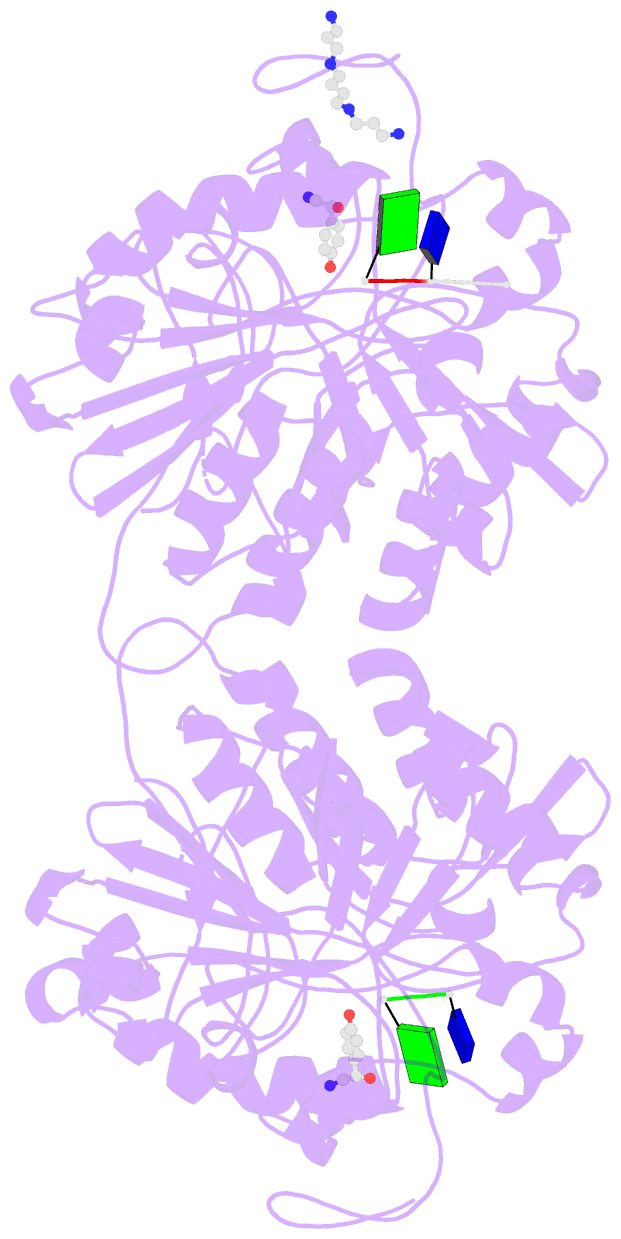
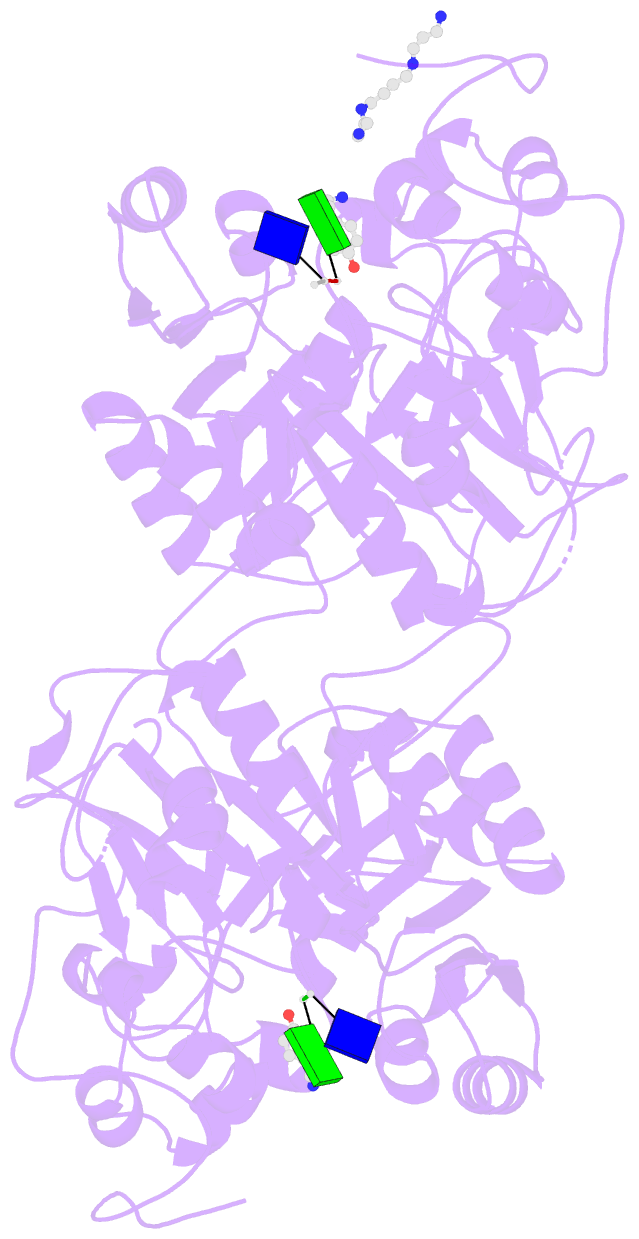
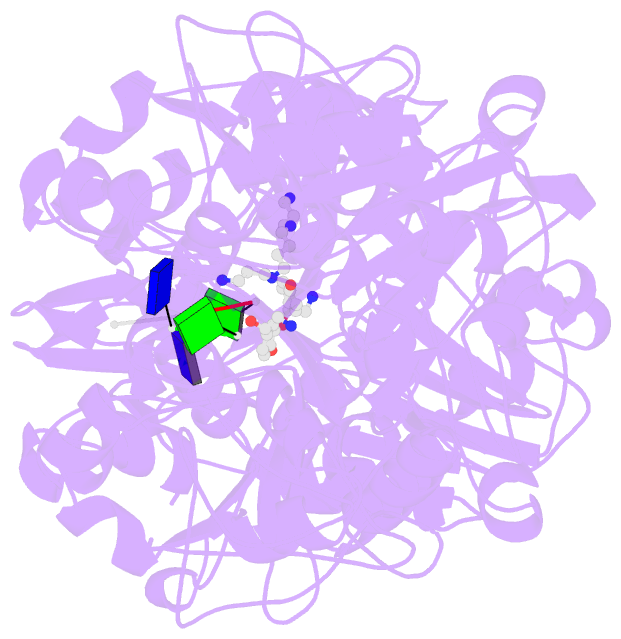
- The crystal structure of human tyrosyl-DNA
phosphodiesterase complexed with vanadate, octopamine, and
tetranucleotide agtg
- Reference
-
Davies DR, Interthal H, Champoux JJ, Hol WG (2004):
"Explorations
of peptide and oligonucleotide binding sites of
tyrosyl-DNA phosphodiesterase using vanadate
complexes." J.Med.Chem.,
47, 829-837. doi: 10.1021/jm030487x.
- Abstract
- Tyrosyl-DNA phosphodiesterase (Tdp1) catalyzes the
hydrolysis of a phosphodiester bond between a tyrosine
residue and a DNA 3' phosphate and functions as a DNA
repair enzyme that cleaves stalled topoisomerase I-DNA
complexes. We previously determined a procedure to
crystallize a quaternary complex containing Tdp1, vanadate,
a DNA oligonucleotide, and a tyrosine-containing peptide
that mimics the transition state for hydrolysis of the Tdp1
substrate. Here, the ability of vanadate to accept a
variety of different ligands is exploited to produce
several different quaternary complexes with a variety of
oligonucleotides, and peptides or a tyrosine analogue, in
efforts to explore the binding properties of the Tdp1 DNA
and peptide binding clefts. Eight crystal structures of
Tdp1 with vanadate, oligonucleotides, and peptides or
peptide analogues were determined. These structures
demonstrated that Tdp1 is able to bind substituents with
limited sequence variation in the polypeptide moiety and
also bind oligonucleotides with sequence variation at the
3' end. Additionally, the tyrosine analogue octopamine can
replace topoisomerase I derived peptides as the apical
ligand to vanadate. The versatility of this system suggests
that the formation of quaternary complexes around vanadate
could be adapted to become a useful method for
structure-based inhibitor design and has the potential to
be generally applicable to other enzymes that perform
chemistry on phosphate esters.