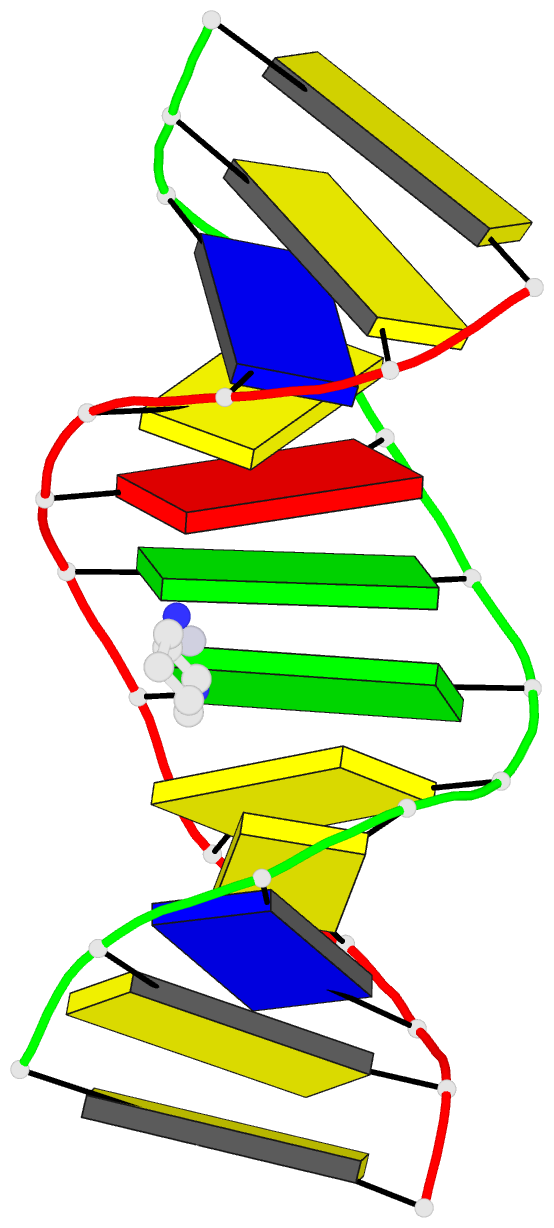
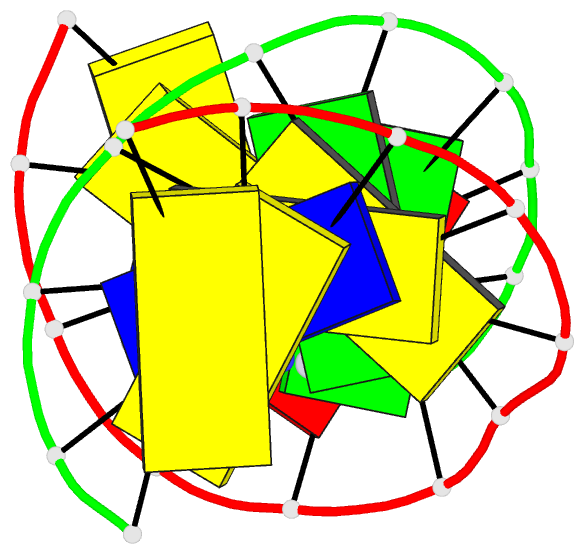
Summary information and primary citation
- PDB-id
-
1pg9;
DSSR-derived features in text and
JSON formats
- Class
- DNA
- Method
- NMR
- Summary
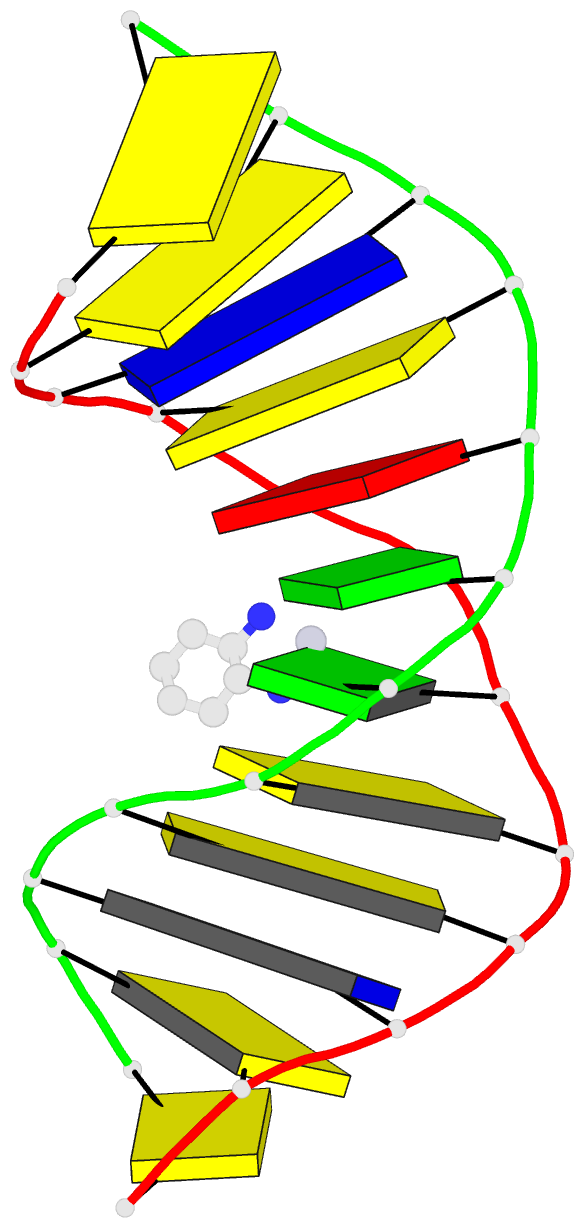
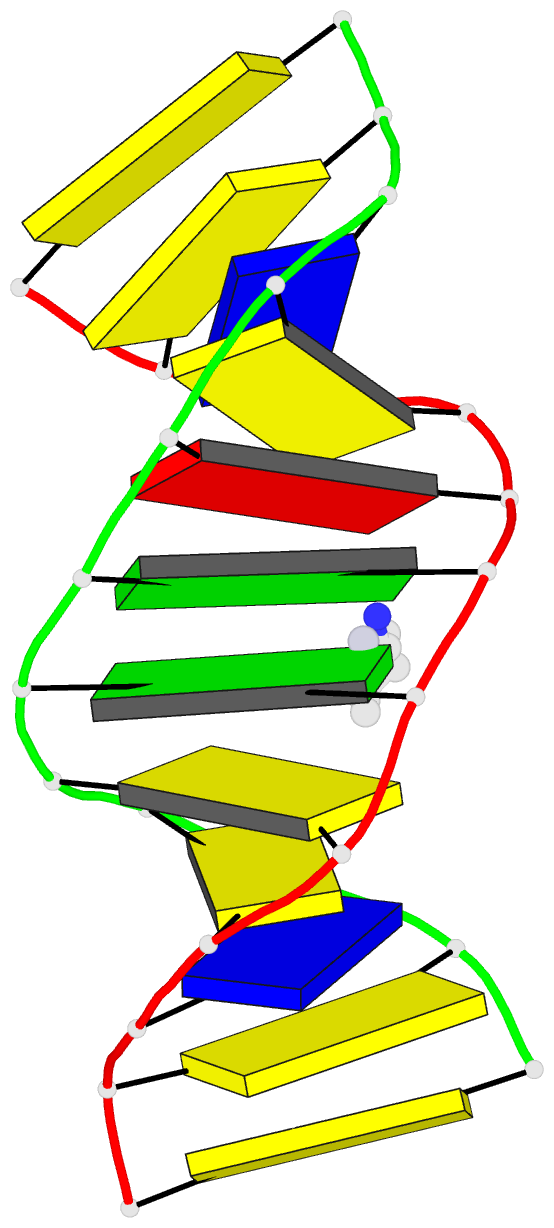
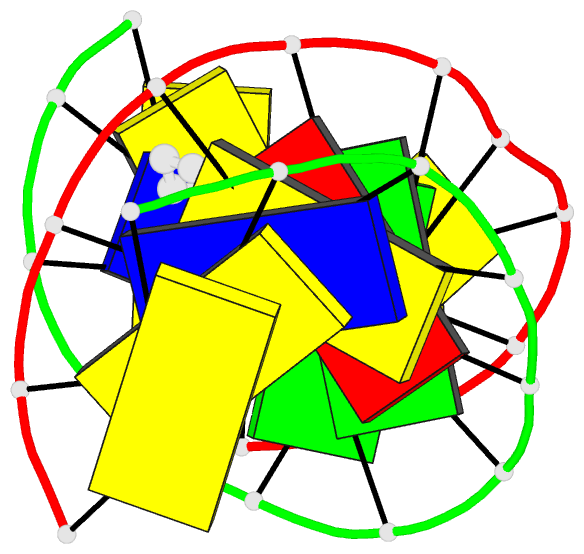
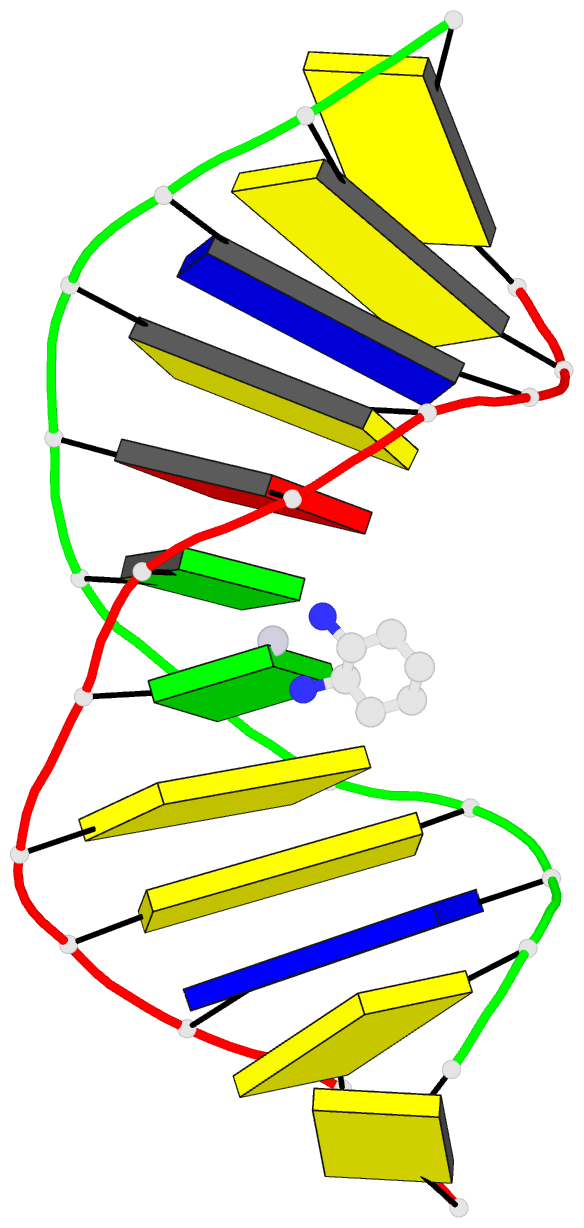
- NMR solution structure of an oxaliplatin 1,2-d(gg)
intrastrand cross-link in a DNA dodecamer duplex
- Reference
-
Wu Y, Pradhan P, Havener J, Boysen G, Swenberg JA,
Campbel SL, Chaney SG (2004): "NMR
solution structure of an oxaliplatin 1,2-d(GG)
intrastrand cross-link in a DNA dodecamer duplex."
J.Mol.Biol., 341, 1251-1269.
doi: 10.1016/j.jmb.2004.06.066.
- Abstract
- We have determined, at high resolution, the NMR
solution structure of an oxaliplatin-GG DNA dodecamer in
the AGGC sequence context by 2D NMR studies. Homonuclear
assignment strategies resulted in unambiguous assignment of
203 out of 249 protons, which corresponds to assignment of
approximately 81% of the protons. Assignments of H5' and
H5" protons were tentative due to resonance overlap. The
structure of the oxaliplatin duplex was calculated using
the program CNS with a simulated annealing protocol. A
total of 510 experimental restraints were employed in the
structure calculation. Of 20 calculated structures, the 15
with the lowest energy were accepted as a family. The RMSD
of the 15 lowest energy structures was 0.68 A, indicating
good structural convergence. The theoretical NOESY spectrum
obtained by back-calculation from the final average
structure showed excellent agreement with the experimental
data, indicating that the final structure was in good
agreement with the experimental NMR data. Significant
conformational differences were observed between the
oxaliplatin-GG 12-mer DNA we studied and all previous
solution structures of cisplatin-GG DNA duplexes. For
example, the oxaliplatin-GG adduct shows much less
distortion at the AG base-pair step than the cisplatin-GG
adducts. In addition, the oxaliplatin-GG structure also has
a narrow minor groove and an overall axis bend of about 31
degrees, both of which are very different from the recent
NMR structures for the cisplatin-GG adducts. These
structural differences may explain some of the biological
differences between oxaliplatin- and cisplatin-GG
adducts.