Summary information and primary citation
- PDB-id
-
1okf;
DSSR-derived features in text and
JSON formats
- Class
- DNA-RNA hybrid
- Method
- NMR
- Summary
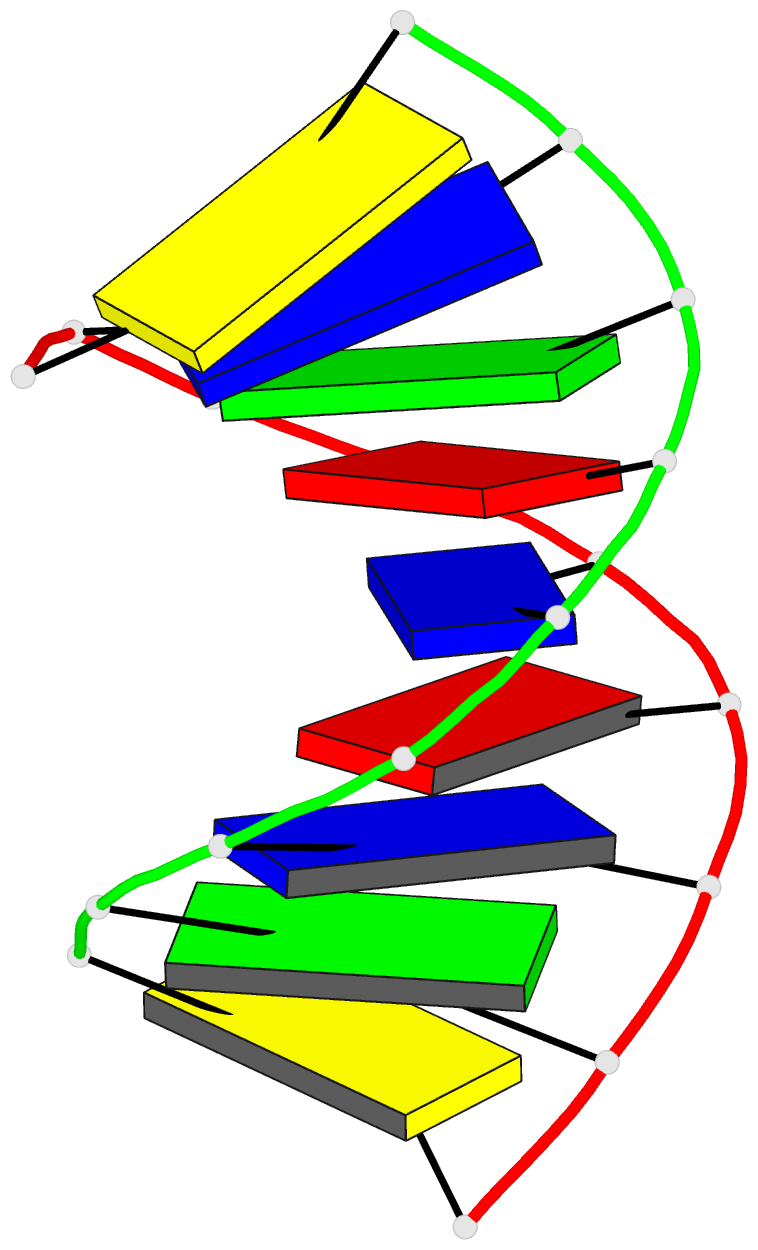
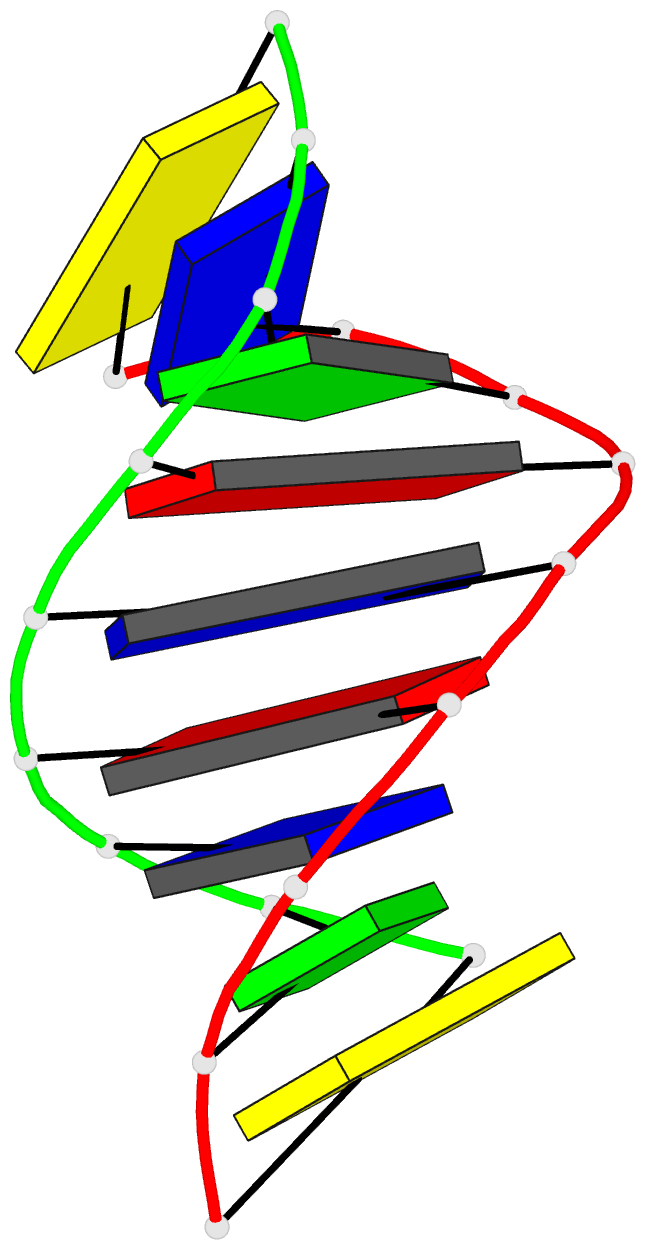
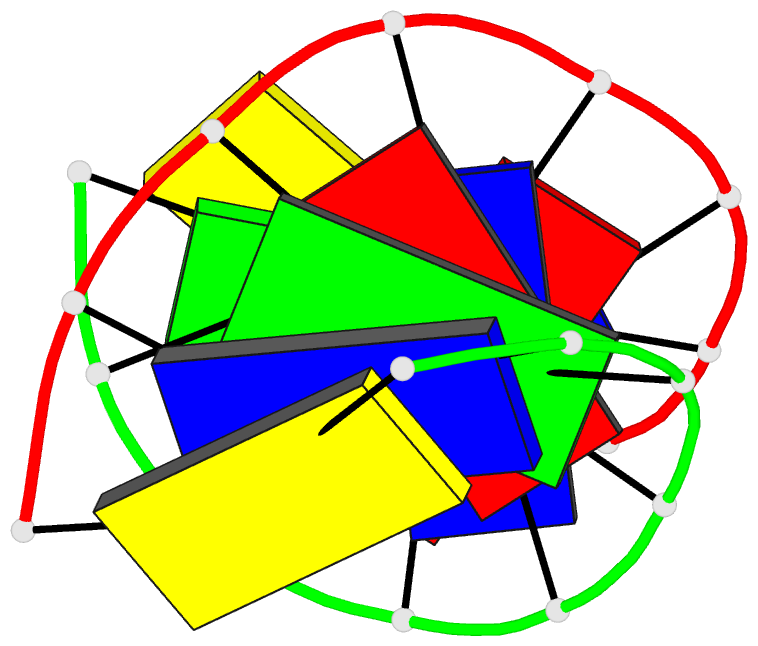
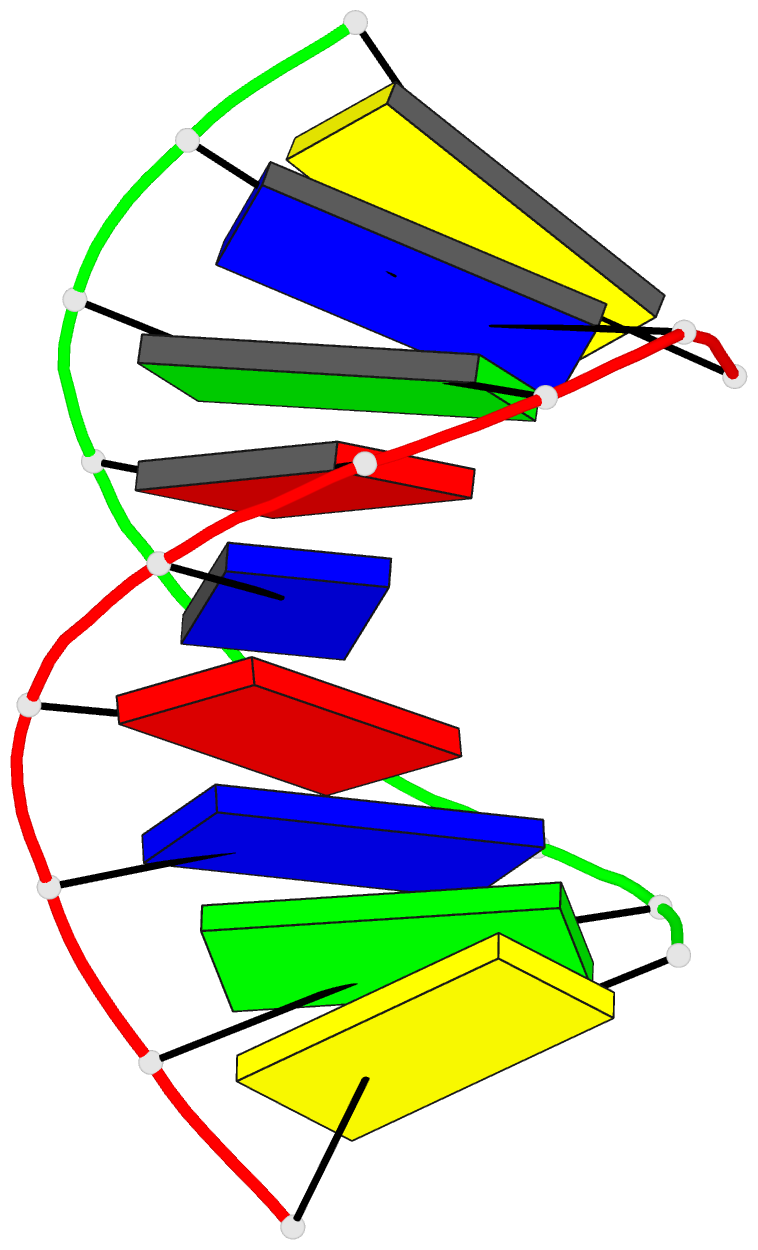
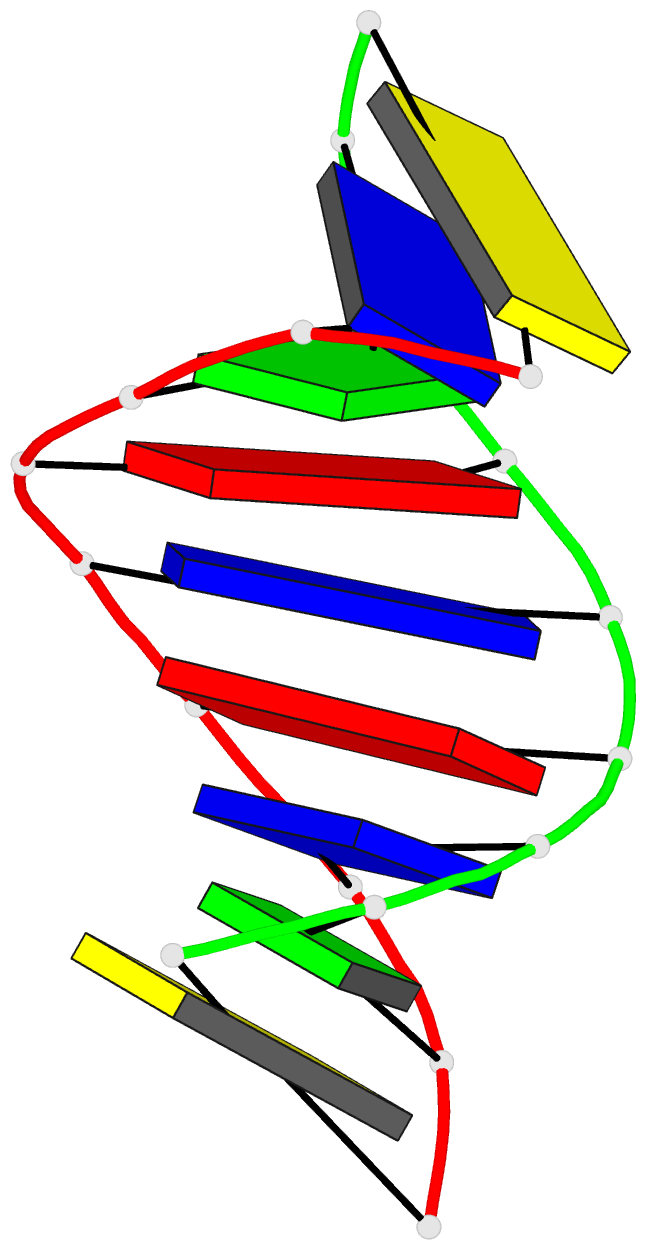
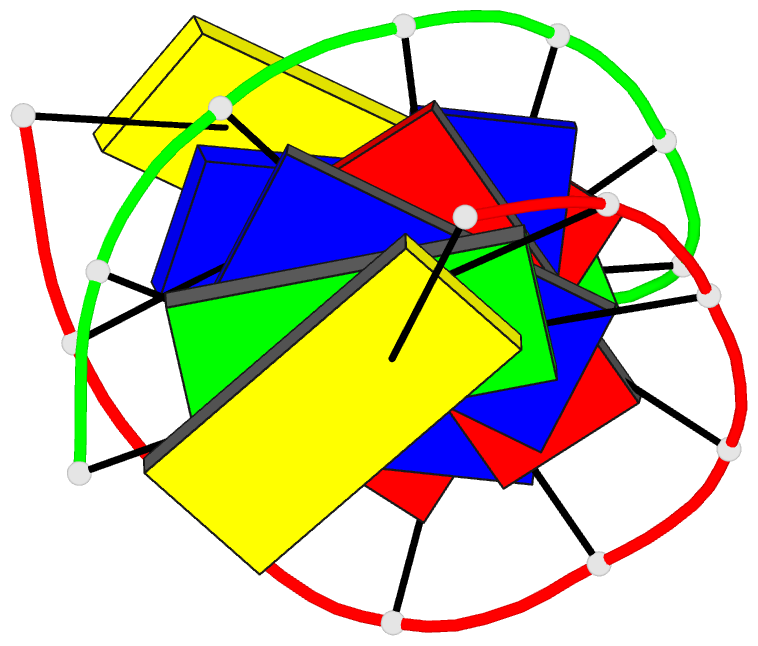
- NMR structure of an alpha-l-lna:RNA hybrid
- Reference
-
Nielsen JT, Stein PC, Petersen M (2003): "NMR
Structure of an Alpha-L-Lna:RNA Hybrid: Structural
Implications for Rnase H Recognition." Nucleic
Acids Res., 31, 5858. doi: 10.1093/NAR/GKG800.
- Abstract
- Alpha-L-LNA (alpha-L-ribo configured locked nucleic
acid) is a nucleotide analogue that raises the
thermostability of nucleic acid duplexes by up to
approximately 4 degrees C per inclusion. We have determined
the NMR structure of a nonamer alpha-L-LNA:RNA hybrid with
three alpha-L-LNA modifications. The geometry of this
hybrid is intermediate between A- and B-type, all
nucleobases partake in Watson-Crick base pairing and base
stacking, and the global structure is very similar to that
of the corresponding unmodified hybrid. The sugar-phosphate
backbone is rearranged in the vicinity of the modified
nucleotides. As a consequence, the phosphate groups
following the modified nucleotides are rotated into the
minor groove. It is interesting that the alpha-L-LNA:RNA
hybrid, which has an elevation in melting temperature of 17
degrees C relative to the corresponding DNA:RNA hybrid,
retains the global structure of this hybrid. To our
knowledge, this is the first example of such a substantial
increase in melting temperature of a nucleic acid analogue
that does not act as an N-type (RNA) mimic. alpha-L-LNA:RNA
hybrids are recognised by RNase H with subsequent cleavage
of the RNA strand, albeit with slow rates. We attempt to
rationalise this impaired enzyme activity from the
rearrangement of the sugar-phosphate backbone of the
alpha-L-LNA:RNA hybrid.