Summary information and primary citation
- PDB-id
-
12sl;
DSSR-derived features in text and
JSON formats
- Class
- replication
- Method
- cryo-EM (2.93 Å)
- Summary
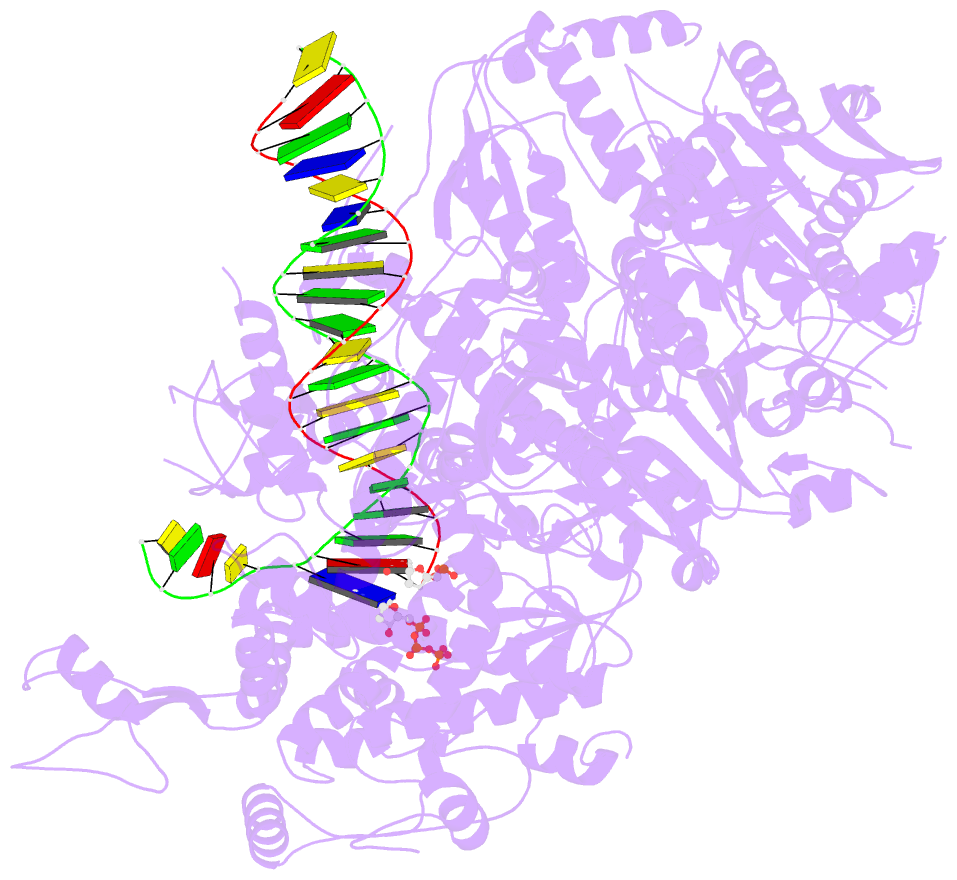
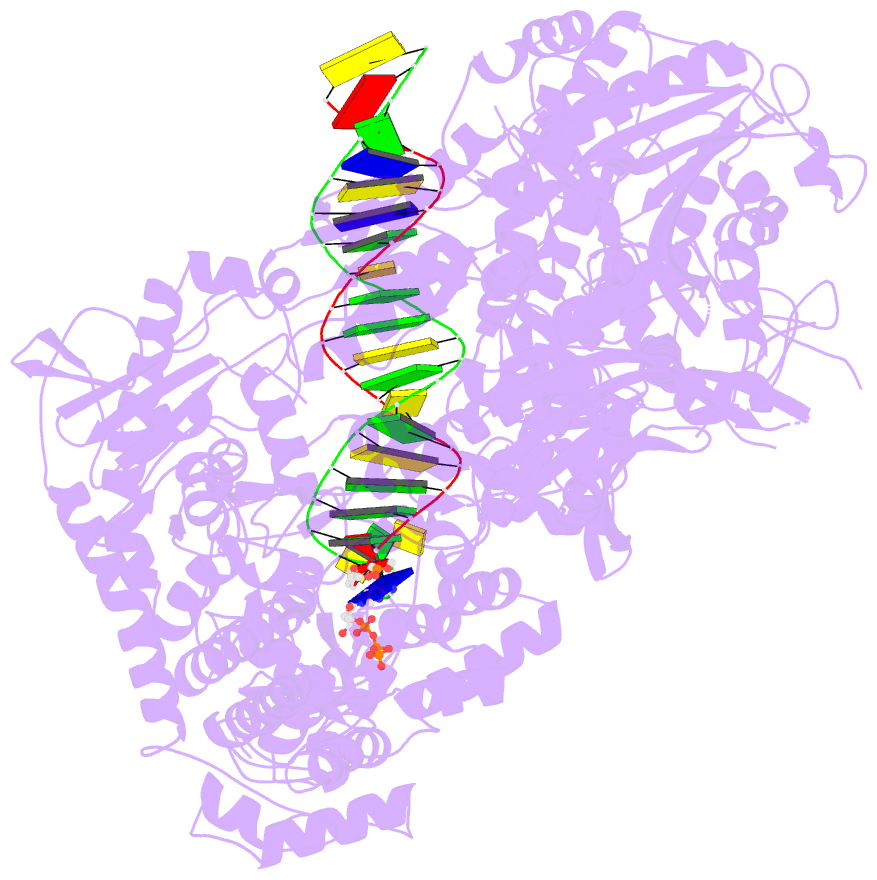
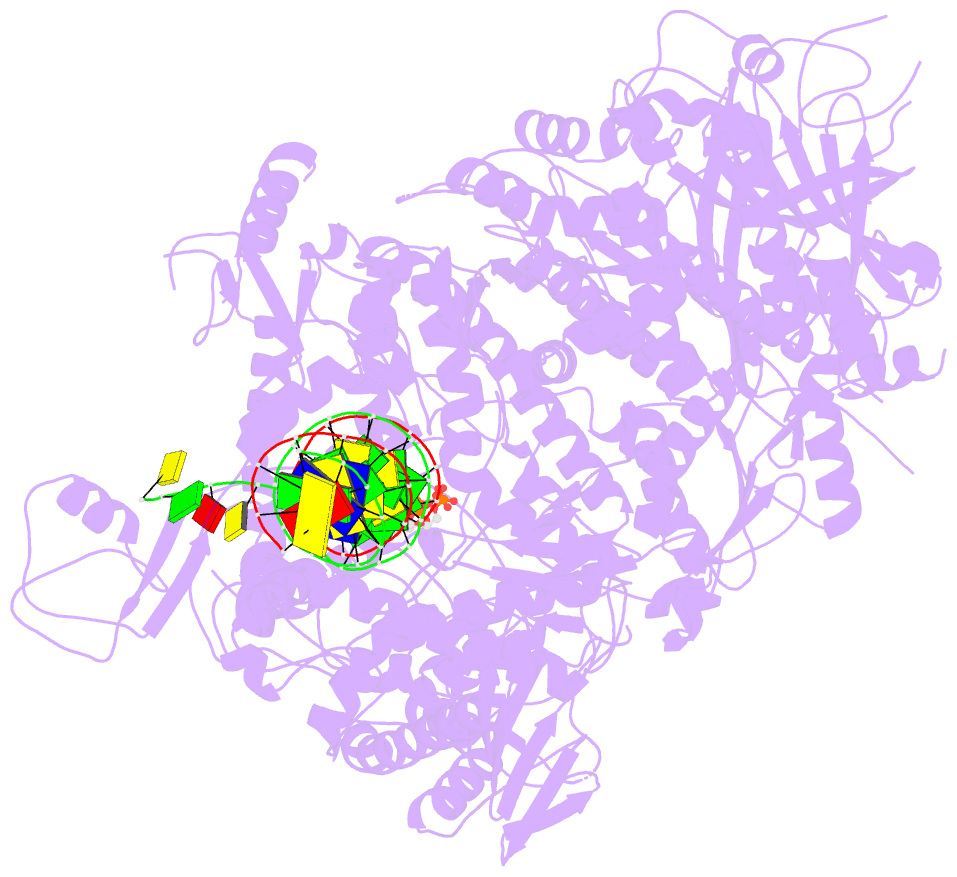
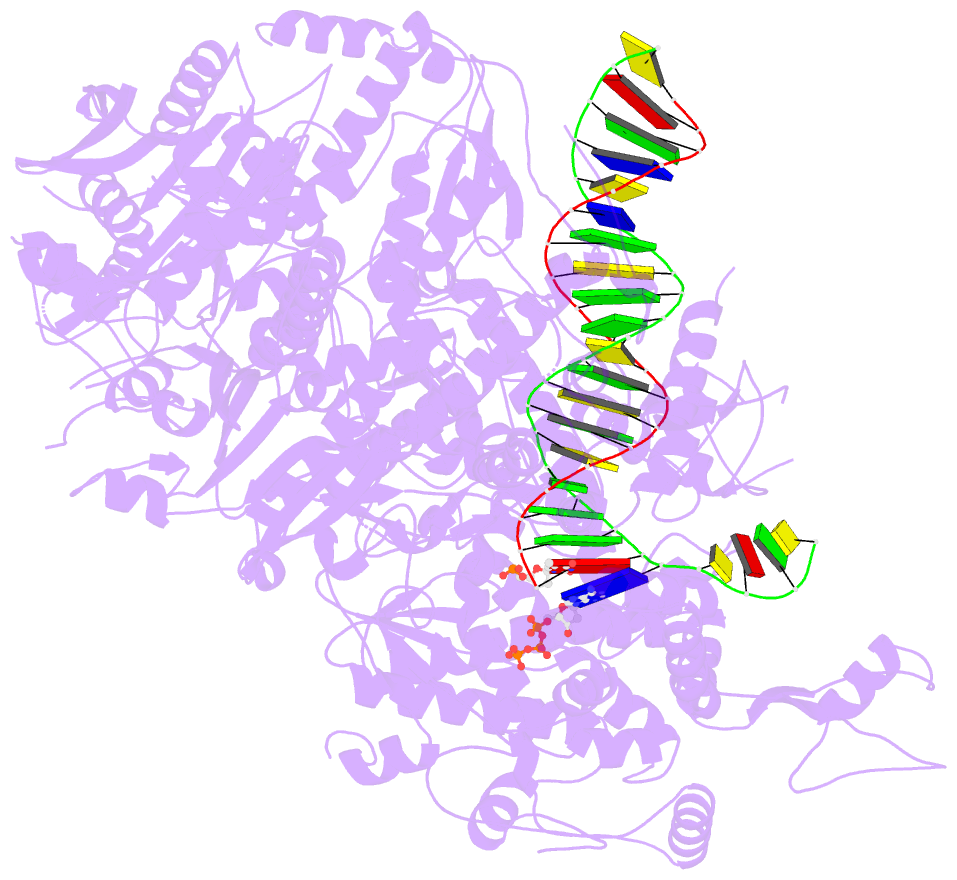
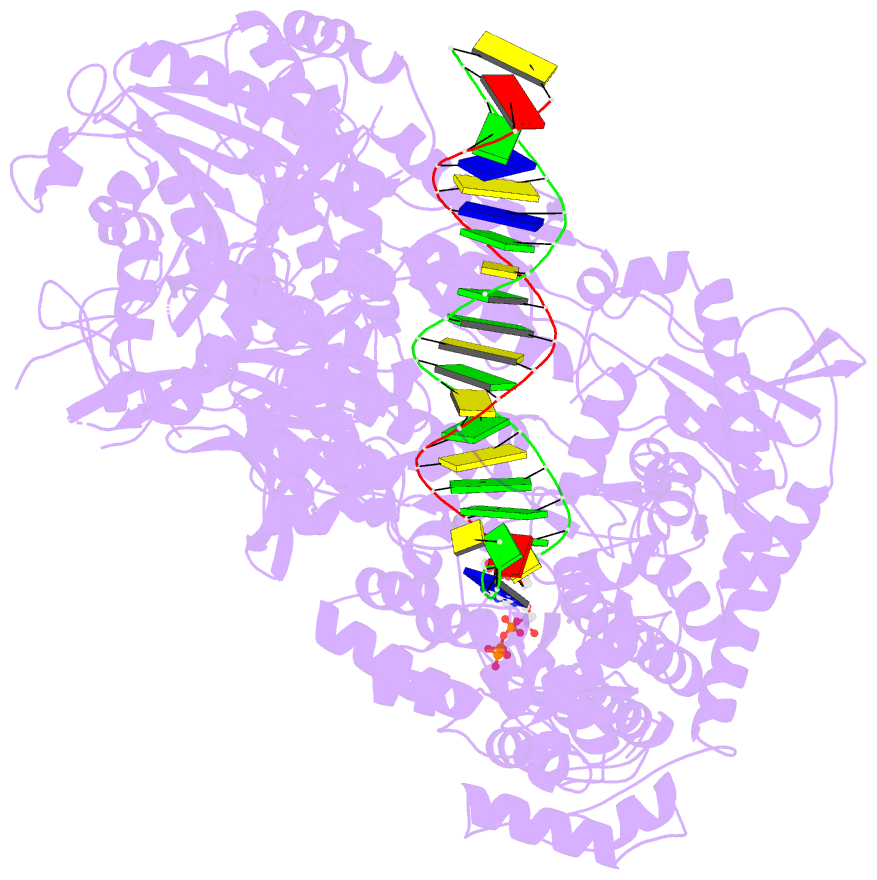
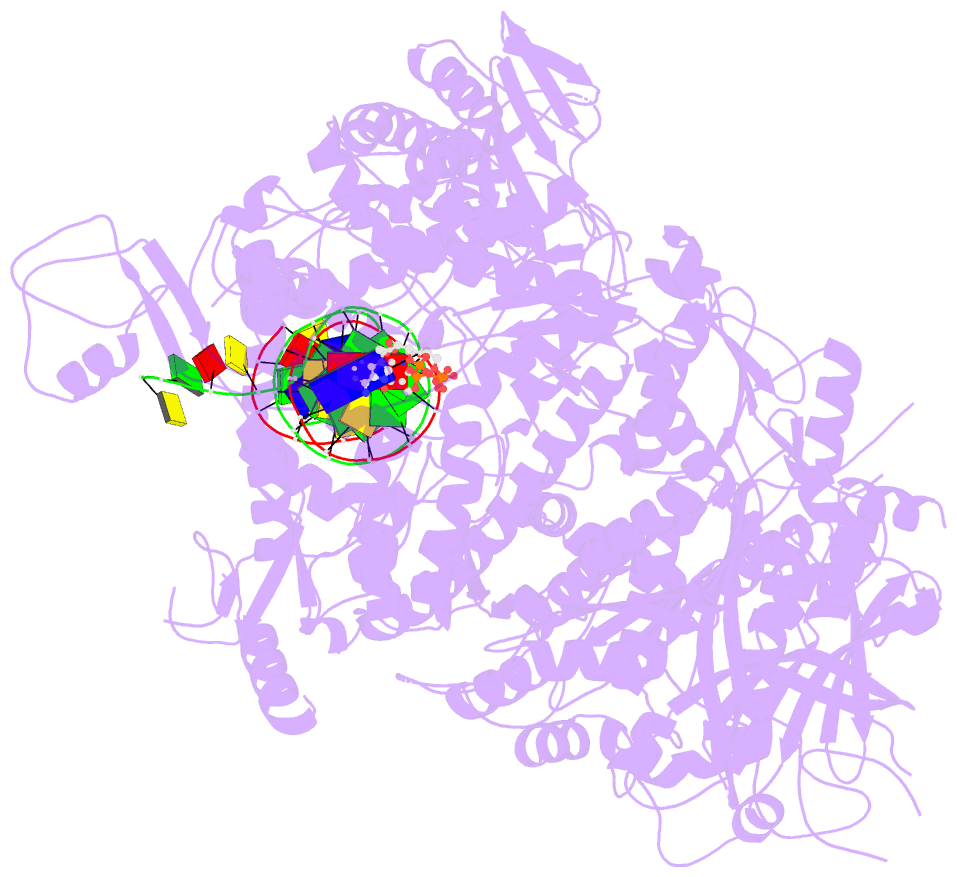
- Structure of a strand-displacement complex of human
mitochondrial DNA polymerase gamma
- Reference
-
Sokolova V, Buchel G, Strock S, Nayak AR, Temiakov D
(2026): "Molecular
and structural basis for replication initiation and
strand separation by human mitochondrial DNA polymerase
gamma." Nucleic Acids Res.,
54. doi: 10.1093/nar/gkag925.
- Abstract
- Defects in human mitochondrial DNA (mtDNA) replication
can lead to somatic mutations associated with a range of
devastating mitochondrial diseases. However, the molecular
mechanisms governing the earliest steps of mtDNA
replication and their fidelity remain poorly understood.
Here, we found that DNA polymerase gamma (Polγ) forms
stable complexes with RNA-DNA primer-template substrates,
exhibiting greater stability and lower misincorporation
than on DNA-primed substrates. Structural analysis revealed
that Polγ interacts with the 2'-OH groups of ribose within
the first four nucleotides of the primer, explaining the
stability of complexes that utilize RNA primers. Although
Polγ requires TWINKLE to extend RNA primers, its intrinsic
strand-displacement activity allows it to extend DNA
primers independently. Structural data further show that
the strand-separation mechanism in human Polγ is distinct
from that of its yeast paralog, Mip1, and involves
previously unresolved elements-the catcher and a GP loop in
the exonuclease domain-that support intrinsic
strand-displacement synthesis by Polγ. Structure-guided
mutagenesis of elements involved in strand separation
supports these structural observations. Together, our study
provides mechanistic insight into mtDNA replication
initiation and strand separation and has implications for
understanding the molecular basis of mitochondrial
disease.